Bolivia Reviews 67 State Companies for Closure as Losses Mount
Key Facts
Bolivia spent two decades building a state-owned corporate sector that now loses money every year. The new government has just given itself the legal tools to shut parts of it down.
Bolivia’s cabinet approved Supreme Decree 5727 on 24 September, and the text reached the Official Gazette a day later. It declares the reorganisation, dissolution and liquidation of central-government companies a national priority.
Why This Matters
Bolivia is running out of dollars, and the state’s own companies are part of the reason. President Rodrigo Paz took office on 8 November 2025 after winning the country’s first presidential runoff.
He inherited a treasury that had been financing loss-making firms for years, the state news agency ABI reported. On 19 September his government ended the diesel subsidy, raising the pump price by 83%.
That decision followed a programme agreed with the International Monetary Fund (IMF). Ending subsidies was the visible half of the adjustment, and the state companies are the quieter half.
For a reader in London or New York, the scale is easier to grasp in dollars. Fourteen state firms still owe more than one billion dollars on credits they drew down.
The companies involved include lithium, steel, sugar, cement, an airline and a cable-car network. Several of them sit on assets that foreign investors have been circling for years.
How Bolivia unwinds them will shape what is left for private capital to buy or partner with. It will also test whether a centrist president can face down the unions that built these firms.
What Decree 5727 Actually Does
The decree does not order a single closure by itself, the Argentine daily El Litoral reported. It sets a procedure, and the procedure runs through two bodies most readers will not know.
OFEP is the technical office charged with strengthening public enterprise and auditing their books. COSEEP is the strategic council that must approve whatever OFEP recommends for each firm.
Sector ministries then have a maximum of fifteen working days to submit a regulatory proposal. Companies created by decree can be wound up by decree, La Razón reported from La Paz.
Firms created by law need a bill, which means Congress gets a vote on those cases. Once a company is notified, the decree freezes much of what its managers can do.
It may not take on new debt, sell assets, raise salaries or hire staff. Essential replacement hiring is the only exception, according to the text summarised by Visión 360.
Investigations into past management continue even after a company has been closed. Final reports go to the Plurinational Legislative Assembly, Bolivia’s Congress, for oversight.
The Numbers Behind the Decision
Boliviano figures here use the Banco Central de Bolivia official rate of Bs12.22 per US dollar on 25 September 2026. Fifteen of the 67 companies are in technical bankruptcy, the news portal Visión 360 reported.
OFEP put their accumulated losses at Bs2.655 billion in April, about US$217 million at today’s rate. Negative equity across the same group reaches Bs1.901 billion (about US$156 million).
A separate OFEP report in July, covering fifteen firms through 2025, gave a higher figure. It put losses at Bs5.177 billion (about US$424 million) and unpaid credits at Bs16.273 billion (about US$1.33 billion).
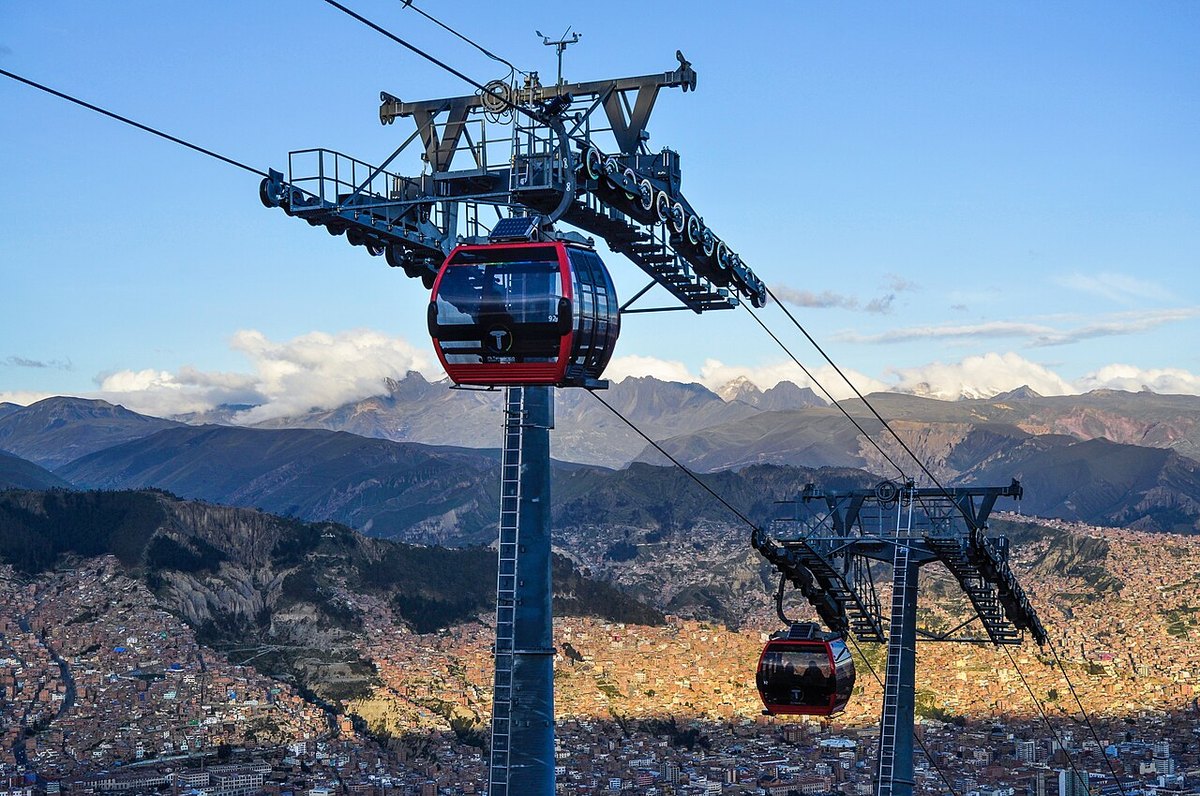
Mi Teleférico, the La Paz cable-car network, lost Bs2.039 billion (about US$167 million), but the minister says it is exempt. Yacimientos de Litio Bolivianos (YLB), the state lithium firm, followed at Bs527.7 million (about US$43 million).
Boliviana de Aviación, the state airline, lost Bs485.9 million (about US$40 million), ABI reported. The Karachipampa smelter and the San Buenaventura sugar plant each lost tens of millions of dollars.
YLB has absorbed roughly US$890 million of public money for Uyuni lithium, EFE reported. The agency said the plants are running at about 17% of their design capacity.
How Bolivia Built These Companies
Most of these firms date from the presidencies of Evo Morales and Luis Arce. Morales governed from 2006 to 2019 and nationalised gas, telecoms and parts of mining.
Arce, his former economy minister, held office from 2020 until 2025 and kept expanding the model. The stated aim was to substitute imports and keep industrial profit inside the country.
Gas export revenue paid for it while prices were high and fields were still productive. When gas output fell, the subsidy bill and the company losses stayed where they were.
The Paz government says earlier administrations leaned on central bank resources to keep the firms running. That claim is disputed by the former governing party and has not been tested in court.
Bolivia now imports roughly 85% of its diesel, which is what made the subsidy so expensive. The same dollar shortage that squeezed fuel imports also squeezed the state companies’ suppliers.
The Government’s Case
Ministers have framed the decree as accounting, not ideology. Gustavo Jáuregui, deputy minister for sustainable industrialisation, ruled out selling the firms.
“This is not a privatisation; at no time has this government spoken about it,” he told ABI. Economy Minister Christian Morales said between eight and ten institutions would be assessed first.
Pablo Camacho, who heads OFEP, said the work starts next week and will be sequential. “We begin next week, sequentially,” Camacho said of the first package of eight companies.
Presidency Minister José Luis Lupo had put the argument more bluntly in July. “A state company with deficits today is not protecting heritage, it is destroying it,” he said.
Unions and the Opposition Push Back
The reaction from organised labour came within a day. Andrés Paye, of the Bolivian mineworkers’ federation FSTMB, rejected the process outright.
“We are not going to play OFEP’s game,” he told the radio network Erbol. He said the government was “trying to lengthen the queue of the unemployed”.
The federation declared a state of emergency and promised to defend state assets. Paye also attacked Decree 5716, the measure that removed the diesel subsidy.
Evo Morales, the former president, gave the sharpest political response. “They are going to privatise the sun,” he said, according to the news agency ANF.
Morales argued the decree fulfils commitments made to the IMF and will empty the state. ANF noted the decree does not in fact order general privatisation, and that each case needs its own legal instrument.
Economists Call It a Start, Not a Solution
Analysts quoted in Bolivian media welcomed the move but questioned its reach. Gonzalo Vidaurre called the decree an inflection point in the management of public money.
He also said it was necessary but still insufficient for a sector of more than sixty firms. Fernando Romero, economy secretary in the Tarija regional government, called it a concrete step.
He stressed cutting two consecutive years of deficits rather than transferring ownership. Emapa, the food marketing company, says it has already left the deficit range.
Its general manager, Sergio Siles, told El Diario the firm is not on the list. El Diario counted at least fourteen companies with serious financial problems, including Mutún and Quipus.
A Second Decree Aimed at Bus Owners
The cabinet approved a companion measure, Supreme Decree 5726, on the same day. It creates a national vehicle renewal programme branded PATRIA, ABI reported.
The programme folds the existing gas-conversion agency into a new executive body under the public works ministry. It will finance new buses and the conversion of diesel engines to compressed natural gas.
Repayment runs through a fuel-consumption tracking system that links service stations to beneficiaries. In practice the operator pays back the state at the pump rather than at a bank.
The measure is aimed at the same transport unions that struck over the diesel price. No budget figure for PATRIA has been published, and the implementing rules are still pending.
What It Means If You Live, Work or Invest in Bolivia
Suppliers and contractors to state firms should expect payment terms to tighten quickly. A notified company cannot sign new contracts, which may strand work already in progress.
Employees of the listed firms face the clearest risk. And the mineworkers’ federation is already mobilised.
Travellers should watch for road blockades, since transport unions struck over diesel this month. Investors interested in lithium, steel or cement assets should follow COSEEP resolutions rather than headlines.
Nothing can be sold while a company sits under the decree’s safeguard restrictions. Anyone holding Bolivian sovereign debt should read the first eight cases as a test of political will.
What Is Not Yet Known
The government has not named the eight companies in the first package. It has not said how many jobs are involved or what redundancy terms would apply.
No saving target has been published for the programme as a whole. It is unclear which firms would need a bill in Congress rather than a decree.
The treatment of Entel, the state telecoms operator, has not been spelled out. Officials have not said what happens to the debts of companies that are wound up.
There is no published timetable beyond the fifteen working days for ministry proposals. Whether the mineworkers’ emergency turns into strikes remains an open question.
Frequently Asked Questions
What does Bolivia’s Decree 5727 do?
It makes reorganising, dissolving or liquidating central-government companies a national priority. It sets a procedure run by the audit office OFEP and the council COSEEP.
How many Bolivian state companies are affected?
Sixty-seven companies are under review. Officials say fifteen of them are technically bankrupt.
Is Bolivia privatising its state companies?
The government says no, and the decree does not order a general sale. Deputy Minister Gustavo Jáuregui said privatisation has never been discussed.
Who is opposing the measure?
The mineworkers’ federation FSTMB has declared a state of emergency over job losses. Former president Evo Morales says the plan serves the IMF.
Sources: El Litoral, 67 public companies placed under review, La Razón, government decrees priority for reorganisation or liquidation, ABI, government prioritises reorganisation and closure of public firms, ABI, deputy minister rules out privatisation, ABI, OFEP report on losses and unpaid credits, Infobae/EFE, fifteen firms in technical bankruptcy and YLB capacity, Visión 360, analysts on the decree and the union response, Visión 360, first package of eight companies, Erbol, mineworkers warn of unemployment, ANF, Evo Morales on privatisation, El Diario, a further step towards closing loss-making firms, ABI, Decree 5726 creates the PATRIA vehicle programme, Banco Central de Bolivia, official exchange rate table
This article was produced by The Rio Times’ automated newsroom system. How we use AI · Report an error
In depth
Read More from The Rio Times