BNDES Brasil Soberano Opens US$4.4 Billion Tariff Credit Round
Brazil · Trade
Key Facts
- —What happened Brazil’s state development bank opened applications on 17 September 2026 for a third round of trade-shock credit.
- —How much About US$4.4 billion, split between the National Treasury and the bank’s own resources.
- —Who can borrow Exporters hit by United States tariffs, Gulf-region exporters, fertiliser makers, critical-minerals firms and other trade-exposed industry.
- —What it costs Annual rates from 3 percent for critical minerals to 9.8 percent for large companies’ working capital.
- —The catch Less than half the money is tied to United States tariffs, and earlier rounds were only partly taken up.
- —Why it matters Roughly two-thirds of Brazilian exports escape the United States duty, so the damage is concentrated, not general.
Brazil’s development bank is lending again to exporters caught by trade shocks. Less than half the money is tied to United States tariffs.
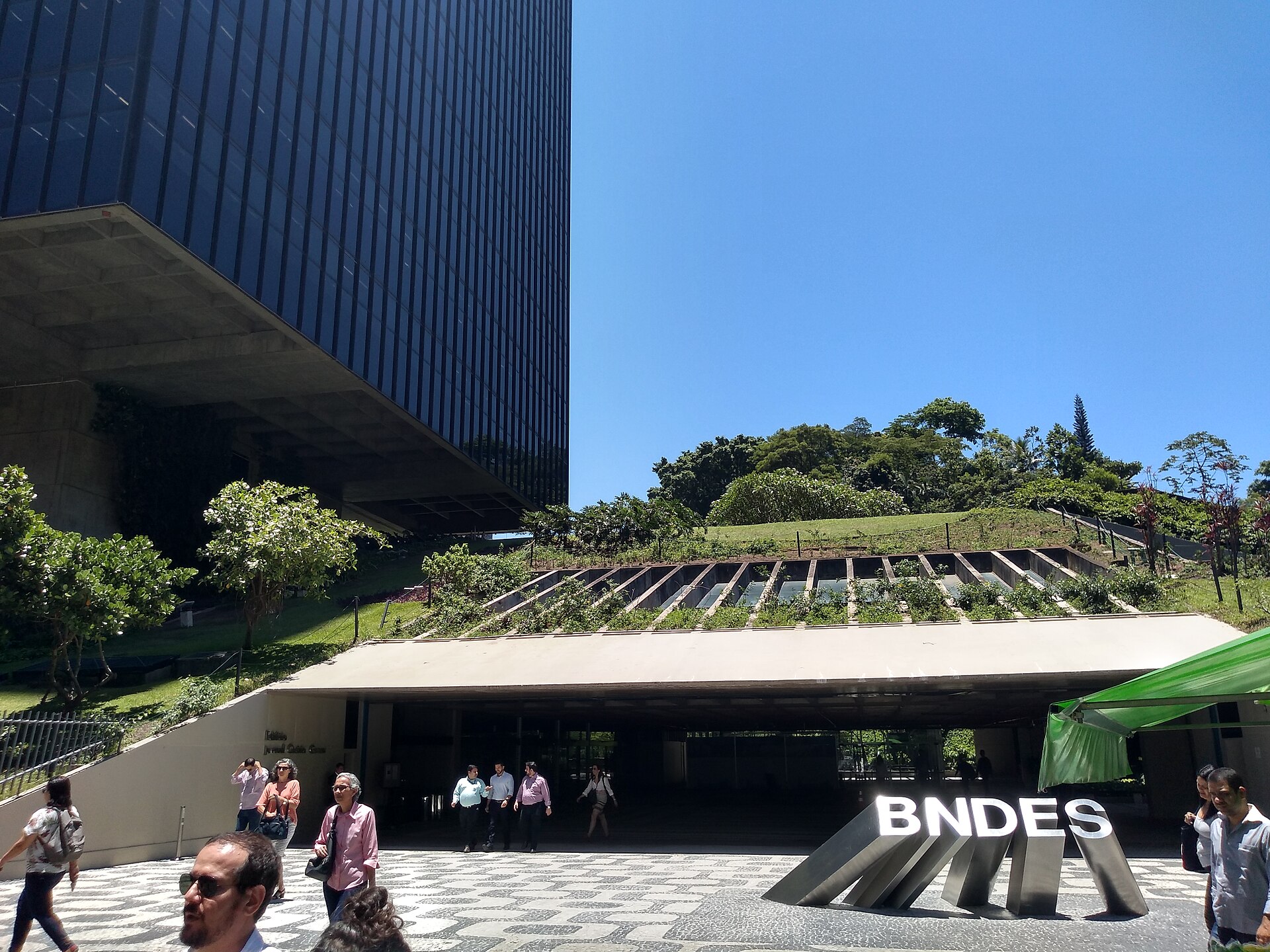
BNDES Brasil Soberano, the Brazilian government’s emergency credit line for trade-hit exporters, opened a third round on Thursday 17 September 2026. The state development bank is offering R$22.6 billion (about US$4.39 billion).
Applications go directly to BNDES or through accredited partner banks. The money is for companies whose export markets have been disrupted.
Where the money comes from
Of the total, R$13.5 billion (about US$2.62 billion) comes from the National Treasury. The remaining R$9.1 billion (about US$1.77 billion) comes from the bank’s own resources.
The envelope reached its current size on 1 September 2026. BNDES added R$4.1 billion (about US$796 million) to a package announced in July at R$18.5 billion (about US$3.59 billion).
How the money is divided
The largest bucket, R$8.8 billion (about US$1.71 billion), is reserved for exporters hit by United States tariffs. A second bucket of R$6.8 billion (about US$1.32 billion) goes to exporters selling into the Persian Gulf.
That Gulf money answers disruption from conflict in the Middle East, not tariffs. Fertiliser and fertiliser-intermediate makers take R$4.0 billion (about US$776 million).
The critical-minerals supply chain receives R$2.0 billion (about US$388 million). Another R$1.0 billion (about US$194 million) is set aside for other industrial sectors relevant to foreign trade.
On those numbers, roughly 39 percent of the BNDES Brasil Soberano tranche is specific to United States tariffs. Less than half the headline figure is tariff relief in the strict sense.
What borrowers pay
Working capital costs 9.8 percent a year for large companies and 8.3 percent for smaller ones.
Capital goods and fixed-asset purchases carry 8.0 percent a year for all sizes. Investment lines are priced at 6.5 percent, and critical-minerals projects at 3.0 percent.
Permitted uses cover working capital, export finance, capital goods, capacity expansion, supply-chain development, innovation, and adapting products for new markets. Repayment terms, grace periods and loan tenors are not published.
No closing date or eligibility threshold has been published for this round.

A plan built in stages since 2025
Plano Brasil Soberano was created in August 2025, as the federal answer to the first Trump tariff round. It carried R$30 billion (about US$5.82 billion) routed through the Export Guarantee Fund, the state’s export insurance vehicle.
The vehicle was Provisional Measure 1.309/2025, a decree with immediate legal force. A second measure in September 2025 formalised the credit.
A second phase followed in 2026 under Provisional Measure 1.345, branded BNDES Brasil Soberano Competitividade. It added R$15 billion (about US$2.91 billion) in lines aimed more broadly at export competitiveness.
The bank dates the 2026 phase to 22 July 2026, when Law 15.473/2026 and Provisional Measure 1.379/2026 were published. Its programme page lists R$185 billion (about US$35.9 billion) of financing lines under a wider umbrella, a separate and far larger total.
Take-up is the real test
The money on offer has consistently outrun the money approved. ND Mais reported on 23 July 2026 that approvals had reached R$19.6 billion (about US$3.80 billion) across more than 1,000 operations.
That was out of the original R$30 billion (about US$5.82 billion) emergency envelope. Tribuna do Sertão, on 17 September 2026, reported phase-one approvals of R$16.2 billion (about US$3.14 billion) measured through mid-December.
Either way, approvals sit well below the sums offered.
Food manufacturing absorbed R$4.15 billion (about US$805 million) of the approvals to July. Wholesale traders took R$1.98 billion (about US$384 million) and wood products R$1.85 billion (about US$359 million).
Large enterprises took R$13.3 billion (about US$2.58 billion) of the total. Machinery, equipment and chemicals together accounted for R$2.2 billion (about US$427 million).

Micro, small and medium enterprises took R$6.3 billion (about US$1.22 billion) across 982 operations. Four states absorbed 67 percent of the money.
They are São Paulo, Santa Catarina, Rio Grande do Sul and Paraná. BNDES attributes the concentration to their heavier exposure to tariffed exports.
Monitoring of 500 borrower companies found 60.6 percent had kept or expanded their headcount.
Aloizio Mercadante, the president of BNDES, has presented the programme as essential support for companies facing unilaterally imposed tariffs.
The tariffs the money is meant to offset
The United States tariffs behind the programme have changed shape twice. Duties imposed under emergency economic powers were struck down by the United States Supreme Court in February 2026.
On 22 July 2026 Washington imposed a 25 percent tariff on Brazilian goods. It used Section 301 of the 1974 Trade Act, after a year-long investigation into Brazil’s trade practices.
A further 12.5 percent was proposed under a separate forced-labour investigation. That would lift the combined rate to 37.5 percent.
Public trackers from July and August 2026 still describe that second layer as proposed.
The 25 percent duty covers machinery, electrical equipment, granite, gold, tyres, sugar and apparel. Those are real export lines, but they are not the bulk of Brazil’s sales to the United States.
Roughly two-thirds of Brazilian exports escape the duty. Coffee, orange juice, beef, cocoa, nuts, tropical fruit, iron and manganese ore, wood pulp, petroleum products and civil aircraft are exempt.
Steel, aluminium, copper, cars and lumber sit under other trade regimes. The assessment comes from Monica de Bolle of the Peterson Institute for International Economics.
What it means in practice
For an exporter, BNDES Brasil Soberano is a credit line at published annual rates, with conditions attached. The paperwork runs through the bank itself or an accredited commercial lender.
For an investor, the number to watch is approvals, not the headline envelope. Three rounds in, the plan has offered more than it has approved.
For a reader abroad, the tariff shock is narrower than the headline rate suggests. It bites in particular industrial states and particular product lines, not across the whole economy.
More: Business and economy coverage, every day from The Rio Times.
Frequently Asked Questions
What is BNDES?
BNDES is Brazil’s state-owned national development bank. It lends to companies on terms that commercial banks generally do not offer, usually for investment, exports and industrial projects. Its money comes partly from the National Treasury and partly from its own resources, as this programme shows. When the federal government wants to move credit quickly to a sector, BNDES is normally the channel it uses.
What tariffs does the United States charge on Brazilian goods?
Tariffs imposed under emergency economic powers were struck down by the United States Supreme Court in February 2026 and terminated. On 22 July 2026 Washington imposed a fresh 25 percent tariff under Section 301 of the 1974 Trade Act. A further 12.5 percent was proposed under a separate forced-labour investigation, which would take the combined rate to 37.5 percent. Roughly two-thirds of Brazilian exports, including coffee, beef, orange juice and civil aircraft, are exempt from the duty.
Why does a tariff programme include money for the Persian Gulf?
The third round is not only about the United States. R$6.8 billion (about US$1.32 billion) of the R$22.6 billion (about US$4.39 billion) is reserved for exporters selling into the Persian Gulf region. That bucket answers trade disruption caused by conflict in the Middle East, not by American duties. It is the single clearest sign that the programme has widened beyond its original purpose.
Has the money actually reached companies?
Only in part. ND Mais reported on 23 July 2026 that BNDES had approved R$19.6 billion (about US$3.80 billion) across more than 1,000 operations, out of an original R$30 billion (about US$5.82 billion). Large enterprises took R$13.3 billion (about US$2.58 billion) of that, and four southern and south-eastern states absorbed 67 percent of the money. Monitoring of 500 borrower companies found 60.6 percent had kept or expanded their headcount.
Sources: Tribuna do Sertão on the opening of applications, Brasil 247 on the Treasury and bank funding split, Brasil em Folhas on the September top-up, O Tempo on the extra money added on 1 September, ND Mais on approvals after the plan’s first year, Brazil’s trade ministry on the original 2025 plan, Agência Brasil on the measures in the package, BNDES on the programme’s 2026 legal basis, Monica de Bolle at the Peterson Institute on the Section 301 tariffs, Atlantic Council on which Brazilian goods are exempt
This article was produced by The Rio Times’ automated newsroom system. How we use AI · Report an error
Read More from The Rio Times