Between Faith and Fear: The Unseen War on Christians in Nigeria
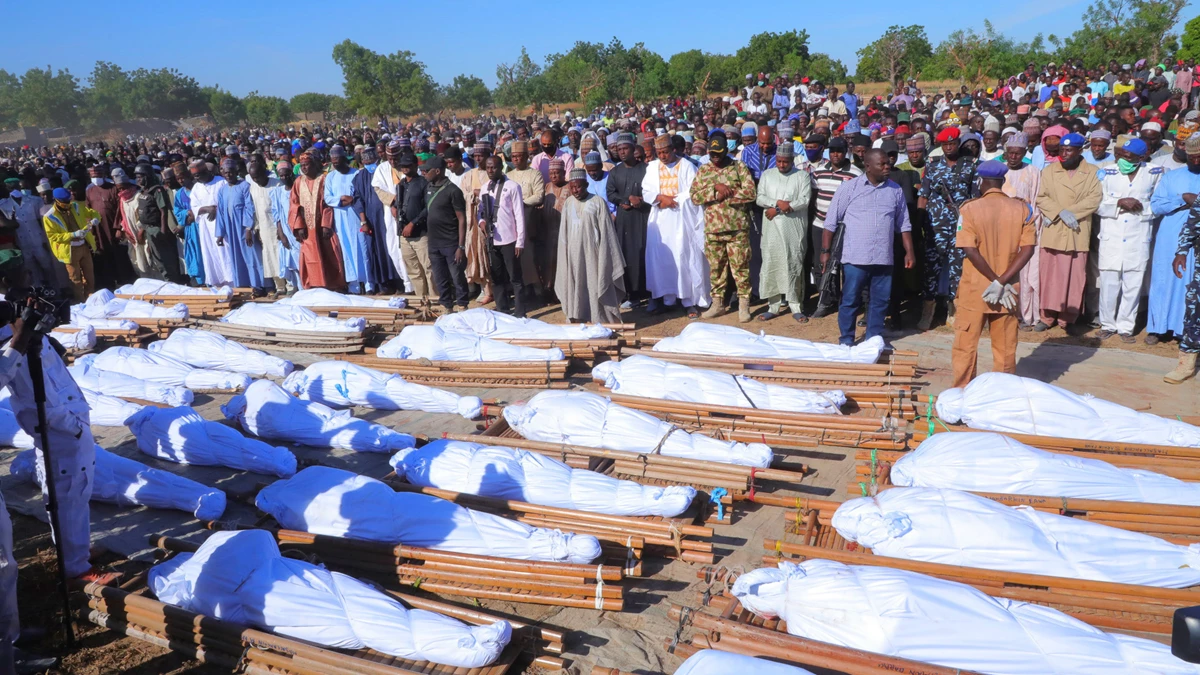
(Analysis) Across the globe, Nigeria may not be the first country that comes to mind when one thinks of religious persecution.
Yet facts on the ground tell a starkly different story. Over the last two decades, armed groups have killed an estimated 100,000 Christians in Nigeria, and more than three million Christian farmers have been displaced from ancestral lands.
Experts call it a “slow-motion genocide,” fueled by extremist ideology and, many argue, enabled by government complicity.
A Fractured Landscape
Nigeria, with over 250 ethnic nationalities and more than 500 languages, is the most populous Black nation in the world.
Divided primarily between Islam in the North and Christianity in the South, the country’s roots as a single entity trace back to 1914, when British colonial authorities fused two separate protectorates.
(Fulani people)
[arve url=”https://www.riotimesonline.com/wp-content/uploads/2025/02/Fulani-People-Nigeria-5.mp4″ loop=”true” autoplay=”true” /]
That decision, motivated by administrative convenience rather than cultural cohesion, remains a critical factor in the nation’s ongoing tension.
While Nigerians of different faiths and ethnicities historically coexisted in relative peace, key turning points—such as the civil war of 1967–1970—shaped the modern political and religious landscape.
During the colonial era, British administrators formed partnerships with influential Fulani rulers in the North. These rulers, heirs of a 19th-century Islamic caliphate, believed in expanding their domain southward—a goal they say was interrupted by colonial rule but remains intact to this day.
The Fulani Factor
Nomadic Fulani herders have long traveled across West and Central Africa, prioritizing clan loyalties that span borders. This transnational element has led to the flow of outside fighters into Nigeria, carrying modern weaponry and extremist ideologies.
Over the past 20 years, an influx of arms has emboldened Fulani militias and allied groups—such as Boko Haram and Islamic State West Africa—which share a common goal of implementing strict Islamic rule and subjugating other communities.
[arve url=”https://www.riotimesonline.com/wp-content/uploads/2025/02/christians-killed-nigeria.mp4″ loop=”true” autoplay=”true” /]
Local sources describe a coordinated campaign in which Christian villages are besieged, pastors kidnapped, and farmland seized. Internally displaced persons (IDPs) now number over three million, with many languishing in camps for more than a decade.
Entire villages stand abandoned as Fulani herders claim control of fertile farmland, sometimes calling it a divine right.
Government Complicity or Lethargy?
Observers point to glaring inaction by Nigerian officials as further evidence of an intentional strategy. Attacks often go uninvestigated; perpetrators face no trials; and citizens in remote regions, particularly in the so-called “Middle Belt,” remain defenseless.
Despite billions in military funding, security forces either fail to respond or arrive long after attacks have concluded. Critics allege that the government’s lack of enforcement, and even rumored appeasement, amounts to tacit approval.
In one example, a terrorist financier was publicly named by a foreign government, yet local authorities declined to prosecute. Moreover, proposed reforms—such as a “Ministry of Livestock” to manage open grazing—raise fears of further institutionalizing land grabs for Fulani communities.
An Urgent Call for Action
Faith leaders and human-rights advocates insist this crisis is more than a regrettable byproduct of conflicts over land or resources. Father Ambrose Ekoroko, a Nigerian priest currently studying human rights in the United States, says these attacks constitute a slow but relentless jihad.
In his view, the violence stems from “an ideology claiming Nigeria belongs to one group, with a mandate to subjugate all others.” In testimony to international organizations, advocates stress that the problem cannot be dismissed as a local or internal dispute.
Silenced Bells – The Vanishing Christian Churches of Nigeria
They call for a comprehensive investigation, stronger sanctions, and the re-inclusion of Nigeria on international watchlists for violations of religious liberty. Absent pressure from allies like the United States, they argue, little incentive exists for the Nigerian government to reverse course.
Faith, Hope, and a Way Forward
Amid dire reports, many Christian communities remain steadfast. Churches continue to be planted and new dioceses formed, even in predominantly Muslim areas.
Local charities and international relief organizations assist IDPs with food, housing, and trauma counseling.
Still, most advocates agree that more robust action is needed from global partners—governments, faith communities, and human-rights organizations alike.
Calls for prayer resonate across Christian networks, but observers add that advocacy must extend beyond the spiritual realm. Cutting off foreign aid until credible investigations begin or halting arms shipments to unresponsive security forces could, in theory, prompt change.
While the path forward is unclear, one conclusion rings resoundingly true: unless global attention intensifies and effective pressure is applied, Nigeria’s silent genocide may yet continue unchecked.
More: Nigeria news in English, every day from The Rio Times.
Editorial responsibility: Matthias Camenzind, Editor-in-Chief · Editorial standards · Report an error