Beijing’s Billions Tighten Grip on Strategic Resources
(Analysis) China’s provincial governments, as revealed by official announcements analyzed recently, ramp up subsidies for strategic mineral exploration.
Over half of the nation’s 34 provinces, including resource-heavy Xinjiang, boost funding to secure high-tech supply chains. This move intensifies a brewing rivalry with the United States over resources vital for semiconductors, electric vehicles, robotics, and missiles.
Beijing allocates over 100 billion yuan ($13.8 billion) annually since 2022 to mineral exploration, marking the largest three-year investment in a decade. The country produces 30 of the 44 critical minerals tracked globally, cementing its dominance in the sector.
Meanwhile, President Xi Jinping drives a self-sufficiency agenda, prioritizing advanced manufacturing and emerging technologies since 2012. The U.S. counters this strategy as President Donald Trump, since taking office in January 2025, pushes domestic mining initiatives.
He targets minerals in Greenland, Ukraine, and the Democratic Republic of Congo to loosen China’s grip. However, China tightens export controls on key minerals like gallium, germanium, antimonio, graphite, and tungsten, escalating tensions in the ongoing trade war.
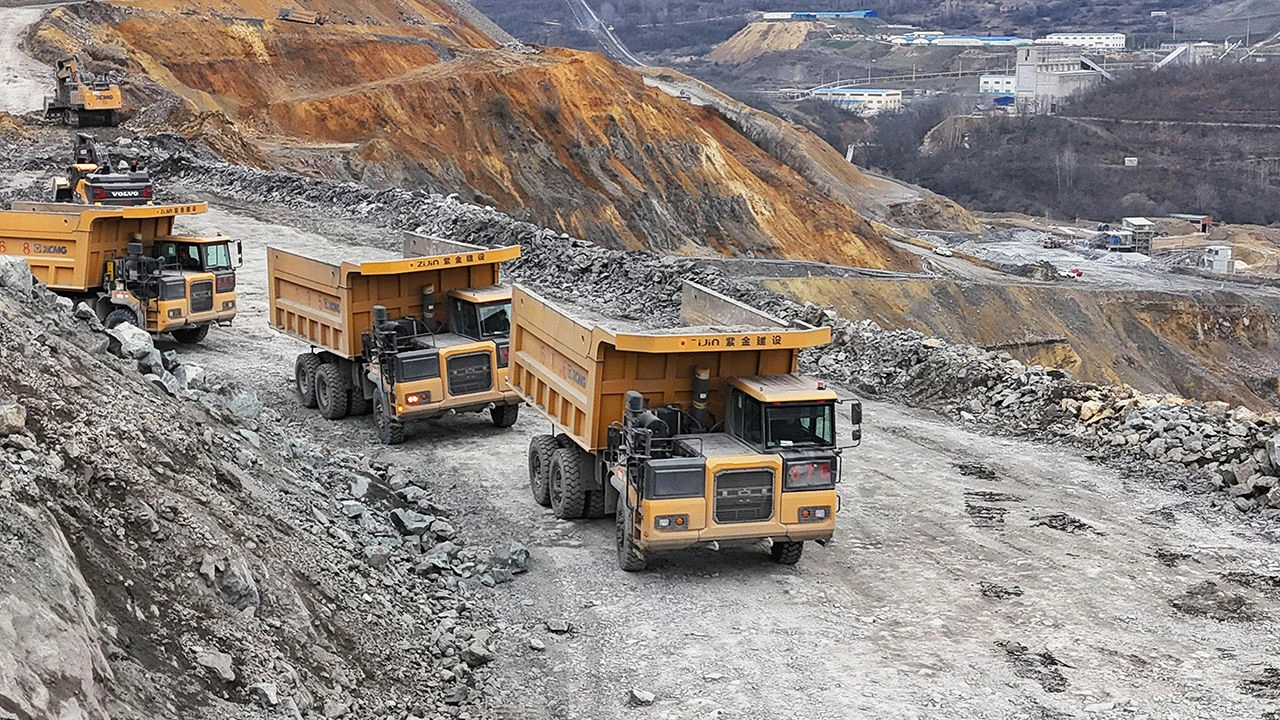
Xinjiang’s funding for geological exploration jumps from 150 million yuan in 2023 to 650 million yuan in 2025. This region, despite its poverty and unrest, issues record numbers of mining rights to fuel China’s ambitions.
Xiong Zili, a senior official, claims these efforts bolster industrial security and counter external uncertainties effectively. China’s global reach expands through $57 billion in loans over two decades, securing copper, cobalt, nickel, lithium, and rare earths abroad.
State-backed institutions target developing nations, locking in resources while restricting foreign access at home. Since 2021, Beijing blocks overseas firms from mining tungsten, rare earths, and uranium, demanding state approval for any involvement.
Global Race to Diversify Mineral Supply Chains
The U.S. and Europe scramble to diversify supply chains, but China’s processing dominance—over 90% for some minerals—creates a steep challenge. Cory Combs, a Beijing-based analyst, notes China sustains its mining sector with subsidies and tax breaks regardless of market cycles.
He argues this approach prioritizes security over profit, a logic foreign to Western market-driven strategies. Globally, nations like Japan and Australia resist China’s hold, with Japan cutting reliance on Chinese rare earths from 90% in 2010 to 58% by 2023.
Australia pumps $1.2 billion into its mineral sector, yet it lags far behind China’s scale. The EU aims to source 80% of its lithium domestically by 2025, but progress stalls under strict regulations.
China’s strategy traces back decades, evolving from export quotas in the 1990s to today’s integrated supply chain control. Xi’s vision now faces a world waking up to its dependence, as competitors race to catch up. The stakes rise as minerals become bargaining chips in a high-tech showdown.
Last year, China’s parliament eased laws, allowing firms to explore farmland for minerals, further boosting domestic output. This shift underscores Beijing’s relentless drive to stay ahead.
The U.S., with its fragmented approach, struggles to match China’s unified, state-led effort in this critical arena. The story behind these figures reveals a calculated power play reshaping global economics and security.
China’s investments signal a future where resource control dictates technological supremacy. As tensions mount, the world watches a contest that could redefine industrial power for decades.
More: DR Congo news in English, every day from The Rio Times.
This article was produced by The Rio Times’ automated newsroom system. How we use AI · Report an error
Read More from The Rio Times