Record Seaweed Threatens Barbados Beach Vendors’ Livelihoods
Expat Service
Key Facts
—The warning. Vendors at Enterprise Beach in Christ Church say worsening sargassum is threatening their livelihoods.
—The season. Scientists say 2026 is on track to be one of the worst sargassum years on record across the Caribbean.
—The geography. As the easternmost island, Barbados is the first to intercept seaweed drifting west across the Atlantic.
—The problem. Sargassum is harmless at sea but rots on the shore, releasing a rotten-egg smell that drives visitors away.
—The response. The government plans to start offshore collection to stop the seaweed before it reaches the coast.
A seasonal nuisance is turning into a serious economic worry on Barbados. Mounting piles of Barbados sargassum seaweed are driving visitors away from a popular south-coast beach, and the vendors who work there fear for their summer income.
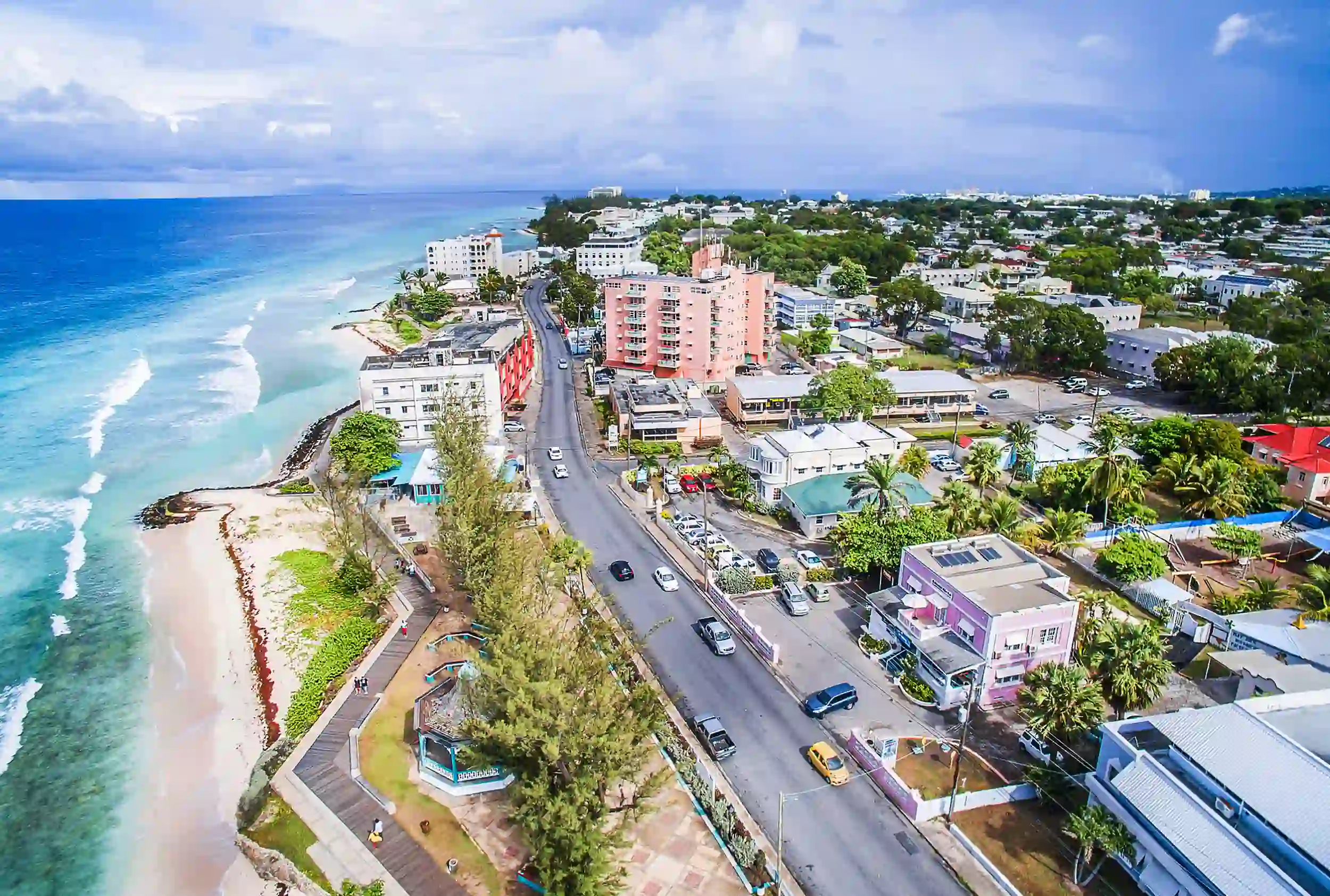
The complaints come from Enterprise Beach in Christ Church, better known to locals as Miami Beach. It is normally one of the island’s most relaxed and popular stretches of sand.
Christ Church is a parish on the southern coast of Barbados, home to many of the island’s most visited beaches and a hub for both tourism and local recreation. The area supports a network of small vendors who rely on beachgoers for their income.
When a reporter visited this week, the pallets where vendors usually set up to sell were empty. One vendor who has lived in the area his whole life said he had never seen so much seaweed in more than four decades.
Why the Barbados sargassum problem is growing
Sargassum is a brown seaweed that drifts across the Atlantic in vast floating mats. Out at sea it is harmless, and even useful, providing a habitat for young fish and turtles.
These floating mats originate in the Sargasso Sea and other parts of the Atlantic, carried by ocean currents and winds. The phenomenon has intensified in recent years, though the exact reasons remain a subject of scientific investigation.
The trouble starts on land. When the seaweed washes ashore and piles up in the heat, it rots and releases hydrogen sulphide, a gas with the smell of rotten eggs that can irritate the airways.
Hydrogen sulphide is the same compound that gives rotten eggs their distinctive odour, and in higher concentrations it can cause headaches, nausea, and breathing difficulties. For people with asthma or other respiratory conditions, even brief exposure can be uncomfortable.
Barbados is especially exposed. As the easternmost island in the Caribbean, it is the first place the westward-drifting seaweed reaches, and its peak season runs from April to August.
This year is shaping up to be a bad one. Researchers who track the blooms by satellite recorded record volumes across most of the Caribbean in the spring, and the government has said it expects the island’s 2026 bloom to reach record levels.
The hit to livelihoods
The timing makes it worse. The vendors say the summer months are when they depend most on local customers, who stay away when the beach is buried and smelly.
Beach vendors in Barbados typically sell food, drinks, and small goods to both tourists and locals. Their income is seasonal and weather-dependent, making any disruption to beach access a direct threat to their ability to earn.
They have appealed to the government to clear the seaweed more consistently and to find productive uses for it. They also want more activities laid on to draw people to the beach year-round, rather than only in the winter tourist season.
There is a cruel irony in the current moment. One vendor noted that Barbados is seeing extra visitors this year because of the hurricane that battered Jamaica, but warned that fouled beaches could squander that windfall.
What is being done
The problem is not new, and nor is the search for solutions. Barbados has battled annual sargassum influxes since 2011, and the government runs a programme to clear affected beaches with labour and heavy equipment.
The newer idea is to catch the seaweed before it lands. Officials say they are in talks with experts to begin offshore collection, aiming to intercept the mats at sea rather than scraping them off the sand.
Offshore collection involves deploying boats and barriers to gather floating sargassum while it is still in the water. This approach could reduce the volume that reaches shore, though it raises questions about cost, logistics, and what to do with the collected seaweed.
Some are also trying to turn the problem into a product. Local researchers and entrepreneurs have experimented with using sargassum for compost, cosmetics and even vehicle biogas, though none of this yet works at the scale the blooms demand.
Whether these efforts can grow to match the volume of seaweed arriving each year remains an open question. So too does the broader challenge of whether Barbados and its Caribbean neighbours can adapt to what may be a permanent shift in ocean conditions.
For a visitor or a resident, the practical takeaway is simple. Conditions vary by the day and the coast, so it is worth checking a live sargassum tracker before a beach trip and favouring the sheltered west coast when the east is buried.
More: Latin America news in English, every day from The Rio Times.
Frequently Asked Questions
Is sargassum dangerous?
Sargassum itself is not toxic to touch, though it can harbour small stinging organisms. The main issue is the hydrogen sulphide gas released as it rots on the beach, which smells of rotten eggs and can irritate the airways of people with asthma or other sensitivities.
When is Barbados sargassum season?
The peak season in Barbados typically runs from April to August, though arrivals have crept earlier in recent years. As the easternmost Caribbean island, Barbados is often the first to be hit by seaweed drifting west across the Atlantic.
Which Barbados beaches are least affected?
The sheltered west coast, on the calmer Caribbean side, generally sees far less sargassum than the exposed south and east coasts. Conditions change daily with wind and currents, so checking a live tracker before heading out is the safest approach.
Connected Coverage
The Riviera Maya’s Record Sargassum Season: Where the Clean Beaches Are
This article was produced by The Rio Times’ automated newsroom system. How we use AI · Report an error · Editorial responsibility: Matthias Camenzind, Editor-in-Chief