Brazil’s Stock Exchange Delists Oi, a Failed State-Backed Telecom Champion
Key Facts
Oi, the telephone company Brazil once built up as a national champion, has spent a decade failing to restructure its debts. Now B3, the country’s stock exchange, has cancelled its listing after a Rio court confirmed the company’s bankruptcy.
B3, which runs Brazil’s stock market in São Paulo, has cancelled the listing of Oi’s ordinary and preferred shares, OIBR3 and OIBR4. Its Official Notice 337/2026-DRL, dated 16 September 2026, was made public on 18 September, Telesíntese reported.
Why This Matters Beyond Brazil
Oi grew out of the 1998 privatisation of Telebrás, Brazil’s former state telephone system, according to the company’s own history. Its 2009 merger with Brasil Telecom created a group with a nationwide presence, the company says.
Fortune described that tie-up as a state-sponsored merger that came with mandatory fixed-line expansion duties. A 2008 government decree under President Lula changed concession rules to allow the deal, the news site Sem Pauta reported.
In 2003, Oi’s shares together carried the largest weight in the Ibovespa, above Petrobras and Vale, Banco do Brasil’s Investalk noted. The Ibovespa is Brazil’s benchmark stock index, followed closely by local and foreign investors.
In June 2016, Oi sought court protection with about R$65.4 billion (US$12.7 billion) in debt, then Brazil’s largest such filing. MercoPress put that at US$19.2 billion at the exchange rate of the time.
The delisting now ends a decade in which Oi tried, and failed, to restructure under court supervision. For investors, the case shows how little shareholders can expect when a Brazilian company is liquidated.
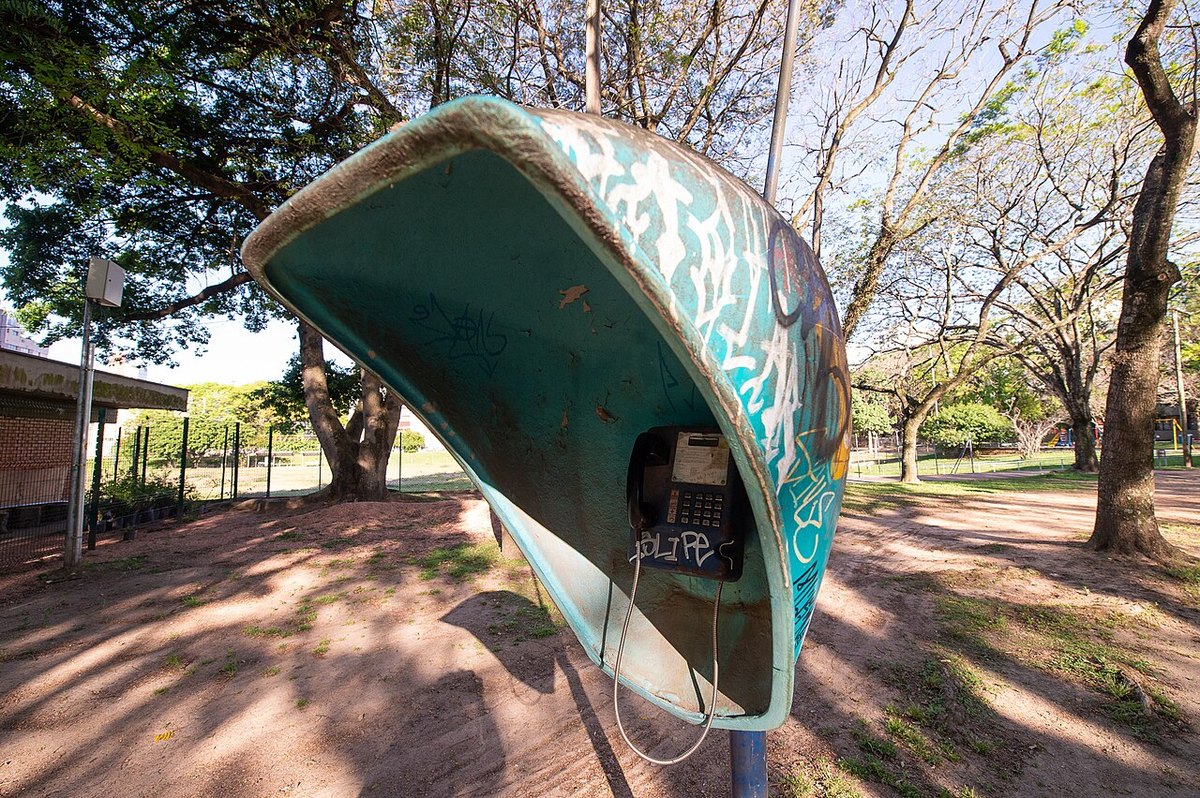
For ordinary Brazilians, it matters because Oi still carries emergency lines and payphones in many areas. In more than 6,000 municipalities, Oi is the only provider of fixed voice service, Teletime reported.
Live Market IntelligenceBrazil — Live Market Board
Rio Times · Live Market Intelligence
Brazil — Live Market Board
-0.41%
185,229.17
-0.41%
63,375.93
-0.78%
11,381.18
+1.30%
3,021,926
-1.29%
2,548.22
+1.05%
60,023.65
-1.13%
| Instrument | Last | Change | YoY | Prev. | High | Low | Volume |
|---|---|---|---|---|---|---|---|
| IBOV | 185,229.17 | -0.41% | +21.85% | 185,992.03 | 168,310 | 167,142 | — |
| USD/BRL | 5.16 | +0.01% | -5.13% | 5.16 | 5.18 | 5.14 | — |
| SELIC | 14.00% | — | — | — | — | — | |
| PETR4 | 41.64 | -0.05% | +35.19% | 41.66 | 41.97 | 41.15 | 41,499,400 |
| VALE3 | 72.97 | +0.83% | +30.75% | 72.37 | 73.54 | 72.66 | 17,658,000 |
| ITUB4 | 38.60 | -1.03% | +4.57% | 39.00 | 39.34 | 38.39 | 29,487,800 |
| BBDC4 | 16.85 | +0.36% | +3.50% | 16.79 | 16.90 | 16.67 | 19,416,900 |
| BBAS3 | 19.37 | +0.47% | +0.73% | 19.28 | 19.44 | 19.16 | 11,069,200 |
| B3SA3 | 14.26 | -0.21% | +12.73% | 14.29 | 14.47 | 14.11 | 33,037,800 |
| ABEV3 | 14.89 | -0.80% | +21.91% | 15.01 | 15.07 | 14.81 | 16,453,100 |
| WEGE3 | 47.59 | +0.49% | +29.99% | 47.36 | 48.08 | 47.36 | 3,364,600 |
| PRIO3 | 59.14 | -0.19% | +50.67% | 59.25 | 59.81 | 58.74 | 3,325,600 |
| SUZB3 | 41.33 | +2.35% | -23.55% | 40.38 | 41.48 | 40.35 | 3,914,900 |
| RENT3 | 34.68 | -0.09% | +0.84% | 34.71 | 34.96 | 34.35 | 7,979,100 |
| AZZA3 | 15.89 | -2.63% | -53.76% | 16.32 | 16.42 | 15.82 | 1,330,300 |
| CSNA3 | 4.30 | +0.47% | -42.65% | 4.28 | 4.41 | 4.26 | 10,076,100 |
| GGBR4 | 24.69 | +2.19% | +51.38% | 24.16 | 24.85 | 24.18 | 7,047,600 |
| ENEV3 | 24.21 | -1.38% | +70.49% | 24.55 | 24.64 | 23.99 | 9,297,000 |
What B3 Decided
B3 based the move on article 70, section V, of its issuer rules, Telesíntese reported. That provision allows automatic cancellation of a listing when the issuer is declared bankrupt.
Trading had already been suspended on 25 August, the day the appeals court confirmed the bankruptcy. A final auction on 3 September closed out open derivative and share-lending positions, according to Telesíntese.
On the last trading day, 24 August, OIBR3 closed at R$0.10 (about US$0.02), Teletime reported. OIBR4, the preferred share, closed at R$0.50 (about US$0.10) on the same day.
Dollar figures in this article use the Central Bank of Brazil’s PTAX selling rate of R$5.1575 on 18 September 2026. Figures from earlier years are converted at that same rate unless stated otherwise.
The Court Ruling Behind It
On 25 August 2026, the First Chamber of Private Law of Rio de Janeiro’s state court confirmed the bankruptcy. The vote was unanimous, according to Tecnoblog, with appeals judge Mônica Maria Costa Di Piero as rapporteur.
Appeals judges Augusto Alves Moreira Júnior and Adriano Celso Guimarães joined her vote. The panel rejected appeals by the banks Bradesco and Itaú against the original bankruptcy decree.
That decree was issued on 10 November 2025 by judge Simone Gastesi Chevrand of Rio’s 7th Commercial Court. She found that Oi survived mainly on asset sales and loans rather than on its own operations, Conjur reported.
Di Piero suspended that first decree on 14 November 2025 after the banks appealed, Migalhas reported. The August judgment lifted that suspension and ended Oi’s second judicial recovery, Brazil’s court-supervised restructuring.
How Deep the Hole Is
Oi’s negative equity stands at no less than R$22.6 billion (about US$4.4 billion), according to Migalhas. Negative equity means its liabilities exceed everything it owns by at least that amount.
Tecnoblog put the group’s total debt at about R$44 billion (US$8.5 billion). Migalhas cited debts of about R$29 billion (US$5.6 billion), so published estimates differ.
The number of creditors is roughly 164,000 to 165,000, depending on the account. Five banks were owed about R$4 billion (US$780 million) in guarantees alone, Migalhas reported.
Suppliers outside the recovery process are owed about R$1.7 billion (US$330 million), the same outlet reported. The company had been expected to run out of cash for essential payments by the end of August 2026.
How Oi Was Broken Up
Very little of the original business remains inside the company. Its mobile unit went to rivals TIM, Vivo and Claro, a sale completed on 20 April 2022.
The final price was R$15.92 billion (about US$3.1 billion), Suno reported. Control of the fibre network, V.tal, passed to funds linked to the bank BTG Pactual in June 2022, Teletime reported.
In March 2025, Oi completed the sale of its 4.3 million fibre broadband customers to V.tal, Teletime reported. That deal was valued at R$5.68 billion (about US$1.1 billion), and V.tal is moving those customers to its Nio brand.
What stayed behind was the corporate unit Oi Soluções and the old fixed-line telephone business. Oi Soluções serves government bodies, Caixa’s lottery network and private companies, Seu Dinheiro reported.
The Fixed Lines and Payphones
The telephone unit was auctioned on 8 April 2026 to Método Telecomunicações for R$60.1 million (about US$11.7 million). It covers about 528,700 lines, Telesíntese reported.
The package includes public payphones and the emergency numbers 190 for police, 192 for ambulances and 193 for firefighters. Anatel, the telecoms regulator, approved the transfer on 3 September with four conditions.
They include a financial guarantee with a reference value of R$160 million (about US$31 million), Teletime reported. Cade, the antitrust authority, cleared the deal without restrictions on 10 September.
The sale still has to close in practice, and customer numbers must be migrated to Método. Método must also keep serving areas where Oi is the only voice provider until December 2028.
How a Brazilian Bankruptcy Works
Under Brazil’s bankruptcy law, a court can turn a failed judicial recovery into a liquidation. A court-appointed administrator then takes control of the company and sells its assets.
Lawsuits and debt collections against the company are suspended while the estate is assembled. Creditors are paid in a legal order, with labour claims near the top and shareholders last.
In Oi’s case, the court allowed essential services to continue provisionally until successors take over. Bruno Rezende, of the firm Preserva-Ação, stayed on as judicial administrator and also became intervenor, Conjur reported.
Two Recoveries, One Outcome
Creditors approved Oi’s first recovery plan in December 2017, and the court closed the case on 14 December 2022. By then debt had been cut to R$21.92 billion (about US$4.3 billion), Agência Brasil reported.
Less than three months later, on 1 March 2023, Oi filed for recovery a second time. It declared debts of R$43.7 billion (about US$8.5 billion) in that filing, the newspaper O Tempo reported.
That second process ran until the November 2025 decree and the August 2026 confirmation. The two cases together kept Oi under court supervision for most of the past decade.
Reactions and the Other Side
Bradesco and Itaú, two of Brazil’s largest private banks, had fought the bankruptcy decree in court and lost. V.tal, the fibre company Oi once controlled, also appealed against the November decree, Teletime reported.
Anatel said it would ensure an orderly transition without service interruption, Seu Dinheiro reported. A restructuring lawyer quoted by Investalk described shareholders as residual investors rather than creditors.
The reports on B3’s notice did not include comment from Oi’s court-appointed administrator. Lawyers quoted by Investalk said customers’ phone, internet and TV contracts remain valid.
What It Means If You Are a Customer, Worker or Investor
Anatel’s position is that the bankruptcy does not automatically interrupt any service, O Tempo reported. Remaining customers are advised to keep paying for services they receive and to keep their receipts.
Complaints can go to Anatel on 1331, its consumer app or its online system. Supplier cuts over unpaid bills have already hit lottery shops and Bahia’s police cameras, Seu Dinheiro reported.
Oi had about 2,000 employees, and a deal to dismiss 60% of them had been reached, Migalhas reported. Unpaid wages and severance count as labour claims, which rank ahead of most other debts.
For investors, OIBR3 and OIBR4 can no longer be bought or sold on B3. The shares move from B3’s central depository to the books of Banco do Brasil, Oi’s transfer agent.
Holders remain shareholders while the shares and Oi’s legal personality survive, according to the B3 notice as reported. Oi also keeps its registration as a public company with the securities regulator, CVM, for now.
With negative equity above R$22 billion (about US$4.3 billion), there is no public indication that anything will reach shareholders. Oi’s US receipts left the New York Stock Exchange in October 2021 and moved to over-the-counter trading as OIBZQ.
What Is Not Yet Known
No timetable has been published for selling the remaining assets or paying creditors. Oi’s 27.5% stake in V.tal was sold to BTG-linked funds, but a court suspended that sale, Teletime reported.
The judge also froze Oi’s arbitration rights against the federal government, Telesíntese reported. She called Oi’s earlier settlement waiving most of those claims a genuine waiver of credit.
The fate of Oi Soluções’ corporate and government contracts has not been settled. Nor is it clear whether Oi’s ADR programme has been formally terminated by its depositary.
Bradesco and Itaú could still try to take the case to higher courts in Brasília. Until the estate is sold, no one can say how much any class of creditor will recover.
Frequently Asked Questions
Why does Oi’s delisting matter?
Oi was once Brazil’s state-backed telecom champion and the heaviest stock in its main index. Its exit from B3 marks the end of a decade of failed restructuring and leaves shareholders last in line.
Are my Oi shares worthless now?
The shares still exist and are recorded at Banco do Brasil, but they cannot trade on B3. Shareholders are paid last in a liquidation, after creditors owed more than the company’s assets.
Will my Oi phone line stop working?
Anatel says the bankruptcy does not automatically interrupt services. Fixed lines, payphones and emergency numbers are being transferred to Método Telecom.
What happened to Oi’s mobile and fibre customers?
Mobile customers moved to TIM, Vivo and Claro in 2022. Fibre broadband customers moved to V.tal in 2025 and are being moved to its Nio brand.
Sources: Telesíntese, B3 cancels Oi listing after bankruptcy, Money Times, B3 cancels Oi listing, Teletime, B3 suspends trading in Oi shares, Tecnoblog, Rio court decrees Oi bankruptcy again, Migalhas, TJ-RJ decrees Oi bankruptcy and ends recovery, Migalhas, Rio court suspends Oi bankruptcy decree, Conjur, 7th Commercial Court decrees Oi bankruptcy, Oi investor relations, company history, Fortune, Oi files Brazil’s biggest bankruptcy, Sem Pauta, Oi bankruptcy and the supertele project, Investalk, what Oi’s bankruptcy means for shareholders, MercoPress, Oi US$19bn bankruptcy filing, Agência Brasil, court ends Oi’s first recovery, O Tempo, Oi files second recovery, Suno, Oi completes sale of mobile assets, Teletime, Oi completes sale of V.tal control to BTG, Teletime, Oi completes sale of broadband unit to V.tal, Tecnoblog, Oi Fibra becomes Nio, Seu Dinheiro, Oi services after bankruptcy, Teletime, Anatel approves sale to Método with conditions, Telesíntese, Cade clears sale of Oi fixed-line unit to Método, Agência Brasil, Oi fixed-line unit sold for R$60 million, Teletime, V.tal appeals Oi bankruptcy decree, Teletime, V.tal shares and the Oi estate, Telesíntese, court freezes V.tal and arbitration funds, O Tempo, what Oi’s bankruptcy means for customers, Oi material fact on voluntary NYSE delisting of ADRs, Banco Central do Brasil, PTAX exchange rates
This article was produced by The Rio Times’ automated newsroom system. How we use AI · Report an error
LatAm Markets: Live Signals → — real-time movers, turnover leaders and FX across Latin America.
Read More from The Rio Times