Lima’s Traffic Congestion Costs Peru S/30 Billion a Year, Car Industry Warns
Peru · Transport
Key Facts
—The bill. Lima’s traffic congestion drains about S/30 billion (roughly US$8.7 billion) from Peru’s economy every year, according to the Asociación Automotriz del Perú (AAP).
—The demand. The auto association says the country does not need more studies, it needs to execute a single, integral transport reform.
—Four fronts. Its plan bundles better public transport, the delayed Metro Lines 3, 4 and 7, a younger vehicle fleet and tougher road-safety enforcement.
—The target. The AAP wants Lima’s average traffic speed lifted from 12 km/h to 25 km/h by 2036.
—The timing. The message is aimed at the next government, which takes office on 28 July, to treat transport as a policy of state.
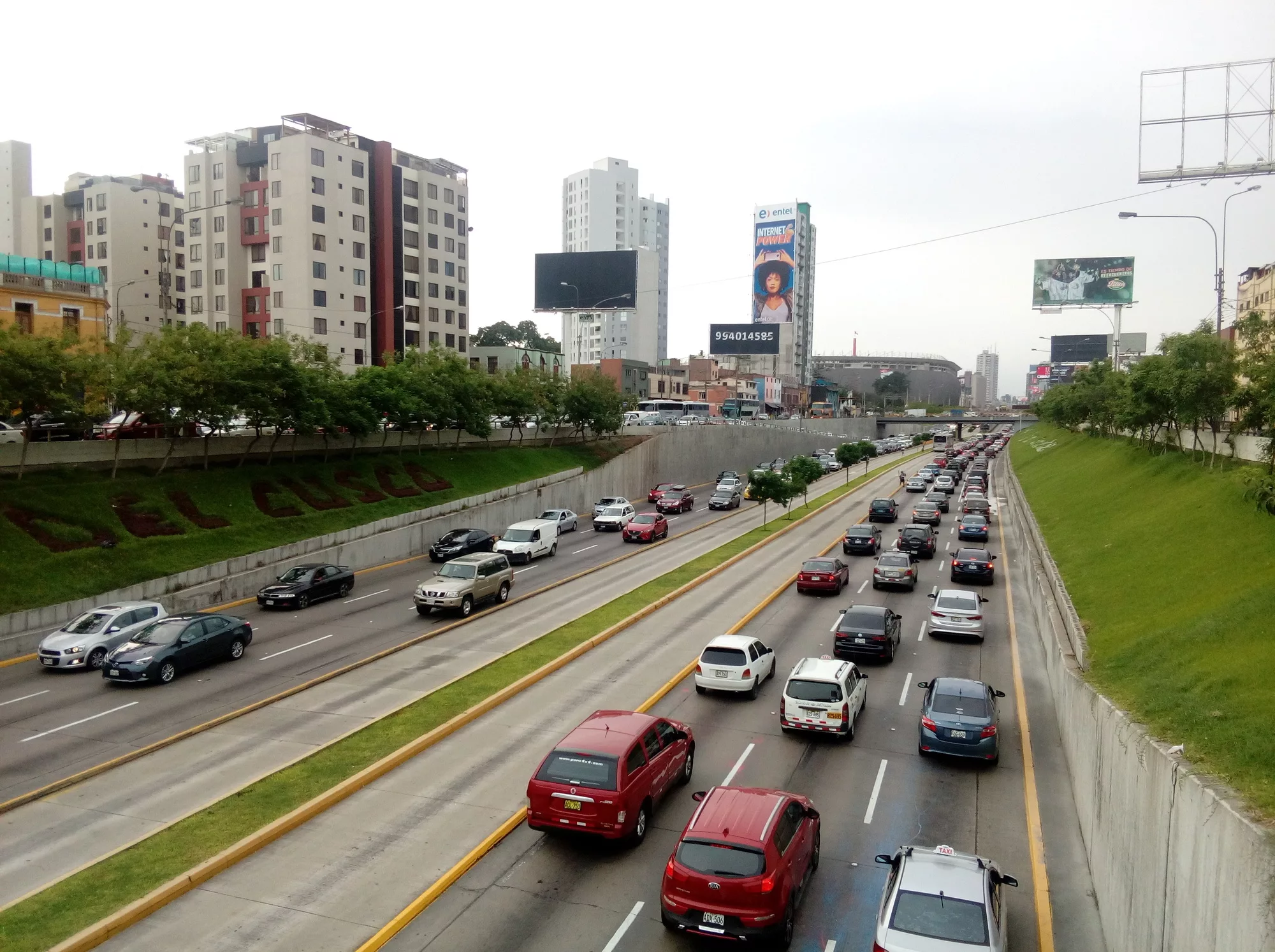
Peru’s car industry has put a price on the capital’s daily gridlock, and it is enormous: Lima traffic congestion costs the economy around S/30 billion a year, the equivalent of about US$8.7 billion, according to the Asociación Automotriz del Perú.
That figure, roughly the size of a large slice of the national budget, is the cost of hours lost in traffic, wasted fuel, higher logistics bills and the health toll of dirtier air. It lands as Peru prepares for a change of government at the end of July.
The AAP made the case this week as it launched what it calls a road map for the incoming administration, arguing that Peru has spent years diagnosing the problem without fixing it.
Why Lima traffic congestion costs so much
Lima is consistently ranked among the world’s slowest big cities to move around. Average speeds sit near 12 kilometres an hour, little faster than a bicycle, and commuters in the worst districts lose the equivalent of years of their lives stuck in traffic.
The AAP argues the root cause is not simply that there are too many cars. It points instead to weak planning, thin oversight, missing infrastructure and a large informal transport sector that operates with little control.
Peru now has about 3.9 million light vehicles on the road, more than 3.2 million smaller vehicles such as motorcycles, and some 400,000 heavy vehicles, per Gestión. Managing that fleet, the association says, is a governance problem as much as an engineering one.
What the auto industry is proposing
The plan rests on four fronts. The first is modern public transport, with the city’s buses and trains folded into a single integrated system with one affordable fare, so riders are not forced back into cars.
The second is finally building the big projects on the drawing board, above all Metro Lines 3, 4 and 7, which are meant to carry hundreds of thousands of passengers a day but have moved slowly for years.
The third is renewing an ageing fleet through stricter vehicle inspections, scrapping the oldest cars and shifting toward cleaner engines, natural gas and electric power. The fourth is tougher road safety, using cameras, electronic monitoring and a sanctions system that actually deters bad driving.
The targets the AAP wants by 2036
The association has attached numbers to its goals. It wants Lima’s average traffic speed roughly doubled, from 12 to 25 kilometres an hour, and the average age of the light-vehicle fleet cut from 14.5 years to 11.
It also wants the road-death rate reduced from about 10 to 6 per 100,000 people, a target that would bring Peru closer to safer middle-income peers. All of it, the AAP insists, needs to be treated as a long-term policy of state rather than a project that dies with each new government.
Why it matters for investors and visitors
For anyone doing business in Peru, congestion is a direct tax on productivity. Goods move slowly, workers arrive late and tired, and logistics costs feed straight into prices, blunting the competitiveness of a city that is still the country’s commercial heart.
The open question is whether an incoming government, sworn in on 28 July amid a fragile political transition, will treat a decade-long transport plan as a priority, or leave Lima idling in the same jams for another cycle.
More: Peru news in English, every day from The Rio Times.
Frequently Asked Questions
How much does Lima traffic congestion cost Peru?
The Asociación Automotriz del Perú estimates congestion costs around S/30 billion a year, equivalent to roughly US$8.7 billion, counting lost time, wasted fuel, higher logistics costs and health effects.
What is the AAP proposing to fix it?
It wants a single integral transport reform built on four fronts: an integrated public-transport system with one fare, faster construction of Metro Lines 3, 4 and 7, fleet renewal toward cleaner vehicles, and stronger road-safety enforcement.
How slow is traffic in Lima?
Average speeds are around 12 kilometres an hour, among the slowest of any major city. The AAP wants that raised to 25 kilometres an hour by 2036 as part of its reform targets.
Connected Coverage
Peru Court Ruling Hands Fujimori a Tool to Undo Costly Laws
Peru’s Transition Begins: Fujimori Opens Her Office as the Opposition Digs In
Peru’s Andean Explorer Is Named the World’s Best Train for 2026
This article was produced by The Rio Times’ automated newsroom system. How we use AI · Report an error · Editorial responsibility: Matthias Camenzind, Editor-in-Chief
Living in or visiting Lima? See this month's events and our Lima city guide with rents, safety and upcoming concerts.