Rio Times · Guides
Key Facts
—Official poverty rate Q1 2026 INDEC reported 38.1% of urban Argentines lived below the poverty line in the first half of 2026.
—June 2026 inflation Monthly CPI decelerated to 1.9%, the lowest figure since mid-2020, confirming a sustained disinflation path.
—July 2026 inflation projection Private consultancies tracked by the BCRA expect July CPI to print around 1.8%, extending the cooling trend.
—Indigence rate Extreme poverty (indigence) stood at 8.2%, meaning 2.4 million people cannot afford a basic food basket.
—Annual inflation outlook The market consensus for end-2026 inflation has dropped to 28.4%, down from 211.4% in 2023.
—Key risk A still-fragile exchange-rate anchor and slow real-wage recovery keep millions of families in precarity.
Argentina’s urban poverty rate touched 38.1% in the first half of 2026, while monthly inflation eased to 1.9% in June — the calmest price environment in nearly six years — reshaping the calculations for anyone living in, investing in, or relocating to the country.
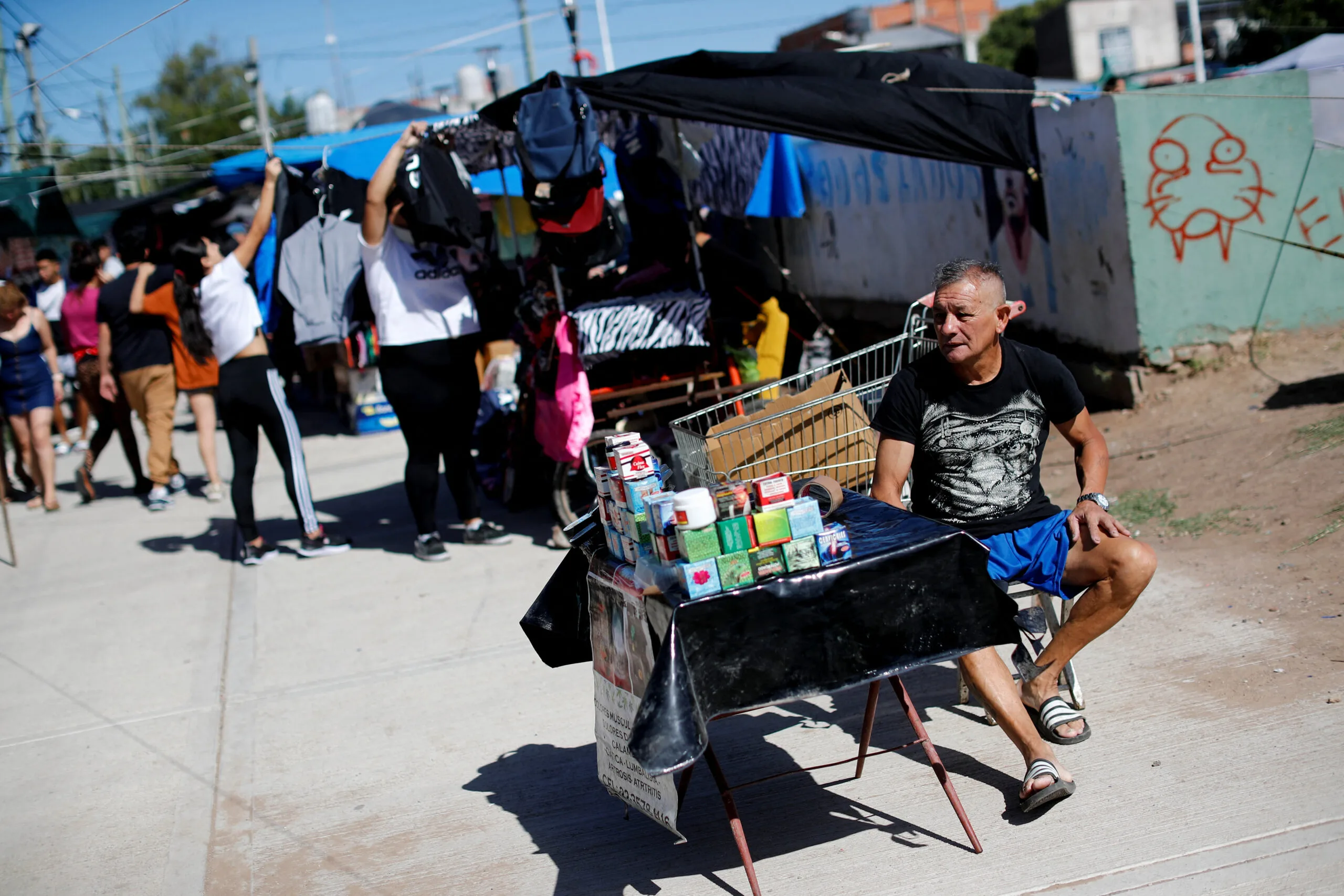
Argentina poverty rate 2026
The official urban poverty rate fell to 38.1% in the first semester of 2026, according to the latest release from the national statistics institute, INDEC. That figure marks a sharp improvement from the 52.9% peak recorded in the first half of 2024, yet it still means four in ten Argentines live below the line.
Extreme poverty — indigence, the inability to cover even a basic food basket — dropped to 8.2%. Across the 31 urban agglomerates INDEC surveys, approximately 2.4 million people remain in severe material deprivation.
The human psychogram of Argentina in 2026 is one of cautious, exhausted relief. Families who spent 2023–2024 sprinting ahead of triple-digit inflation are now buying in bulk again.
But the memory of collapse is raw, and the middle class remains psychologically hollowed out by the experience: statistically above the line, yet emotionally scarred.
Argentina inflation rate July 2026 Milei
President Javier Milei’s signature disinflation program has driven the monthly consumer price index below 2% by mid-2026. The June reading landed at 1.9%, and preliminary high-frequency data tracked by the Central Bank’s Market Expectations Survey (REM) points to a July print around 1.8%.
The mechanics behind the cooling are dramatic: a deep fiscal adjustment that flipped a chronic deficit into consistent primary surpluses, a crawling-peg exchange rate of 1% monthly depreciation, and a sterilisation programme that sopped up excess pesos. The cost, felt across 2024, was a brutal recession that slashed consumption and drove poverty above 50% before the late-2025 recovery began.
For foreign investors, the mood contained in these numbers is one of bewildered optimism. Milei’s administration has delivered the most aggressive fiscal correction in modern Argentine history.
The macro numbers are aligning; the street-level reality — still tough — is starting to catch up.
Argentina inflation rate June 2026
June 2026’s 1.9% monthly CPI print confirmed the tenth consecutive month of sub-3% readings. The core component, which strips out seasonal and regulated prices, ran slightly lower at 1.7%, suggesting underlying price inertia is breaking.
The INDEC release shows food and non-alcoholic beverages — the category that most directly affects the poor — rising just 1.2% in June. That deceleration is mechanically reducing the poverty line, allowing more households to cross back above it.
We have tracked this trajectory from its violent beginnings: when The Rio Times reported July 2024 inflation at 4.0% and the central bank rate at 40%, the descent into single-digit monthly prints felt distant. The central bank has since cut its policy rate to 29% nominal in an environment where year-on-year CPI still runs near 35%.
Argentina inflation rate
The annual inflation rate for the 12 months to June 2026 stood at 35.8%, down from an unimaginable year to mid-2025 when it exceeded 80%. The REM consensus expects the 2026 calendar-year figure to settle at 28.4%, a fraction of the 211.4% recorded in 2023.
Core inflation durability matters here. Services inflation has been stickier than goods, a pattern typical of disinflation programmes where wages slowly recover past purchasing power.
Expats earning in hard currency will feel their purchasing power declining from its absurd 2024 peak, while locals in pesos begin to catch a breath.
The exchange rate is the wild card. The official peso depreciates at a controlled 1% monthly crawl, but the parallel ‘blue’ gap has narrowed to roughly 12%.
A sudden unification or realignment would feed directly into short-term CPI, a risk every business continuity plan should bracket.
What changed in 2026
Several structural shifts converged in 2026. First, the government eliminated the remaining import restrictions, allowing goods to flow and disciplining domestic price-setters through competition.
Second, the soybean harvest rebounded strongly after the 2023 drought, bringing export revenue and relieving the reserve position.
Third — and most consequential for the reader on the ground — the real-wage recovery accelerated. After losing nearly 60% of their dollar-equivalent income between 2020 and 2024, registered private-sector workers regained approximately 18% in real terms over the 12 months to mid-2026.
That shift is lifting consumption and, paradoxically, making Argentina feel more expensive to dollarised visitors than it did a year ago.
Politically, Milei’s coalition passed a second wave of structural reforms in the autumn 2026 legislative session, including labour modernisation measures. The governability story — unthinkable in early 2024 when the president held a tiny minority in Congress — has become a market stabiliser in its own right.
Common mistakes
Assuming the poverty number tells the whole story. INDEC’s line uses a basic-basket methodology.
A family dips below if its income cannot purchase a defined set of calories and services. At 38.1%, millions scraping by just above the line are statistically not poor but live one shock away from destitution.
Conflating CPI with dollarised living costs. A 1.9% monthly peso CPI does not mean dollar costs rose 1.9%.
If the exchange-rate crawl lags domestic inflation, dollar costs climb faster. Expats on USD budgets saw local costs surge in 2025–2026 even as peso inflation eased.
Extrapolating the 2026 trend indefinitely. Argentine stabilisations have a record of exhausting themselves when fiscal fatigue or an external shock hits.
The current programme’s durability hinges on commodity prices and the government’s willingness to maintain a primary surplus into an election year in 2027.
Ignoring provincial variation. Poverty rates range from 25% in parts of Patagonia to over 45% in the northern Gran Resistencia and Concordia agglomerates.
Investors targeting regional consumer markets need to disaggregate the national headline.
Frequently Asked Questions
What is Argentina’s poverty rate in 2026?
Argentina’s official urban poverty rate was 38.1% in the first half of 2026, measured by INDEC using the income-based basic-basket methodology across 31 urban areas.
What is Argentina’s inflation rate for July 2026?
The official July 2026 CPI figure will be published by INDEC in mid-August 2026, but the Central Bank’s REM survey of private consultancies projects a monthly result of approximately 1.8%.
How does Milei’s programme affect poverty and inflation?
The Milei administration’s fiscal-surplus policy and controlled exchange-rate crawl have slashed monthly inflation from 25.5% in December 2023 to below 2% in mid-2026. Poverty spiked to 52.9% during the 2024 recession as social spending was compressed, then fell sharply to 38.1% as real wages recovered and inflation eased.
Sources: INDEC – Incidencia de la pobreza y la indigencia (First Half 2026 official release), BCRA – Relevamiento de Expectativas de Mercado (REM) July 2026, INDEC – Consumer Price Index June 2026
In depth
Read More from The Rio Times
Fresh reporting on this topic, refreshed automatically as new stories are published.
- Jul 31Brazil Sets US$193 Million Santos Container Terminal Auction
- Jul 31Argentina OKs US$9.7 Billion Vicuña Copper Mine in San Juan
- Jul 31South Korea, Chile Agree to Modernize Trade Deal
- Jul 31Milei Capital Markets Reform Opens Argentina to Bonds
- Jul 31Kaiser Codelco Plan: US$2,150 Handout for Chileans
- Jul 31Latin America Sports Daily for Friday, July 31, 2026
- Jul 31Ghana Wants US$700 Million to Restart Its Aluminium Smelter
- Jul 31Latin American Pulse for Friday, July 31, 2026