Argentina and Brazil relaunch relations: announcements, meeting of presidents and joint projects
RIO DE JANEIRO, BRAZIL – There will be announcements of joint works, the presence of officials from the federal cabinet and the neighboring administration, proposals to increase trade, and an imminent meeting between thoroughbred left-winger Alberto Fernández and thoroughbred right-winger Jair Bolsonaro.
But above all, Argentina and Brazil will celebrate today, December 1, the day of friendship between the two countries with a big party at the Argentine embassy in Brasilia, aimed at relaunching bilateral relations.
Ambassador Daniel Scioli prepared for this noon a meeting with the Brazilian government to evoke the beginning of the Mercosur integration process and the appointment of then Presidents Raúl Alfonsín, and José Sarney in Foz do Iguaçu on November 30, 1985.
Read also: Check out our coverage on Argentina
“This is a moment of progress, results, and advances in bilateral relations. Hence, this celebration of the friendship day between both countries is significant”, Scioli told El Cronista when highlighting what will be today’s meeting at the Argentine embassy in Brasilia.
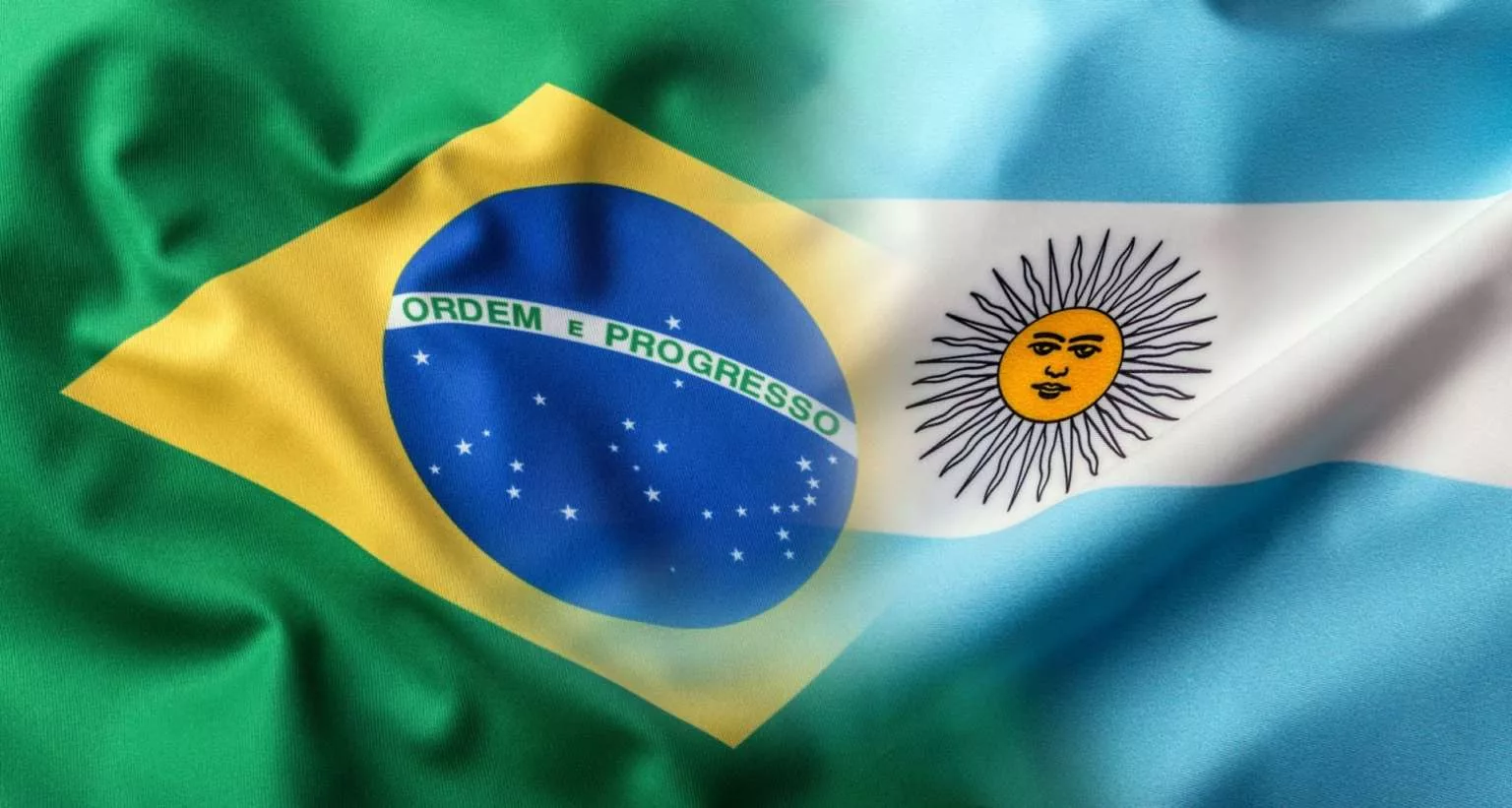
At the Argentine embassy in Brasilia, 400 guests are expected, and President Alberto Fernández will send a video recorded to greet the friendship day between the two countries.
In addition, the Secretary of Strategic Affairs, Gustavo Béliz, will travel especially for this meeting, and the Deputy Chief of Cabinet, Jorge Neme, and the Governor of Chaco, Jorge Capitanich, among other Argentine leaders.
Béliz’s agenda also includes a meeting with the Minister of Economy, Paulo Guedes, the Secretary of Strategic Affairs, and Bolsonaro’s most trusted man, Flavio Viana Rocha. The idea of Argentina and Brazil is undoubtedly to relaunch bilateral relations and advance in a deeper agenda.
Yesterday, Scioli met with Bolsonaro’s Minister of Agriculture, Teresa Cristina. He will announce today that there are no longer phytosanitary obstacles at the borders between both countries and that they will advance in cooperation agreements to boost Mercosur’s agricultural exports.
In addition, Scioli is engaged in coordinating with the Brazilian private sector and the government of Bolsonaro in implementing the project for the construction of a gas pipeline that will go from Vaca Muerta to Brazil to export gas to the neighboring country in a few years.
Alberto Fernández announced last week the construction of the Néstor Kirchner and Transport.Ar Gas Pipeline will go from Vaca Muerta to Buenos Aires with an increase of budget funds for US$400 million to complete the financing of the first stage of the President Néstor Kirchner Gas Pipeline and its complementary works.
And now, on the Brazilian side, the works from Uruguayana to Porto Alegre are being negotiated with private capital. In this way, Argentina will boost gas exports to Brazil in the immediate future.
On the other hand, the relaunching of bilateral relations seeks to encourage Brazilian investments in Argentina and further boost bilateral trade.
Scioli underscored the “good prospects” for trade between the two countries and estimated that export revenues to that destination would be US$12 billion this year. “Brazil became the key Argentine trade partner again; this was consolidating, and there are good prospects ahead”, said the Argentine ambassador.
In October 2021, Argentine exports to Brazil were US$1.2182 billion, and Brazilian exports were US$1.1258 million, with an Argentine surplus balance of US$92.4 million. Thus, Argentine exports grew by 50.5% with respect to the same month of 2020, while Brazilian exports increased by 38%.
On the political level, beyond ideological differences, Scioli is finalizing the details. In addition to the summit of Mercosur presidents to be held in Brasilia on December 16 and 17, there will be a meeting between Bolsonaro and Alberto Fernández alone.
At that Mercosur summit, the governments of Argentina and Brazil will propose to Uruguay that a Mercosur-China trade agreement outside the bloc is unfeasible and that the reduction of the standard external tariff by 10%, as already agreed, be accepted.
More: Argentina news in English, every day from The Rio Times.
This article was produced by The Rio Times’ automated newsroom system. How we use AI · Report an error · Editorial responsibility: Matthias Camenzind, Editor-in-Chief