Amazonas State Faces Health System Collapse Due to Covid-19
SÃO PAULO, BRAZIL – The state of Amazonas in the Northern region of Brazil is expected to be the first state in Brazil to face a health system collapse because of the new coronavirus. The epicenter of the crisis will be in the capital Manaus; state officials say that the collapse could occur as early as next Tuesday (April 14th). According to the mayor of Amazonas’ capital Manaus, however, the collapse has already occurred.

“It (hospital network) has already collapsed, it is no longer able to fulfill the demand of treatment, against the coronavirus. Elective surgeries in all hospitals, those who have an injured knee or shoulder, who have problems of the heart, of cancer, are being postponed due to this fight of all against the coronavirus “, said Mayor Arthur Virgilio Neto in his social networks.
Manaus concentrates more than half of the 4.2 million inhabitants of the state, which has over 60 municipalities, many of which are inhabited by indigenous populations.
On Monday (April 6th), approximately 95 percent of the 293 places available in ICUs of public and private hospitals were already occupied, according Amazonas health officials.
On Friday (April 10th), Virgilio Neto said that officials were also seeing a collapse in its mortuary system. “Burials are growing exponentially. Manaus is going into mortuary chaos, there is no more space,” he said. Earlier in the day, one of Manaus’ main hospitals, seen as a reference for Covid-19 treatment in the capital, announced it had reached full capacity.
For Mario Adolfo Filho, journalist and executive editor of the Manaus news website Toda Hora, part of the problem is the state’s location; the other is the fact that President Jair Bolsonaro is downplaying the importance of social distancing.
“Manaus is the most important capital in the North. Here we have an important Industrial pole with multinational companies. Many Asian companies. In addition, we have almost daily flights to the United States and Panama. We are closer to North America than most states in Brazil. A lot of people go to the USA many times a year; our first cases were from abroad and from Sao Paulo,” Adolfo Filho told The Rio Times in an online interview.
“Even with the daily alerts, social isolation in the outskirts of Manaus is not taken seriously. Manaus is a city that gave Bolsonaro an significant margin of votes. So, unfortunately his word is worth a lot here. If he tells people to keep going (outside), people will keep going (outside),” added the journalist.
According to Adolfo Filho, state officials, although allies of President Bolsonaro’s government, have been urging residents to remain indoors. “We have an upward curve of cases and we have not yet reached the second half of April and the first of May, which is when we estimate the largest number of cases,” said executive director of the Amazonas Health Agency, Rosemary da Costa Pinto.
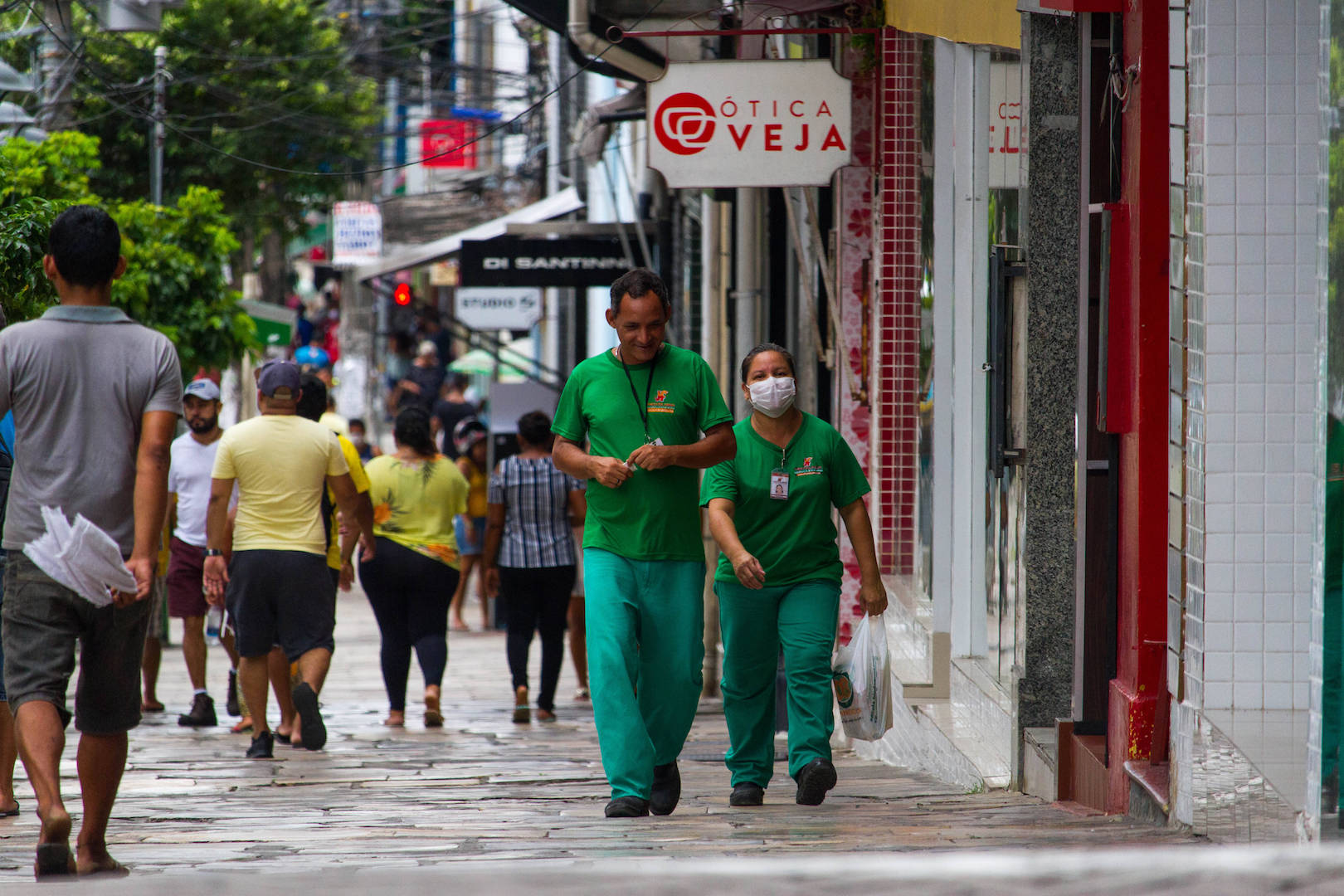
As in all of Brazil, in Amazonas there is also widespread underreporting of cases of the new coronavirus. The state performs tests only on risk groups, health professionals and patients with more severe symptoms of covid-19. On Wednesday (April 8th) a shipment was received of 10,000 rapid tests for the Covid-19, to be used by health professionals and critically ill patients, ensuring faster isolation and intervention measures.
Another important concern for authorities in the Amazon state is with its indigenous population. Amazonas state senator, Eduardo Braga, for example is pushing for the construction of a field hospital in Manaus, to house exclusively indigenous people diagnosed with Covid-19.
“It is an important way to offer differentiated and specialized attention to our indigenous population. If this works in Manaus, we want to extend it to the Alto Solimões and Alto Rio Negro regions, which, together with Manaus, concentrate the largest indigenous populations in Brazil,” said Braga in his social media.
A little after 7:30pm on Friday (April 10th), the official number of contaminated people living in the state had totaled 981 persons, with 50 deaths. This means that 23.31 persons per 100,000 has been infected, the highest percentage rate in the country. The national average rate is 9.38 per 100,000 people.
More: Brazil news in English, every day from The Rio Times.
Editorial responsibility: Matthias Camenzind, Editor-in-Chief · Editorial standards · Report an error