Amazon Rainforest Degradation Reaches 15-Year High in 2024
The Amazon rainforest is facing its worst degradation in 15 years. From January to September 2024, 26,246 square kilometers of forest were affected, equivalent to 17 São Paulo cities.
Imazon NGO’s Deforestation Alert System revealed these alarming figures. Compared to the same period in 2023, this year’s increase is a staggering 1,265%.
Degradation differs from deforestation. While deforestation involves complete tree removal, degradation refers to damage from fires and logging.
Degraded areas can become carbon emitters rather than absorbers. Although deforestation decreased in President Lula’s first year, forest degradation skyrocketed.
In addition, satellite data showed 104,600 heat spots in the Amazon from January to September 2024, up from 57,900 in 2023.
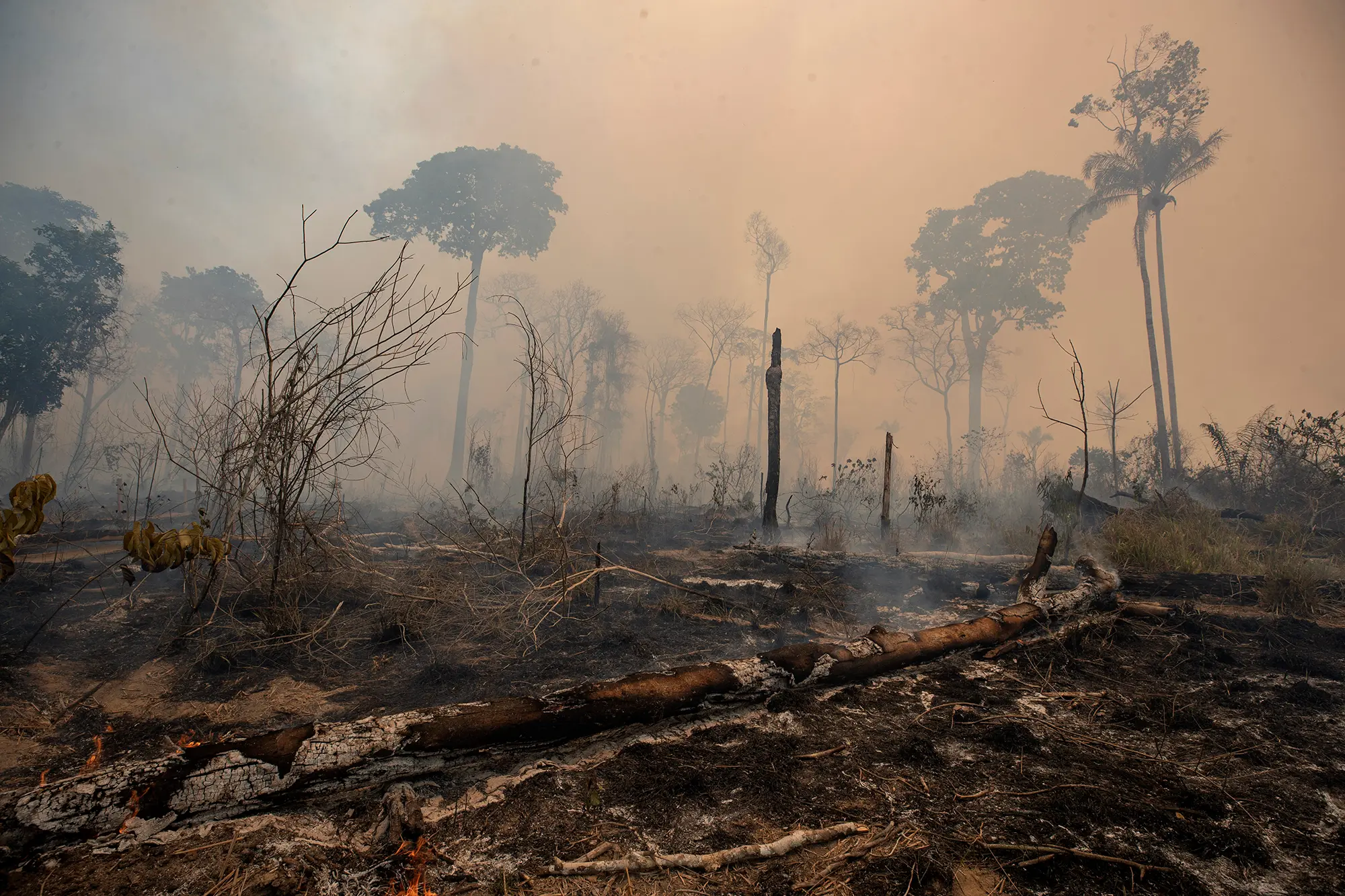
2024 brought another year of climate crisis and extreme drought to the Amazon. Rivers hit record lows, and smoke waves and scarce rainfall added to the region’s woes.
September saw a massive spike in degraded areas, with 20,238 square kilometers affected that month alone. Imazon directly links this degradation to fires.
Significant Degradation in Pará State
Pará State accounts for over half of September’s degradation. Seven of the ten municipalities with the highest degradation rates are in Pará. São Félix do Xingu tops the list, followed by Ourilândia do Norte and Novo Progresso.
These areas struggle with land grabbing, deforestation, fires, and illegal gold mining. Conservation units and indigenous lands in Pará also suffered significant degradation.
After Pará (57%), Mato Grosso (25%), Rondônia (10%), and Amazonas (7%) follow in the September degradation rankings. Imazon’s survey also shows an increase in Amazon deforestation over the past four months.
September saw 547 square kilometers deforested, slightly higher than September 2023. From January to September, 3,071 square kilometers of vegetation were lost.
The main deforestation indicator from INPE’s PRODES program shows a 21.8% decrease between August 2022 and July 2023 compared to the previous period.
As of publication, neither the Ministry of Environment and Climate Change nor the Pará government had responded to Imazon’s data. The situation calls for urgent action to protect the Amazon’s vital ecosystems.
This article was produced by The Rio Times’ automated newsroom system. How we use AI · Report an error · Editorial responsibility: Matthias Camenzind, Editor-in-Chief
Read More from The Rio Times