Africa Intelligence Brief — Monday, September 28, 2026
Executive Summary
Africa Intelligence Brief for September 28: Sudan's exodus into Chad runs at twenty times the old rate, Congo's Ebola cases pass 8,000, a South African
Africa Intelligence Brief — Monday, 28 September 2026
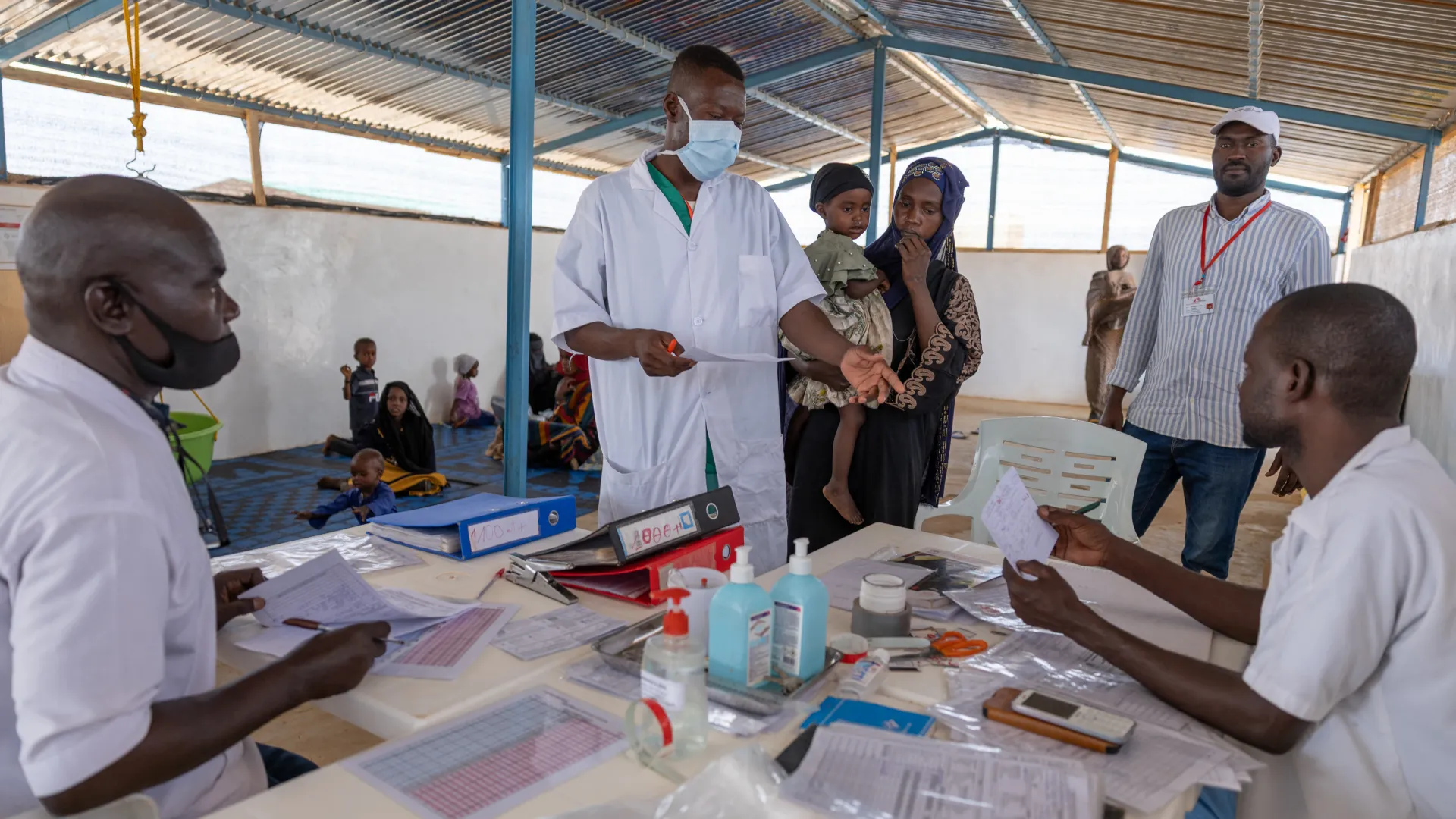
Africa’s temper this Monday is alarm that has stopped rising because it has nowhere left to go. The continent’s largest stories are the same ones as last week — a war, an epidemic, a massacre — and each of them got worse over the weekend by a measurable amount.
The register is exhaustion with arithmetic. The United Nations refugee agency counts the people crossing into Chad, the World Health Organization counts the sick in Congo, and the South African police count the dead from a single tavern, and in each case the number is larger than it was on Friday.
Sudan is the sharpest case because its war has stopped being containable. The flow of people into eastern Chad is running at twenty times its earlier rate, and the agency that feeds them says its money is running out at the same time.
Congo’s epidemic crossed a line of its own. Cases of Ebola passed eight thousand over the weekend, according to Africanews, four days after the government began describing the outbreak as controlled.
What steadies the region is small and procedural. São Tomé and Príncipe held an election on Sunday that nobody tried to stop, and its young voters told reporters exactly what they wanted: work, and a reason to stay.
Key Facts
—Chad’s twenty-fold border. More than 400 Sudanese a day crossed into eastern Chad over the past week, about twenty times the earlier rate, the United Nations refugee agency said on 25 September, as Reuters reported that the exodus is accelerating while aid money runs dry.
—Ebola past eight thousand. Cases in Congo’s Bundibugyo outbreak crossed 8,000 over the weekend, Africanews reported on 28 September. The World Health Organization’s report of 25 September counted 7,890 confirmed cases and 3,799 deaths as of 23 September, across 63 health zones in seven provinces.
—The tavern toll. The death toll from a South African tavern shooting rose to 18 after one more victim died of his wounds, Reuters reported on 28 September.
—São Tomé votes. The island state held parliamentary, regional and local elections on Sunday 27 September, with young voters telling Africanews they want “jobs and action” as their generation emigrates.
—Drones over North Kordofan. The Rapid Support Forces intensified deadly drone attacks on government-held towns in North Kordofan last week, disrupting ordinary life and creating what Reuters called “a deep sense of insecurity” among residents.
—The Kenge crash. Seventeen people died when an aircraft carrying two Congolese generals came down on a residential plot at Kenge on Friday 25 September, Kwango’s deputy governor said.
—Tigray dark again. Telecoms networks were disrupted in Tigray as Ethiopia’s military cited major losses to rebels, Reuters reported on 26 September, reviving fears of a renewed blackout and blockade in the north.
Adré Counts What N’Djamena Cannot Absorb
Sudan’s war has entered the phase where its measure is taken at someone else’s border. The United Nations refugee agency said on 25 September that more than four hundred Sudanese a day crossed into eastern Chad over the past week, about twenty times the rate it had been recording.
The acceleration has a cause, and it is not a battle. Reuters’s account of the surge, published on 25 September, paired the twenty-fold increase with the reason for it: the aid that kept people in place inside Sudan is running dry.
That combination is the week’s bleakest mechanism. Families who stayed through two years of fighting because a food ration anchored them are now walking, because the ration stopped before the shooting did.
The war is also reaching for new ground rather than settling on old lines. The Rapid Support Forces intensified drone attacks on government-held towns in North Kordofan last week, striking a state that had been a refuge from the fighting further west.
Reuters described the effect on the towns’ residents as “a deep sense of insecurity”, the kind of phrase a wire service reaches for when a population has stopped sleeping. Markets and transport in the state were disrupted, and the drones arrived at hours meant to be felt.
Chad is the country paying for a war it is not fighting. Eastern Chad already held one of Africa’s largest refugee populations before this month, and the camps’ own food pipelines are drawn from the same depleted budgets that just failed inside Sudan.
The political register in N’Djamena is quiet alarm. Chad’s government changed its foreign minister this month, and its public line remains welcome-the-stranger, but its officials have spent September asking donors, in increasingly plain language, where the money is.
For a reader outside the region, the number to hold is the multiplier, not the total. A twenty-fold rise in a week is not a trend; it is a break, and breaks at borders are how regional wars announce themselves before anyone declares them.
Kinshasa’s Count Passes Eight Thousand
Congo’s Ebola epidemic crossed eight thousand cases over the weekend, Africanews reported on 28 September. The figure matters because of what the government said four days before it.
Kinshasa has called the outbreak under control since 10 September. The World Health Organization’s own report of 25 September counted 7,890 confirmed cases and 3,799 deaths as of 23 September, a fatality ratio of 48.1 per cent from the Bundibugyo strain.
The geography is still widening. The same WHO report said the outbreak had spread to two additional health zones, bringing the total affected to 63 across seven provinces, including Sud-Ubangi and Haut-Uélé.
The response is thinner than the map. The Africa Centres for Disease Control said this month that contact tracing was running “far short” of what containment requires, and the UN described the epidemic on 15 September as still huge and growing.
A second virus has arrived to keep the first one company. An mpox case was confirmed in the northeastern city at the centre of the Ebola outbreak, Reuters reported on 26 September, putting two declared emergencies into the same under-equipped wards.
Friday added a grief of a different kind. Seventeen people died when an aircraft carrying two Congolese generals came down on a residential plot at Kenge, in Kwango province, on 25 September, the province’s deputy governor said — a loss of senior officers in a week when the state could least spare them.
The register in Kinshasa is stubborn reassurance, and it is wearing thin. Ministers repeat that the peak has passed; the count, which is the only witness without an interest, keeps climbing.
A Tavern In South Africa Buries Its Eighteenth
South Africa’s weekend number came from a single room. The death toll from a mass shooting at a tavern rose to 18 after one more victim died of his wounds, Reuters reported on 28 September.
The story lands in a country that has learned to read tavern shootings as a genre rather than an event. South Africa records mass killings at drinking places with a regularity that has its own grim grammar: a township, a Saturday night, men with rifles, a count that rises for days.
The public argument is no longer about shock. It is about the gap between a state that can stage a G20 and a state that cannot keep a shebeen safe, and the rising eighteenth death is being read this morning as one more entry in that ledger.
The political class’s response has been procedural. Condemnations were issued, a manhunt was announced, and the opposition asked the question it asks each time: how many rifles are circulating, and whose job was it to count them.
What gives the story its weight this Monday is its company. It arrives in the same news week as a central bank rate cut meant to signal normality, and a foreign minister’s statement that South Africa remains “open to talks with the US” — the apparatus of a functioning state, photographed beside its opposite.

São Tomé Votes For A Reason To Stay
The region’s one uncomplicated civic act of the weekend happened on two small islands. São Tomé and Príncipe held parliamentary, regional and local elections on Sunday 27 September, in a vote nobody tried to disrupt and few outside Lusophone Africa watched.
The electorate’s own framing was blunt. Africanews reported from the vote under the line “São Tomé voters demand jobs and action as young people leave”, and the emigration of the young was the campaign’s real subject under every manifesto.
The islands are a useful control case for the continent’s larger argument. They have no war, no epidemic and no insurgency — only the question of whether a small democracy can give its youth a reason to build at home rather than in Lisbon or Luanda.
Results were still being tallied this morning. Whatever the seat count, the vote’s meaning was set by its electorate: a generation that stayed to vote on Sunday is a generation asking to be given a reason to stay on Monday.
Tigray Goes Dark For The Second Time
Ethiopia’s north spent the weekend under a familiar silence. Telecoms networks were disrupted in Tigray as the federal military cited major losses to rebels, Reuters reported on 26 September, and regional roundups carried reports of renewed internet restrictions after fighting broke out.
A communications cut in Tigray is never read as a technical event. The region’s memory of the 2020–22 war is stored in its phone lines: the blackout then preceded the worst of it, and every interruption since is heard as a first note.
Addis Ababa’s framing is that it is containing a rebellion. The military’s own admission of major losses, unusual for an institution that prefers silence to candour, suggests the containment is costing more than the capital’s account of it.
The fear in the region, and in the diaspora that phones home nightly, is blockade logic returning with the blackout. Markets, banks and clinics in Tigray run on connectivity; cutting it is an economic act as much as a military one.
Dakar’s Quarrel Moves To The Budget
Senegal’s political rupture, last week’s lead, has moved from the television studio to the ledger. President Bassirou Diomaye Faye’s New York interview explaining his break with Ousmane Sonko is now background; the foreground is a corrective finance bill waiting in an assembly that Sonko chairs.
The bill is the first test of whether the rupture governs or merely entertains. Mr Faye said he expects deputies to pass it, and declined to rule out dissolving the assembly if they do not — a constitutional power he described as a matter of “necessity or context”.
The register in Dakar this Monday is factional vigilance. Pastef’s refusal to join the government of the technocrat prime minister, Ahmadou Al Aminou Lô, means the country is run by a cabinet and a parliament that answer to men who no longer speak.
Abuja Buys Itself A Reason To Believe
Nigeria’s week closed on the rarest of its story types: an investment decision in its favour. Amni International and TotalEnergies approved an $800 million offshore gas project, a final investment decision of a size Nigeria has spent years asking the market for.
The government will read it as vindication of its reset: a central bank that cut its rate from 26.5 to 23 per cent and called the cut an operational reset, a naira allowed to find its level, a fuel subsidy abolished and survived.
The public will read it more slowly. The Nigerian street’s question about every announced billion is the one it has learned from experience: where does it land, and on whom. Gas revenue is a state story; bread is a household one, and the two have not met in years.
The honest register is therefore split. Abuja’s business pages are genuinely encouraged, and its street is genuinely unmoved, and both are rational responses to the same press release.
Tripoli’s Water Recedes, Its Question Does Not
Libya’s storm floods are draining into the argument Libya always has after water. The prime minister ordered rescue operations as the storms hit, and the affected towns are now asking the question Derna burned into the national memory in 2023: why is the state always surprised by weather.
The register is fury with a file attached. Drainage, dam maintenance and emergency coordination are documented failures with named officials, which is why every Libyan flood becomes a prosecution argument within days of the water going down.
What This Means From Latin America
The African numbers this Monday are Latin America’s business in three direct ways. The first is epidemiological: Brazil’s health surveillance keeps an Africa watch-list for exactly this shape of outbreak, and a Bundibugyo epidemic crossing eight thousand cases with contact tracing “far short” is the scenario Fiocruz’s modellers run their drills on.
The second is commercial. TotalEnergies’ $800 million Nigerian approval is the same capital pool that Latin America’s offshore frontier — Guyana’s Stabroek block, Brazil’s Foz do Amazonas, Suriname’s Block 58 — competes for. Every African final investment decision is a reminder that frontier capital has choices, and that regulatory delay in Belém or Georgetown is priced against decisions like this one.
The third is diplomatic, and Brasília will not miss it. São Tomé and Príncipe is a CPLP member — the Lusophone club is the one multilateral table where Brazil sits beside Africa as a peer — and an election about youth emigration is a subject Brazil’s foreign ministry treats as its own neighbourhood business.
The comparison is set out at greater length elsewhere. The dossier carries the leader, the country health check and the outcome table with its Latin America column — open the Africa Intelligence Dossier.
There is a market contrast worth holding beside it. Brazil’s central bank cut the Selic by a quarter point on 16 September and signalled more, the same direction as Nigeria’s cut from 26.5 to 23 per cent — two of the world’s highest-rate economies exhaling at the same time, for different reasons, watched by the same investors.
What We Are Watching
- Monday 28 September: the General Assembly’s high-level week closes — The speeches end in New York today, and with them the window in which African delegations could make their case in the same room as the Security Council’s permanent five. The African seat bid now returns to procedural channels.
- This week: São Tomé’s seat count — Final results from Sunday’s parliamentary, regional and local elections are expected within days. The margin decides whether the next government can pass a jobs budget or must negotiate one.
- Wednesday 30 September: the WHO’s next Ebola situation report — The agency’s weekly report will show whether the weekend’s crossing of eight thousand cases was an acceleration or an accounting catch-up. The contact-tracing gap is the number inside the number to watch.
- Thursday 1 October: Nigeria’s transport fare deadline — State governors agreed on 27 August to deliver measurable cuts in transport fares by this date. The day arrives as the government asks the street to believe its $800 million week.
- Through the week: Tigray’s phone lines — Whether the weekend’s telecom disruption in Tigray is restored within days or settles into a blackout is the earliest signal of whether the north is heading back toward blockade.
- Ongoing: the Chadian border at Adré — The UN refugee agency’s daily crossing figure, over 400 a day at last count, is the live measure of how fast Sudan is emptying. A second consecutive week at twenty times the old rate would force an international response that has so far been only rhetorical.
Frequently Asked Questions
Why are Sudanese fleeing to Chad now, two years into the war?
The immediate cause is food aid running dry inside Sudan rather than any single battle. Reuters reported on 25 September that crossings into eastern Chad surged to more than 400 people a day, about twenty times the earlier rate, as relief supplies ran dry. Families who had stayed because a ration anchored them are now walking. The United Nations refugee agency published the crossing figures on 25 September.
How bad is Congo’s Ebola outbreak compared with earlier ones?
Africanews reported on 28 September that cases had passed 8,000. The World Health Organization’s report of 25 September counted 7,890 confirmed cases and 3,799 deaths as of 23 September, a fatality ratio of 48.1 per cent, across 63 health zones in seven provinces. The Bundibugyo strain has no licensed vaccine or treatment of its own, and the Africa CDC says contact tracing is running far short of containment needs.
Was the Kenge air crash connected to the Ebola response?
No link has been reported. The aircraft that came down on a residential plot at Kenge on Friday 25 September was carrying two Congolese generals, and seventeen people died, according to Kwango’s deputy governor. The crash happened in Kwango province, in the country’s southwest, far from the northeastern outbreak zone.
Did São Tomé and Príncipe’s election produce a result yet?
The vote was held on Sunday 27 September, covering parliament, regional assemblies and local councils, and counting continued into Monday. Africanews reported from the polls that young voters framed the election around jobs and emigration — their reported demand was “jobs and action” as their generation leaves the islands. Final seat totals were still being tallied when this brief was written.
This article was produced by The Rio Times’ automated newsroom system. How we use AI · Report an error
LatAm Markets: Live Signals → — real-time movers, turnover leaders and FX across Latin America.