IBOV 175,135.41 ▲ 0.31% IPSA 11,470.79 ▲ 0.89% IPC MEX 66,090.98 ▼ 0.15% MERVAL 3,001,209 ▼ 0.79% COLCAP 2,489.80 ▼ 0.59% BVL PERÚ 60,629.82 ▲ 0.25% USD/BRL5.16▲ 0.23% USD/MXN16.97▼ 0.06% USD/CLP926.00▲ 0.47% USD/COP3,150▲ 1.82% USD/PEN3.35▼ 0.07% USD/ARS1,512▼ 0.15% USD/UYU40.25▲ 1.53% USD/PYG5,905▲ 0.48% USD/BOB11.65▲ 2.81% USD/DOP58.25▲ 0.75% USD/CRC448.38▲ 1.62% USD/GTQ7.63▲ 2.37% USD/HNL26.83▲ 1.77% USD/NIO36.62▼ 0.02% USD/VES789.69▼ 0.08% USD/PAB1.00— 0.00% USD/BZD2.00— 0.00% USD/JMD 157.28 — 0.00% USD/TTD6.73▲ 1.14% EUR/BRL6.01▲ 0.17% BRENT 88.88 ▼ 0.03% WTI 83.11 ▼ 0.11% IRON ORE 161.91 — — COPPER 6.61 ▲ 0.03% GOLD 4,461 ▲ 1.78% SILVER 65.59 ▲ 1.26% SOY 1,184 ▲ 3.20% CORN 480.50 ▲ 10.02% WHEAT 655.00 ▲ 3.93% COFFEE 317.25 ▼ 5.51% SUGAR 16.43 ▼ 1.79% ORANGE JUICE 138.55 ▼ 0.47% COTTON 85.03 ▲ 2.33% COCOA 5,719 ▲ 3.18% BEEF 223.60 ▼ 3.93% CATTLE 339.10 ▼ 3.16% LITHIUM 75.20 ▲ 1.47% PETR4 41.64 ▼ 0.05% VALE3 72.97 ▲ 0.83% ITUB4 38.60 ▼ 1.03% BBDC4 16.85 ▲ 0.36% ABEV3 14.89 ▼ 0.80% BBAS3 19.37 ▲ 0.47% B3SA3 14.26 ▼ 0.21% WEGE3 47.59 ▲ 0.49% PRIO3 59.14 ▼ 0.19% SUZB3 41.33 ▲ 2.35% RENT3 34.68 ▼ 0.09% AZZA3 15.89 ▼ 2.63% CSAN3 3.22 ▼ 1.83% RAIZ4 0.25 — 0.00% PCAR3 2.75 ▼ 0.36% GMAT3 3.65 ▼ 1.08% PSSA3 48.13 ▼ 0.54% CVCB3 1.33 ▼ 2.92% POSI3 3.36 ▲ 2.44% SLCE3 13.34 ▲ 0.30% NATU3 8.14 ▼ 0.73% IBOV 175,135.41 ▲ 0.31% IPSA 11,470.79 ▲ 0.89% IPC MEX 66,090.98 ▼ 0.15% MERVAL 3,001,209 ▼ 0.79% COLCAP 2,489.80 ▼ 0.59% BVL PERÚ 60,629.82 ▲ 0.25% USD/BRL 5.16 ▲ 0.01% USD/MXN 17.06 ▼ 0.24% USD/CLP 913.98 ▲ 0.04% USD/COP 3,140 ▲ 0.03% USD/PEN 3.36 ▼ 0.66% USD/ARS 1,493 ▲ 0.10% USD/UYU 40.27 ▲ 1.24% USD/PYG 5,939 ▲ 1.68% USD/BOB 11.64 ▼ 0.76% USD/DOP 58.34 ▲ 1.25% USD/CRC 445.92 ▲ 0.89% USD/GTQ 7.62 ▲ 2.21% USD/HNL 26.79 ▲ 1.57% USD/NIO 36.62 ▲ 0.69% USD/VES 762.44 ▼ 0.13% USD/PAB 1.00 — 0.00% USD/BZD 2.00 — 0.00% USD/JMD 157.28 — 0.00% USD/TTD 6.70 ▲ 0.61% EUR/BRL 5.95 ▲ 1.01% BRENT 88.88 ▼ 0.03% WTI 83.11 ▼ 0.11% IRON ORE 161.91 — — COPPER 6.61 ▲ 0.03% GOLD 4,461 ▲ 1.78% SILVER 65.59 ▲ 1.26% SOY 1,184 ▲ 3.20% CORN 480.50 ▲ 10.02% WHEAT 655.00 ▲ 3.93% COFFEE 317.25 ▼ 5.51% SUGAR 16.43 ▼ 1.79% ORANGE JUICE 138.55 ▼ 0.47% COTTON 85.03 ▲ 2.33% COCOA 5,719 ▲ 3.18% BEEF 223.60 ▼ 3.93% CATTLE 339.10 ▼ 3.16% LITHIUM 75.20 ▲ 1.47% PETR4 41.64 ▼ 0.05% VALE3 72.97 ▲ 0.83% ITUB4 38.60 ▼ 1.03% BBDC4 16.85 ▲ 0.36% ABEV3 14.89 ▼ 0.80% BBAS3 19.37 ▲ 0.47% B3SA3 14.26 ▼ 0.21% WEGE3 47.59 ▲ 0.49% PRIO3 59.14 ▼ 0.19% SUZB3 41.33 ▲ 2.35% RENT3 34.68 ▼ 0.09% AZZA3 15.89 ▼ 2.63% CSAN3 3.22 ▼ 1.83% RAIZ4 0.25 — 0.00% PCAR3 2.75 ▼ 0.36% GMAT3 3.65 ▼ 1.08% PSSA3 48.13 ▼ 0.54% CVCB3 1.33 ▼ 2.92% POSI3 3.36 ▲ 2.44% SLCE3 13.34 ▲ 0.30% NATU3 8.14 ▼ 0.73%
since 2009
Friday, August 28, 2026

Activists in the U.S. develop ‘off-grid’ text messaging for autonomous communities

By · November 11, 2021 · 2 min read

Daily Brief

The morning intel from across Latin America. Free.

By subscribing you agree to our privacy policy. We never share your email.

RIO DE JANEIRO, BRAZIL – Internet and cellular networks are robust and widespread, but they cannot be relied upon. When we need it most, access to the Internet and telephone can quickly be interrupted by natural disasters or government intervention. The risk of being cut off from essential communications poses a threat to the safety and efficiency of communities.

The authors of the Mycelium Mesh Project want to create a mesh network that is easy to install after a possible disruption of Internet service and even during a power outage, preparing for when the government or a disaster disrupts network coverage.

Since 2019, 45 countries have shut down the internet 239 times, according to the internet research firm Top10VPN.

Mesh networks, a form of intranet distributed across various nodes rather than a central internet provider, have the potential to decrease our collective reliance on telecommunication conglomerates.

Nonprofits, like NYC Mesh, are increasingly offering relatively affordable internet alternatives by installing mesh nodes at people’s homes, which then connect to “supernodes” and the Internet at large. One such network was set up at an encampment outside city hall in New York City during the height of last summer’s protests against police violence.

These nodes can be configured based on low-cost and locally available components. The idea is that these transmitting devices can be quickly installed by placing them in abandoned buildings, trees, and lampposts.

During the first test, which took place in Atlanta in the U.S. state of Georgia, the group successfully exchanged text messages with devices up to 42 kilometers away. This was done using nodes powered by the batteries of disposable vaporizers.

Currently, project participants are looking for C++ programmers and mobile application developers to work on essential features of the future network, such as traffic encryption.

They note that it is a nonprofit initiative based on an open-source software model to encourage collaboration.
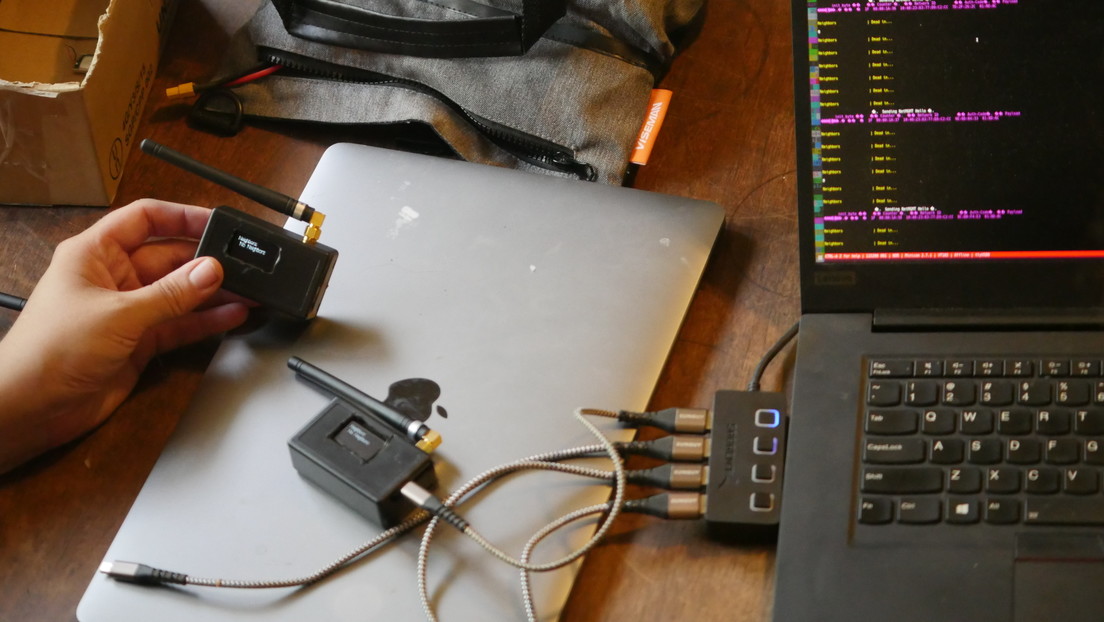
This is an off-grid radio network for digital messaging in a region or metropolitan area using LoRa transceivers and ESP32 microcontrollers. (Photo internet reproduction)
One-stop reference
Company Intelligence
Every listed company in Latin America — financials, ownership and structure for 1,450+ companies across 26 exchanges, in one place.
Browse the directory →
RT
Ask Rio Times
17 years of Latin America reporting, on demand.
Open the full Ask Rio Times →

HERE’S HOW IT WORKS

An off-grid radio network for digital messaging in a region or metropolitan area using LoRa transceivers and ESP32 microcontrollers. The network consists of solar-powered relay nodes placed in public places and high-altitude locations.

People carry peer nodes with them or keep them in a building, house, or vehicle, through which they can send and receive messages using their phone. Mycelium works entirely independently of the power grid and operates even when there is no cell phone, SMS, Internet, or even electricity.

A mesh network is a local network topology in which the infrastructure nodes connect directly, dynamically, and non-hierarchically to as many other nodes as possible and cooperate to efficiently route data from/to clients.

This lack of dependency on one node allows for every node to participate in the relay of information. Mesh networks dynamically self-organize and self-configure, which can reduce installation overhead.

Join us on Telegram: t.me/theriotimes

This article was produced by The Rio Times’ automated newsroom system. How we use AI · Report an error

Read More from The Rio Times

The Rio Times · Power Map
See who really holds power in Latin America
Click to open the Power Map

Rotate for Best Experience

This report is optimized for landscape viewing. Rotate your phone for the full experience.