Latin America crypto shift: stablecoins surge as Bitcoin dips
Key Facts
- Bitcoin softened marginally closing at 64,978 $ with a day-on-day move of -0.10% [board]
- Ethereum eased in sympathy ending the latest settled session at 1,872 $ with a -0.29% daily change [board]
- Solana underperformed the majors finishing at 75.86 $ on a -2.63% day-on-day move in the last recorded session [board]
- XRP extended its recent weakness settling at 1.1069 $ with a -3.04% daily change in the latest session [board]
- Brazil’s crypto use is tilting toward day-to-day payments with retail users relying on dollar-linked stablecoins to hedge the local currency and move money across borders [fact, see source URL below]
- Argentina’s savers are turning to digital dollars using stablecoins as a parallel store of value and remittance rail amid persistent inflation and capital controls [fact, see source URL below]
Today’s Focus
Bitcoin slipped slightly as traders digested a mix of softer risk appetite and ongoing regulatory uncertainty, leaving the broader market in a cautious mood rather than outright panic.
Major cryptocurrencies moved lower in tandem, with more volatile names such as Solana and XRP registering larger percentage declines that underscored investors’ preference for safer, more liquid tokens.
For Latin America, the price board matters less than the underlying shift toward using crypto rails for payments, remittances and savings, especially via dollar-linked stablecoins rather than volatile coins like Bitcoin.
Brazil, Argentina and El Salvador each illustrate different paths: from Brazil’s regulated payments experiments to Argentina’s informal use of digital dollars and El Salvador’s national Bitcoin bet, the region’s story is about infrastructure and confidence as much as prices.
What matters today. The key for readers is whether price volatility pushes Latin American users further into stablecoins and practical crypto use, or back toward traditional banking, making user behavior rather than headline prices the variable to watch.
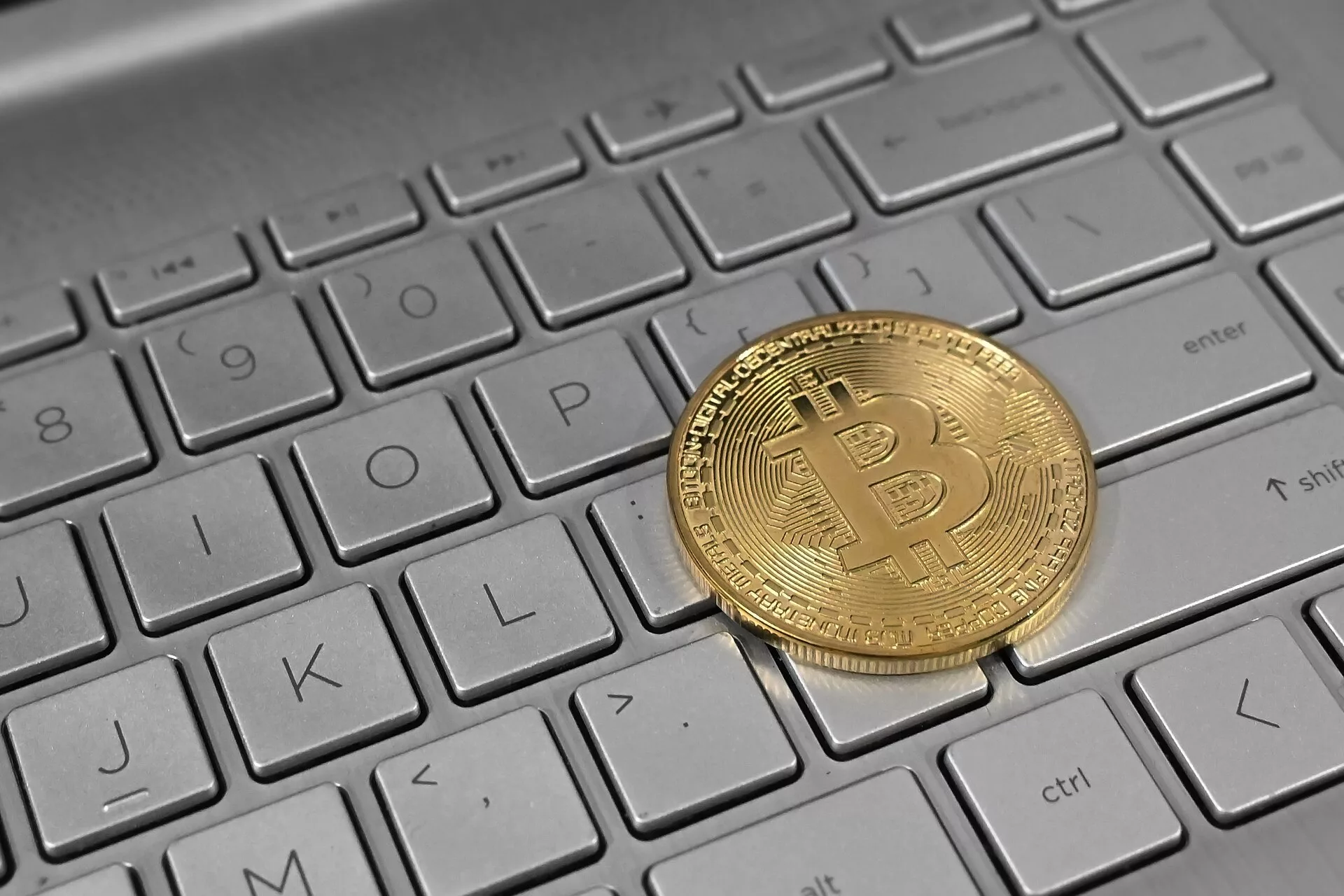
01 The session in one read
Bitcoin spent the latest settled session drifting lower rather than breaking out, closing at 64,978 $ on a day-on-day move of -0.10%, a pattern consistent with a market consolidating after strong prior gains rather than capitulating. Traders and analysts pointed to a mix of global risk-off cues, lingering regulatory and policy uncertainty in major economies, and profit-taking after earlier advances as reasons for the gentle pullback, leaving sentiment cautious but far from the panic seen in past crypto downturns.
In this environment, investors appeared more willing to trim risk than to abandon the asset class, rotating within crypto rather than exiting entirely, which helps explain why the price action was modest and correlated across major names instead of showing a single token in crisis. That kind of synchronized drift is typical of sessions in which macro signals, such as interest rate expectations or regulatory headlines, matter more than coin-specific news.
The latest session’s modest declines across Bitcoin and major altcoins point more to consolidation than a decisive change in trend, suggesting traders are still testing how far they can push risk after a powerful multi-year rally and tightening global financial conditions. For Latin America, the more telling development is that everyday users increasingly treat volatile coins as speculative assets and stablecoins as working money, meaning the true health of the regional crypto story will be measured by transaction volumes in remittances, e-commerce and savings flows rather than spot prices, with stablecoin adoption the variable to watch.
02 The board
The live price board for the latest settled session shows Bitcoin at 64,978 $ with a -0.10% day-on-day change, a small move that nonetheless set the tone for the wider market as traders tested how much risk they wanted to retain into the weekend [board]. Ethereum followed the same gentle downward path, closing at 1,872 $ on a -0.29% daily move that reflected its role as both a core asset and the backbone of a large share of decentralized finance and stablecoin infrastructure [board].
More volatile names painted a slightly sharper picture of risk sentiment, with Solana ending its last recorded session at 75.86 $ on a -2.63% day-on-day move and XRP settling at 1.1069 $ after a -3.04% daily change [board]. Such moves are typical when investors trim exposure to higher-beta tokens first, keeping more liquid and widely held coins relatively steadier; for foreign readers, this means that the market is adjusting risk rather than undergoing a structural shock, even though the percentage swings in altcoins look more dramatic on the screen.
| Asset | Level | Change |
|---|---|---|
| Bitcoin | 64,978 $ | -0.10% |
| Ethereum | 1,872 $ | -0.29% |
| Solana | 75.86 $ | -2.63% |
| XRP | 1.1069 $ | -3.04% |
Source: EODHD close, 2026-07-24. Where a commodity has no spot feed, an exchange-traded tracker or leading producer is shown as a labelled proxy.
Live Market IntelligenceThe live market board
Rio Times · Live Market Intelligence
Latin America — Cross-Market Board
| Instrument | Last | Change | YoY | Prev. | High | Low | Volume |
|---|---|---|---|---|---|---|---|
| IBOV | 176,723.62 | -0.46% | +30.55% | 177,547.57 | — | — | — |
| IPSA | 10,916.70 | -0.84% | — | 11,009.22 | 11,041 | 10,914 | 1,513,213,483 |
| IPC MEX | 66,247.47 | -1.56% | +17.33% | 67,298.78 | — | — | — |
| MERVAL | 3,319,522 | -1.78% | +59.31% | 3,379,772 | — | — | — |
| COLCAP | 2,283.28 | -0.60% | — | 9.04 | 9.05 | 9.02 | 4,133 |
| BVL PERÚ | 57,575.02 | — | — | — | — | — | — |
| USD/BRL | 5.09 | +0.13% | -7.72% | 5.08 | 5.09 | 5.08 | — |
| EUR/BRL | 5.80 | +0.31% | -10.70% | 5.78 | 5.80 | 5.78 | — |
| USD/MXN | 17.50 | -0.15% | -5.64% | 17.52 | 17.52 | 17.48 | — |
| USD/CLP | 945.00 | +1.00% | -0.32% | 935.60 | 945.13 | 945.00 | — |
| USD/COP | 3,200 | -0.47% | -20.71% | 3,215 | 3,280 | 3,200 | — |
| USD/PEN | 3.40 | +0.13% | -4.32% | 3.40 | 3.40 | 3.39 | — |
| USD/ARS | 1,488 | -0.05% | +18.26% | 1,489 | 1,488 | 1,488 | — |
| USD/UYU | 40.14 | +1.38% | +1.14% | 39.60 | 40.14 | 40.14 | — |
| USD/PYG | 6,025 | +1.32% | -18.35% | 5,947 | 6,025 | 6,025 | — |
| USD/BOB | 11.03 | +3.57% | +63.66% | 10.65 | 11.03 | 11.03 | — |
| USD/DOP | 58.04 | -0.19% | -3.35% | 58.15 | 58.04 | 57.95 | — |
| USD/CRC | 451.03 | +2.19% | -8.56% | 441.39 | 451.03 | 451.03 | — |
03 What moved it
The session’s tone was shaped by global macro currents rather than any single crypto event, with investors digesting shifting expectations for interest rates, renewed scrutiny from regulators in major economies, and an ongoing debate about how far blockchain-based finance can integrate with traditional markets. When risk assets wobble in conventional markets, crypto often trades as a high-beta expression of the same mood, and the modest declines in Bitcoin and Ethereum fit that pattern: traders were less certain about the near-term path of policy and liquidity, so they trimmed positions but did not unwind them wholesale.
At the same time, coin-specific narratives continued in the background, including questions about transaction fees, network upgrades and the future of large projects built on chains such as Ethereum and Solana, but none produced a decisive break from the broader trend of cautious consolidation. For outside observers, it is helpful to see this session not as a referendum on crypto’s long-term viability but as one more data point in how the asset class behaves when global risk appetite cools and regulators signal that rules will tighten gradually rather than disappear.
04 The Latin American read
In Latin America, the day’s modest price moves matter mainly because they influence confidence and media attention, but the deeper story is how crypto is being used on the ground: as speculative exposure through coins like Bitcoin and as practical infrastructure through stablecoins and payment applications. Brazil has become a test case for regulated adoption, with authorities allowing experiments in tokenized assets and digital payments while large local and foreign platforms offer users access to both volatile cryptocurrencies and dollar-linked tokens that help shield savings from local currency swings [fact, see source URL below].
Argentina offers a more informal, bottom-up version of the same phenomenon, where chronic inflation, capital controls and a history of currency instability have pushed savers and small businesses toward digital dollars and crypto rails, especially stablecoins that track the US dollar and can be moved quickly across borders [fact, see source URL below]. El Salvador stands apart with its national Bitcoin law, using Bitcoin alongside the US dollar, but even there remittance flows and small everyday transactions often rely on user-friendly wallets and, increasingly, dollar-denominated tokens, so the immediate impact of price dips is about whether people feel comfortable holding Bitcoin rather than whether they can still send money home.
05 The names to watch
For foreign investors watching the region, the most important names are often not individual coins but the platforms and policies that shape how Latin Americans interact with crypto, from Brazilian exchanges and fintechs that integrate stablecoins into everyday banking apps to Argentine services that let users hold digital dollars while still paying local bills. These firms, along with global stablecoin issuers and remittance-focused platforms, sit at the intersection of regulation, user trust and cross-border money flows, making their choices about compliance, transparency and technical resilience critical to whether crypto remains a niche asset or becomes a mainstream utility.
Policymakers are equally central: Brazil’s securities and banking regulators, Argentina’s central bank and tax authorities, and El Salvador’s government and monetary authorities all influence how easy it is to convert between fiat currency and crypto, how remittances are treated, and whether large institutions feel comfortable building services on top of these rails. For readers abroad, these institutional names matter because they determine whether Latin America’s crypto story continues to be driven by retail ingenuity or increasingly by formal financial integration, with regulatory clarity the variable to watch.
06 What to watch
- Stablecoin volumes: Watch transaction data from Brazil and Argentina for signs that dollar-linked tokens are overtaking volatile coins in everyday use, as this shift would signal a maturing local market less driven by price speculation.
- Regulatory developments: Track announcements from Brazil’s securities commission and central bank on tokenized assets, and any Argentine measures on crypto tax and capital controls, because rule changes can swiftly redirect how money flows across borders.
- Remittance corridors: Monitor US-Latin America remittance data and platform earnings for evidence that crypto rails are gaining or losing share against traditional money-transfer operators, especially in El Salvador and Central America.
- Broader risk appetite: Keep an eye on global equity and bond markets for any sustained shift in sentiment, since crypto remains a high-beta expression of risk-on or risk-off moods that can amplify even modest moves in traditional finance.
Frequently Asked Questions
Why did Bitcoin dip in the latest session?
Bitcoin closed at 64,978 $ with a -0.10% daily move as markets digested softer risk appetite, regulatory uncertainty and some profit-taking rather than any single crypto-specific shock.
Why are Solana and XRP falling more than Bitcoin?
Higher-beta tokens like Solana, down -2.63% to 75.86 $, and XRP, down -3.04% to 1.1069 $, typically move more sharply when traders trim risk, reflecting their smaller liquidity and greater sensitivity to sentiment swings.
How are Latin Americans actually using crypto?
In Brazil, regulated apps let users hold dollar-linked stablecoins for payments and hedging; in Argentina, savers turn to digital dollars to beat inflation and skirt capital controls; in El Salvador, Bitcoin is legal tender but stablecoins increasingly power remittances.
What should investors watch next?
The critical variable is stablecoin adoption on the ground in Latin America, because rising transaction volumes would show that crypto is becoming everyday financial infrastructure rather than just a speculative bet.
LatAm Markets: Live Signals → — real-time movers, turnover leaders and FX across Latin America.
Read More from The Rio Times