Key Facts
- Copper futures-linked CPER climbed as the United States Copper Index Fund closed at 39.53 $ (+2.89% d/d) on 2026-07-21, tracking gains in expected copper prices rather than the spot market.
- Copper itself moved higher in global trading with benchmark copper quoted around 6.47–6.53 USD per pound on July 21, 2026, a rise of roughly 2.7–2.8% from the previous day.
- Copper miners outperformed the metal as Southern Copper closed at 188.01 $ (+7.39% d/d) and Freeport-McMoRan at 62.56 $ (+6.41% d/d) on 2026-07-21, signalling a stronger move in equities than in the copper price alone.
- Chile remains the world’s copper heavyweight producing about 5.3 million metric tons in 2024, roughly 23–24% of global mine output and retaining its position as top producer.
- Peru ranks among the top global copper suppliers with around 2.6 million metric tons of mine output in 2024—making it a leading producer in Latin America, even as newer estimates put it third behind the Democratic Republic of Congo.
- A tightening copper balance underpins the rally as Peru and Chile together supply about 40% of global mined copper and recent mine delays have helped flip the International Copper Study Group’s 2026 outlook from a projected surplus into a deficit estimated between 150,000 and 330,000 tonnes.
Today’s Focus
Copper-linked assets had a firm latest settled session, with the CPER futures tracker rising to 39.53 $ (+2.89% d/d) and major copper miners such as Southern Copper and Freeport-McMoRan posting even sharper gains. The move reflects investors leaning into copper’s tight supply story and the metal’s central role in electrification, rather than a one-day data surprise.
Spot and futures benchmarks for copper were higher across exchanges, with prices around 6.47–6.53 USD per pound on July 21, 2026, indicating a broad-based bid for the metal in line with a forecast 2026 deficit and robust demand from China’s grid, renewables and electric vehicles.
Latin America sits at the heart of this story, as Chile and Peru remain dominant upstream suppliers even while the Democratic Republic of Congo challenges Peru’s ranking, making regional operational delays and policy moves pivotal for global copper flows.
For a foreign investor looking at the automatically displayed price board, the key takeaway is that copper miners are being treated as leveraged plays on an under-supplied market, with CPER’s futures-linked rise confirming that the market is pricing stronger copper over the coming months.
What matters today. What matters is that copper’s structural deficit narrative, anchored in Chilean and Peruvian supply constraints and China’s clean-energy demand, is now being priced more visibly into both futures-linked trackers like CPER and the major miners, making any shift in Latin American output or Chinese policy the variable to watch.
01 The session in one read
Copper-linked assets finished the latest settled session on a firm footing, with the United States Copper Index Fund (CPER) closing at 39.53 $ (+2.89% d/d) on 2026-07-21, tracking the gain in copper futures rather than spot trades. The strength was echoed in benchmark copper prices, which were quoted around 6.47–6.53 USD per pound across major venues on July 21, roughly 2.7–2.8% higher than the previous day.
Equities tied to the metal extended the move, as Southern Copper closed at 188.01 $ (+7.39% d/d) and Freeport-McMoRan at 62.56 $ (+6.41% d/d) on 2026-07-21, meaning miners outpaced the futures-linked tracker and the underlying metal itself. For foreign investors, that pattern typically signals confidence in miners’ margins and production profiles when copper prices rise.
The latest copper session suggests a rally driven less by short-term speculation and more by a maturing consensus that the metal is structurally scarce into the energy transition. Futures-linked CPER and the major miners moved in tandem with higher benchmark prices as investors focused on mine delays in Chile and Peru, China’s dominant refining and consumption role, and the loss of key supply such as Cobre Panama, leaving the 2026 deficit outlook from the International Copper Study Group and private forecasters as the variable to watch.
02 The board
Read the automatically displayed price board with one key distinction in mind: CPER does not track the cash price paid for physical copper today, but rather a basket of US futures contracts whose levels embed the market’s expectations for copper prices in the months ahead. When CPER at 39.53 $ (+2.89% d/d) moves in step with a roughly 2.7–2.8% rise in benchmark prices around 6.47–6.53 USD per pound, it is a sign that futures and spot markets are broadly aligned on a firmer short-term outlook.
The stronger percentage gains for Southern Copper at 188.01 $ (+7.39% d/d) and Freeport-McMoRan at 62.56 $ (+6.41% d/d) tell you how equities act as leveraged exposure to the metal: miners’ earnings are tied to the copper price but also to their own costs, volumes and capital plans, so a relatively modest move in CPER can translate into a much larger move in share prices when investors anticipate expanding margins. For a Latin America-focused reader, Southern Copper offers direct operating exposure to Peru and Mexico, while Freeport-McMoRan is a bellwether for US and global copper mining with significant operations in the Americas.
| Asset | Level | Change |
|---|---|---|
| Copper (CPER tracker) | 39.53 $ | +2.89% |
| Southern Copper | 188.01 $ | +7.39% |
| Freeport-McMoRan | 62.56 $ | +6.41% |
Source: EODHD close, 2026-07-21. Where a commodity has no spot feed, an exchange-traded tracker or leading producer is shown as a labelled proxy.
Live Market IntelligenceThe live market board
Rio Times · Live Market Intelligence
Latin America — Cross-Market Board
| Instrument | Last | Change | YoY | Prev. | High | Low | Volume |
|---|---|---|---|---|---|---|---|
| IBOV | 173,325.65 | -0.03% | +29.19% | 173,371.35 | — | — | — |
| IPSA | 10,954.04 | +0.52% | — | 10,896.87 | 11,000 | 10,808 | 1,513,213,483 |
| IPC MEX | 66,709.60 | +0.88% | +19.47% | 66,125.27 | — | — | — |
| MERVAL | 3,281,979 | +1.81% | +60.69% | 3,223,652 | — | — | — |
| COLCAP | 2,301.34 | +0.13% | — | 9.04 | 9.05 | 9.02 | 4,133 |
| BVL PERÚ | 56,620.35 | — | — | — | — | — | — |
| USD/BRL | 5.07 | -0.31% | -8.83% | 5.09 | 5.07 | 5.07 | — |
| EUR/BRL | 5.79 | -0.58% | -11.00% | 5.82 | 5.79 | 5.78 | — |
| USD/MXN | 17.39 | -0.10% | -6.76% | 17.41 | 17.42 | 17.39 | — |
| USD/CLP | 934.18 | -0.03% | -2.04% | 934.50 | 934.18 | 934.18 | — |
| USD/COP | 3,213 | -1.69% | -20.33% | 3,269 | 3,213 | 3,213 | — |
| USD/PEN | 3.40 | +0.07% | -4.50% | 3.40 | 3.40 | 3.39 | — |
| USD/ARS | 1,478 | -0.27% | +15.97% | 1,482 | 1,478 | 1,478 | — |
| USD/UYU | 40.11 | +1.23% | +0.75% | 39.62 | 40.11 | 40.11 | — |
| USD/PYG | 6,045 | +1.76% | -19.24% | 5,940 | 6,045 | 6,045 | — |
| USD/BOB | 10.80 | +2.69% | +60.48% | 10.52 | 10.80 | 10.80 | — |
| USD/DOP | 58.02 | -0.31% | -3.32% | 58.20 | 58.17 | 58.02 | — |
| USD/CRC | 446.12 | +1.15% | -9.31% | 441.06 | 446.12 | 446.12 | — |
03 What moved it
The underlying driver for this session’s move is the tightening balance in the copper market, where earlier expectations of a surplus have given way to deficit forecasts for 2026. A recent industry report notes that Peru and Chile together account for approximately 40% of world mined copper output, and that production losses and project delays in these countries have helped flip the International Copper Study Group’s 2026 outlook from a surplus of +209,000 tonnes to a deficit of 150,000 tonnes, with some private estimates putting the shortfall closer to 330,000 tonnes once refinery bottlenecks and the permanent loss of Cobre Panama’s roughly 350,000 tonnes per year are included.
Those supply concerns are meeting robust demand, especially from China, which produces over 45% of the world’s refined copper and imports about 60% of global copper ore, placing it at the centre of both the price formation and the midstream processing segment of the market. With global electrification—covering power grids, renewables and electric vehicles—driving copper-intensive investment, analysts highlight how the 2026 LME copper price has already touched an all-time high of 13,238 USD per tonne in January, while major banks such as J.P. Morgan and Citigroup project average and peak prices well above 12,000 USD per tonne under supply-shock scenarios.
04 The Latin American read
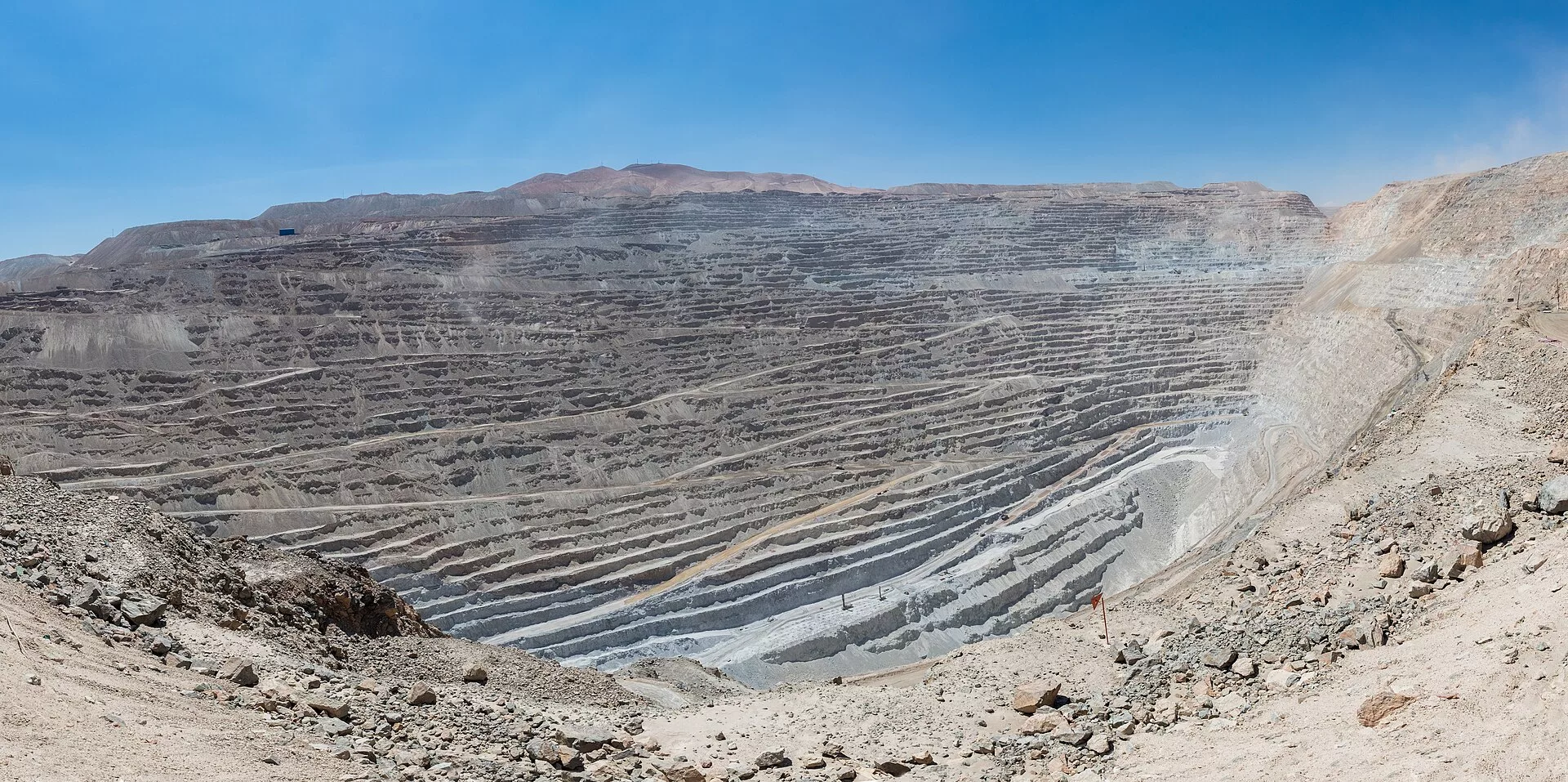
Chile remains the indisputable heavyweight in copper, producing about 5.3–5.5 million metric tons in 2024, equivalent to roughly 23–24% of global mine output, even though its share has gradually slipped from around 30% a decade ago. The country’s production is underpinned by giant porphyry deposits in regions such as Atacama and Antofagasta, with mines like Escondida, Collahuasi and El Teniente anchoring output, but issues such as declining ore grades, water constraints and community opposition have complicated growth plans.
Peru, meanwhile, stands as a key Latin American supplier with approximately 2.6 million metric tons of copper mined in 2024, and many sources place it among the top three global producers, even though newer data point to the Democratic Republic of Congo overtaking it for second place. Major Peruvian mines such as Las Bambas, Cerro Verde and Toromocho provide critical volumes, and expansions like Toromocho’s phase-2 are engineered to lift site capacity significantly, yet K2 Capital’s analysis emphasises that project delays and disruptions in both Peru and Chile have been central to the shift from surplus to deficit in the market’s 2026 forecast.
05 The names to watch
Southern Copper is one of the most important copper-focused miners for Latin America, with operations concentrated in Peru and Mexico and a New York-listed share that closed at 188.01 $ (+7.39% d/d) on 2026-07-21, significantly outperforming both copper futures benchmarks and CPER on the day. The stock’s move followed a global rally in copper prices, and commentary highlights that investors are responding to higher realised and expected copper prices by bidding up miners that can deliver volume growth from large-scale assets in the region.
Freeport-McMoRan, although headquartered in the United States, is a bellwether for copper mining in the Americas, with extensive operations at Morenci in Arizona and other sites that contribute to the US’s roughly 1.1–1.2 million tonnes of annual mined copper. Freeport-McMoRan’s share price closed at 62.56 $ (+6.41% d/d) on 2026-07-21, reinforcing the message that copper miners are trading as geared plays on the metal, and that both US and Latin American operational performance can influence valuations even for investors based far from the mine gates.
06 The outlook
The forward-looking picture for copper is one of sustained tension between strong demand from the energy transition and constrained supply growth, with Chile and Peru’s operational challenges and the closure of large projects such as Cobre Panama feeding into forecasts for a genuine and persistent deficit through 2026. With LME prices already testing record highs and major banks projecting elevated averages and potential spikes under supply-shock conditions, foreign investors reading the latest session’s moves in CPER, Southern Copper and Freeport-McMoRan are effectively being asked to decide whether the market has fully priced the combination of Latin American risk, Chinese demand dominance and global electrification—or whether any shift in mining output or policy from Santiago, Lima or Beijing remains the variable to watch.
07 What to watch
- Latin American mine disruptions: Track operational and permitting developments at Chilean and Peruvian mines, because delays or accidents can materially change the expected 2026 copper deficit and drive sharp moves in both futures and miners.
- Chinese demand and policy: Watch China’s infrastructure, grid and electric-vehicle investment plans, along with any changes in import tariffs or strategic stockpiling, as China produces over 45% of refined copper and imports about 60% of global copper ore, giving it outsized influence on prices.
- Energy transition spending: Monitor policy announcements and investment trends in renewables, transmission lines and EV manufacturing across major economies, since these sectors are copper-intensive and underpin the structural demand story that supports elevated price forecasts.
- Major miners’ capital plans: Follow expansion, maintenance and M&A decisions by large miners such as Codelco, BHP, Southern Copper and Freeport-McMoRan, because changes in project timelines or investment discipline will shape future supply and therefore the path of CPER and copper futures.
Frequently Asked Questions
Is CPER a direct bet on physical copper?
No, CPER is the United States Copper Index Fund, which tracks copper futures rather than physical spot prices, meaning its performance reflects expectations embedded in US copper futures contracts, not day-to-day cash trades in the physical market.
Why did copper miners rise more than CPER and the metal?
Equity in copper miners acts as a leveraged exposure to the metal: when copper prices rise, investors anticipate higher margins and cash flows from existing and future production, so shares of companies like Southern Copper and Freeport-McMoRan can move by a larger percentage than futures-linked trackers such as CPER.
Is Chile still the number one copper producer?
Yes, Chile remains the world’s largest copper producer, with around 5.3–5.5 million metric tons of mine output in 2024, representing roughly 23–24% of global production, even though its share has declined from about 30% a decade ago.
Where does Peru rank among global copper producers today?
Peru produces about 2.6 million metric tons of copper per year and is among the top three miners globally, but recent data indicate that the Democratic Republic of Congo has overtaken it for second place, leaving Chile first and Peru competing for third in the latest rankings.
LatAm Markets: Live Signals → — real-time movers, turnover leaders and FX across Latin America.
Read More from The Rio Times