Zinc Edges Up 0.81% as Nexa, Buenaventura Shares Slip
Key Facts
- Zinc rallied 0.81% to US$3,981.00 a tonne on Thursday, September 24, 2026, a fresh leg higher for the galvanising metal.
- Nexa Resources fell 1.10% to US$12.64 in New York trading, a counterintuitive move given the firm’s direct zinc exposure.
- Buenaventura dropped 1.71% to US$32.85, as the Peruvian diversified miner tracked broader precious-metals pressure rather than zinc’s gain.
- Zinc’s core use is rust-proofing steel meaning construction, infrastructure, warehouses and vehicles dictate most of its demand.
- Peru, Bolivia and Mexico are major producers with Peru’s Cajamarquilla smelter remaining Latin America’s largest zinc refinery.
- Boliden is buying Votorantim’s 64.68% stake in Nexa for US$1.31 billion, implying an equity value of about US$2.03 billion for the zinc miner.
Today’s Focus
Zinc climbed to US$3,981.00 a tonne on Thursday, September 24, 2026, a 0.81% daily gain that kept the metal near levels unseen in the current cycle. The move extended a 2026 run powered by supply constraints and steady galvanised-steel demand across global construction.
Yet the two New York-listed Latin American proxies fell. Nexa Resources, the region’s purest zinc play with three Peruvian and two Brazilian mines plus three smelters, slipped 1.10% to US$12.64. Buenaventura, a less direct proxy due to its precious-metals book, lost 1.71% to US$32.85.
The divergence matters for outsiders: metal strength does not automatically lift miner shares. Nexa’s stock is also absorbing the agreed sale of Votorantim’s 64.68% controlling stake to Sweden’s Boliden for US$1.31 billion, a deal that caps near-term upside speculation.
For Latin America, the session reinforced zinc’s strategic role. Peru’s Cajamarquilla smelter, the region’s largest, is still recovering from a May incident that cut an estimated 7,000 tonnes of refined output, while Nexa has maintained its 2026 sales guidance.
What matters today. Zinc’s rally is a physical-market story of tight supply and construction demand, but miner shares are trading on deal mechanics and precious-metals sentiment rather than the metal’s spot price.
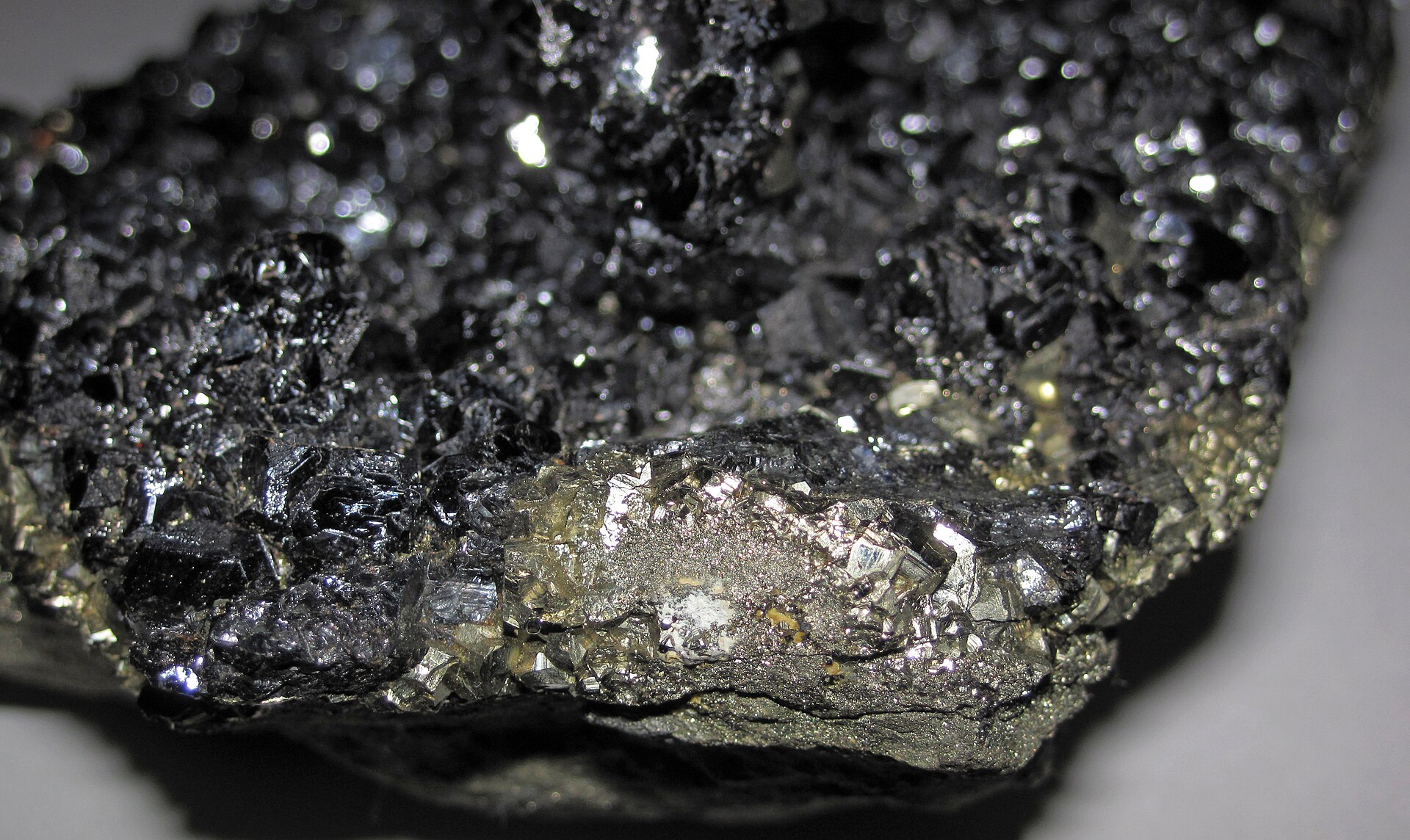
01 The session in one read
Zinc rose 0.81% to settle at US$3,981.00 a tonne on Thursday, September 24, 2026, extending a year of remarkable strength built on constrained supply and resilient construction-linked demand.
But Latin America’s two New York-listed zinc proxies moved the other way. Nexa Resources fell 1.10% to US$12.64, and Buenaventura lost 1.71% to US$32.85, a split that tells a deeper story about who actually benefits from a zinc bull market.
Thursday’s session showed a metal decoupling from its regional proxies. Zinc’s 0.81% climb to US$3,981.00 a tonne reflects genuine tightness in refined supply, yet Nexa’s 1.10% decline to US$12.64 and Buenaventura’s 1.71% drop to US$32.85 signal that investors are pricing company-specific factors ahead of commodity strength. The variable to watch is whether Nexa’s share price can re-anchor to zinc’s rally once the Boliden acquisition terms settle into trading expectations.
02 The board
The price board told a clear tale of divergence. Zinc itself powered upward, but the two regional names tracking it went red, with Buenaventura’s drop roughly half again as steep as Nexa’s.
For outsiders, this is the session’s lesson: commodity strength never automatically translates into miner share gains, especially when companies carry additional metals exposure or when ownership changes loom over the equity.
| Asset | Level | Change |
|---|---|---|
| Nexa Resources | US$12.64 | -1.10% |
| Buenaventura | US$32.85 | -1.71% |
Source: RT close, 2026-09-24. Where a commodity has no spot feed, an exchange-traded tracker or leading producer is shown as a labelled proxy.
Live Market IntelligenceThe live market board
Rio Times · Live Market Intelligence
Latin America — Cross-Market Board
| Instrument | Last | Change | YoY | Prev. | High | Low | Volume |
|---|---|---|---|---|---|---|---|
| IBOV | 183,965.91 | -0.99% | +21.85% | 185,814.09 | 168,310 | 167,142 | — |
| IPSA | 11,300.53 | -1.30% | — | 11,449.63 | 11,210 | 10,984 | 1,513,213,483 |
| IPC MEX | 64,264.16 | -0.02% | +12.17% | 64,276.72 | 66,121 | 65,405 | 108,886,187 |
| MERVAL | 2,939,964 | -1.00% | +30.51% | 3,022,485 | 3,042,365 | 2,991,150 | — |
| COLCAP | 2,609.40 | -0.12% | — | 9.04 | 9.05 | 9.02 | 4,133 |
| BVL PERÚ | 59,677.00 | +0.43% | — | — | — | — | — |
| USD/BRL | 5.16 | +0.01% | -5.13% | 5.16 | 5.18 | 5.14 | — |
| EUR/BRL | 5.95 | +1.01% | -5.83% | 5.89 | 5.98 | 5.94 | — |
| USD/MXN | 17.06 | -0.24% | -8.58% | 17.10 | 17.08 | 17.01 | — |
| USD/CLP | 913.98 | +0.04% | -5.67% | 913.65 | 915.11 | 906.68 | — |
| USD/COP | 3,140 | +0.03% | -22.04% | 3,139 | 3,141 | 3,105 | — |
| USD/PEN | 3.36 | -0.66% | -4.82% | 3.38 | 3.38 | 3.35 | — |
| USD/ARS | 1,493 | +0.10% | +12.96% | 1,491 | 1,494 | 1,480 | — |
| USD/UYU | 40.27 | +1.24% | +1.80% | 39.77 | 40.27 | 40.23 | — |
| USD/PYG | 5,939 | +1.68% | -19.54% | 5,841 | 5,939 | 5,925 | — |
| USD/BOB | 11.64 | -0.76% | +72.04% | 11.73 | 11.72 | 11.64 | — |
| USD/DOP | 58.34 | +1.25% | -3.44% | 57.62 | 58.34 | 58.04 | — |
| USD/CRC | 445.92 | +0.89% | -9.71% | 441.97 | 448.50 | 445.92 | — |
03 What moved it
Zinc’s 0.81% daily rise to US$3,981.00 a tonne continues a 2026 pattern of tightness in refined supply and steady demand for galvanised steel, the rust-proofing process that consumes around half of all zinc.
That demand channel ties zinc directly to construction cranes, factory roofs, warehouse frames and vehicle bodies across the Americas, Europe and Asia.
Supply remains the amplifier. Nexa’s first-quarter 2026 average realised price of US$3,241 a tonne was up 14% year on year, a jump the company itself attributed to supply constraints, and the Cajamarquilla smelter incident in Peru cut an estimated 7,000 tonnes of refined output in May.
Against that backdrop, Thursday’s equity moves were not about zinc at all. Gold came under fresh scrutiny after a two-week plunge left the August breakout at risk, and that precious-metals pressure dragged on diversified miners like Buenaventura.
04 The Latin American read
Peru, Bolivia and Mexico sit at the centre of Latin America’s zinc supply chain, with Peru holding a unique processing edge through Cajamarquilla, the region’s largest zinc smelter.
That smelter’s May disruption removed an estimated 7,000 tonnes from refined output, though Nexa expects to recover the loss in the second half without changing its 2026 sales guidance.
Nexa’s operational footprint spans three polymetallic mines in Peru, two in Brazil, one zinc smelter in Peru and two in Brazil, making it the purest listed Latin American zinc vehicle available to foreign investors.
Buenaventura remains relevant but messier as a zinc proxy: its Uchucchacua and Tambomayo operations produce zinc, yet the company’s precious-metals book means its shares often trade on gold and silver sentiment rather than industrial fundamentals.
05 The names to watch
Nexa Resources carries a deal overhang that now rivals the metal itself as a price driver. Boliden of Sweden has agreed to buy Votorantim’s 64.68% controlling stake for US$1.31 billion, which values Nexa at US$2.03 billion excluding debt.
That transaction caps speculative upside in the near term and explains why Nexa’s 1.10% decline to US$12.64 made sense despite zinc’s rally. Investors are now trading an acquisition multiple, not a spot metal price.
Buenaventura’s 1.71% decline to US$32.85 fits the same logic from a different angle. Its diversified profile exposes the shares to precious-metals declines even when zinc is climbing, a reminder to outsiders to mind the full metal mix before buying a Latin American miner.
06 The outlook
The physical zinc story looks firmly intact going into the fourth quarter, with supply tightness and construction-linked galvanising demand supporting prices near US$3,981.00 a tonne.
The equity story is more complicated. Nexa’s shares face a transition period as the Boliden deal moves toward completion, while Buenaventura will keep trading on whatever gold does next.
Foreign investors watching Latin America should treat zinc as a tailwind that needs company-specific proof before it shows up in share prices, and any renewed gold strength would likely lift Buenaventura far faster than another zinc gain.
07 What to watch
- Boliden-Nexa closing terms: watch whether the US$1.31 billion acquisition progresses smoothly, as deal risk will keep capping Nexa’s share upside even if zinc rises further.
- Cajamarquilla output recovery: Nexa’s guidance for recovering the 7,000-tonne shortfall in the second half makes smelter utilisation a key supply indicator for the region.
- Gold’s technical floor: the two-week gold decline has tested the August breakout; any bounce would drag Buenaventura shares higher regardless of zinc.
- Galvanised steel demand: construction activity across the Americas, Europe and Asia remains the demand engine zinc cannot ignore, especially into year-end infrastructure budgets.
Frequently Asked Questions
Why did zinc rise while Nexa and Buenaventura shares fell?
Zinc’s 0.81% gain to US$3,981.00 a tonne reflects tight physical supply, but Nexa’s 1.10% drop to US$12.64 is tied to the Boliden acquisition, and Buenaventura’s 1.71% drop to US$32.85 to precious-metals pressure, not zinc.
What is zinc mainly used for?
Zinc’s chief use is galvanising steel with a rust-proof coating, linking it directly to construction, infrastructure, warehouses and vehicle manufacturing.
Which Latin American countries produce the most zinc?
Peru, Bolivia and Mexico are major producers, and Peru’s Cajamarquilla smelter is the largest zinc refinery in Latin America.
Is Nexa a pure zinc play?
Yes, it is the closest thing among New York-listed LatAm names: Nexa runs three polymetallic mines in Peru, two in Brazil, and three zinc smelters across both countries.
Market data: RT
This article was produced by The Rio Times’ automated newsroom system. How we use AI · Report an error
LatAm Markets: Live Signals → — real-time movers, turnover leaders and FX across Latin America.
Read More from The Rio Times