World Bank Predicts 1.8% Growth for Latin America in 2024
The World Bank (WB) forecasts Latin America’s economy to grow by 1.8% in 2024, down 0.5 points from January’s estimate.
In 2025, growth will rebound to 2.7% as interest rates normalize and inflation decreases.
Interest rate normalization, falling inflation, and commodity exports support Latin America’s growth in 2024.
According to the WB, economic performance depends on internal and international factors. Commodity prices and global demand will play a moderate role in this outlook.
Guyana will lead with 34.3% growth in 2024, up from 33% in 2023. Conversely, Argentina’s economy will contract by 3.5%, and Haiti’s by 1.8%.
Central America’s growth will weaken to 3.2% in 2024 but recover to 3.5% in 2025 due to increased remittances.
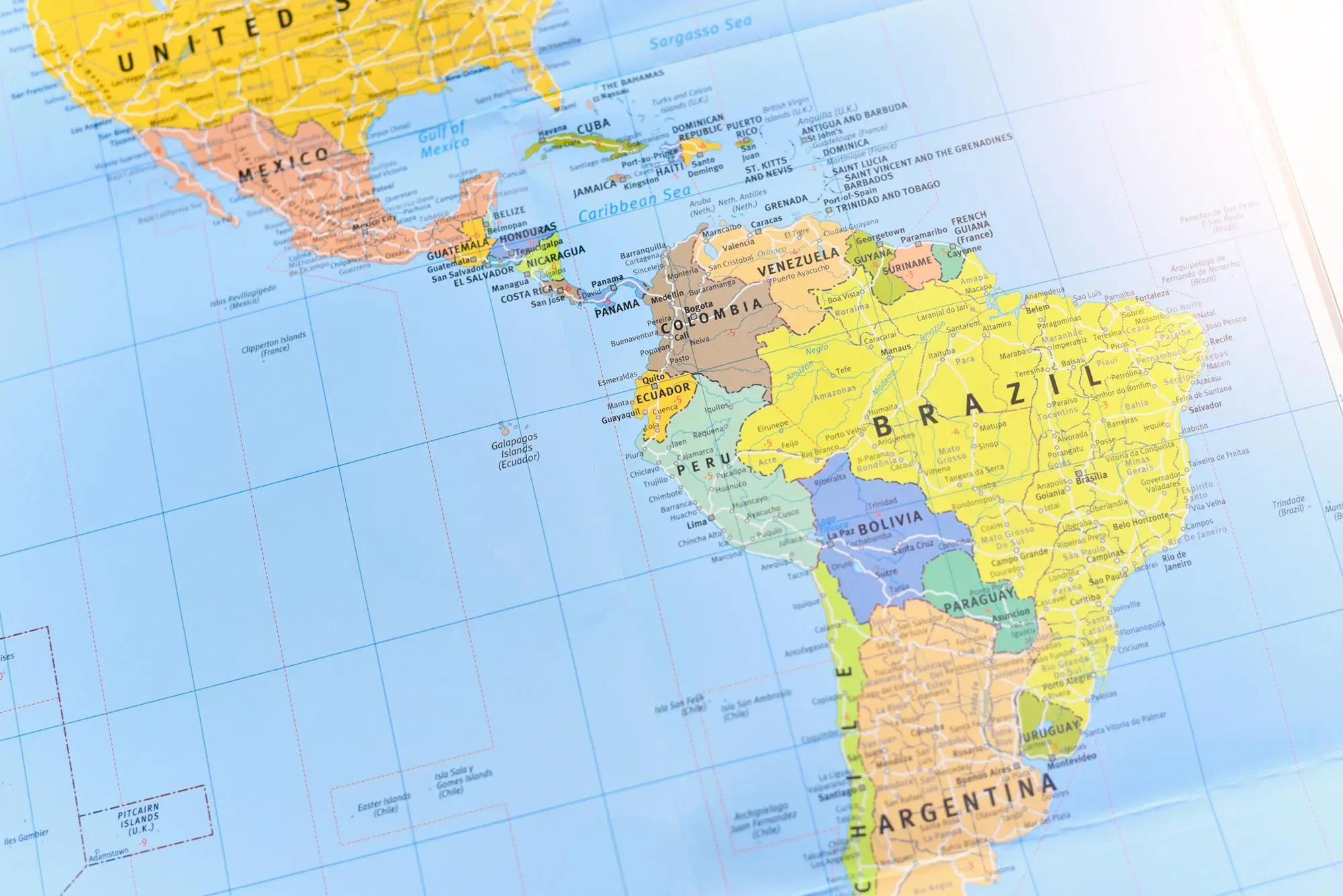
The Caribbean’s growth will strengthen to 7.1% in 2024, with a 5.7% expansion in 2025.
Excluding Guyana, the region’s projected growth is 3.9% in 2024 and 4% in 2025, driven by tourism and remittance recovery.
In April, the WB adjusted Latin America’s growth projection to 1.6% in 2024, down from the 2.3% estimated earlier.
World Bank Predicts 1.8% Growth for Latin America in 2024
Brazil’s growth will moderate to 2% in 2024 and 2.2% in 2025, down from 2.9% in 2023, due to policy rate cuts and recovering private consumption and investment.
Mexico’s economy will slow to 2.3% in 2024 and 2.1% in 2025, down from 3.2% in 2023, despite declining inflation and interest rates.
Argentina’s GDP will contract by 3.5% in 2024 but grow by 5% in 2025 as economic imbalances and inflation decrease.
Colombia’s growth is expected to increase to 1.3% in 2024 and 3.2% in 2025, driven by private consumption and export recovery.
Chile’s growth will be 2.6% in 2024 and 2.2% in 2025, supported by strong demand for green energy commodities and interest rate cuts.
Peru is forecasted to grow by 2.9% in 2024 and 2.6% in 2025, as declining inflation and policy rate cuts boost private consumption.
Business confidence remains strong in Brazil and Mexico. Colombia shows improvements, while Argentina faces significant economic contraction.
Overall, inflation rates are decreasing, and central banks are reducing official interest rates from 2023 levels.
The WB believes commodity prices will support regional exports, although slow growth in China might limit demand for key commodities.
Growth in Latin America and the Caribbean in 2025 will stay below the pre-pandemic decade average of 3.1%.
Forecasts face several risks, including restrictive global financial conditions, high local debt levels, and slower growth in China.
Extreme weather events related to climate change also pose risks. However, stronger economic activity in the U.S. could positively impact Central America and the Caribbean.
More: Latin America news in English, every day from The Rio Times.
This article was produced by The Rio Times’ automated newsroom system. How we use AI · Report an error
Read More from The Rio Times