Africa Pushes Back on Who Sets the Rules at Its Border
Analysis · Africa
Key Facts
A continent does not normally argue about sovereignty in such concentrated terms. Africa did so this week.
The heads of state of five Southern African countries opened the ninth summit of the world’s oldest customs union in Cape Town this morning. A Kenyan court enforced a stop-work order against a United States-funded medical facility on Kenyan soil.
The Financial Action Task Force in Paris kept six African economies under what amounts to financial-sector probation. Three different stories, three different methods, one same question: who sets the rules at the border, and on whose terms.
That question has a particular history on this continent. It was the central political argument of the independence period, the central economic argument of the structural-adjustment era, and the central diplomatic argument of the present.
It is being argued out again, in real time, with consequences that travel well beyond the borders of any one African state. The countries that are doing the arguing today are not the countries they were a generation ago.
Cape Town: a customs union remakes itself
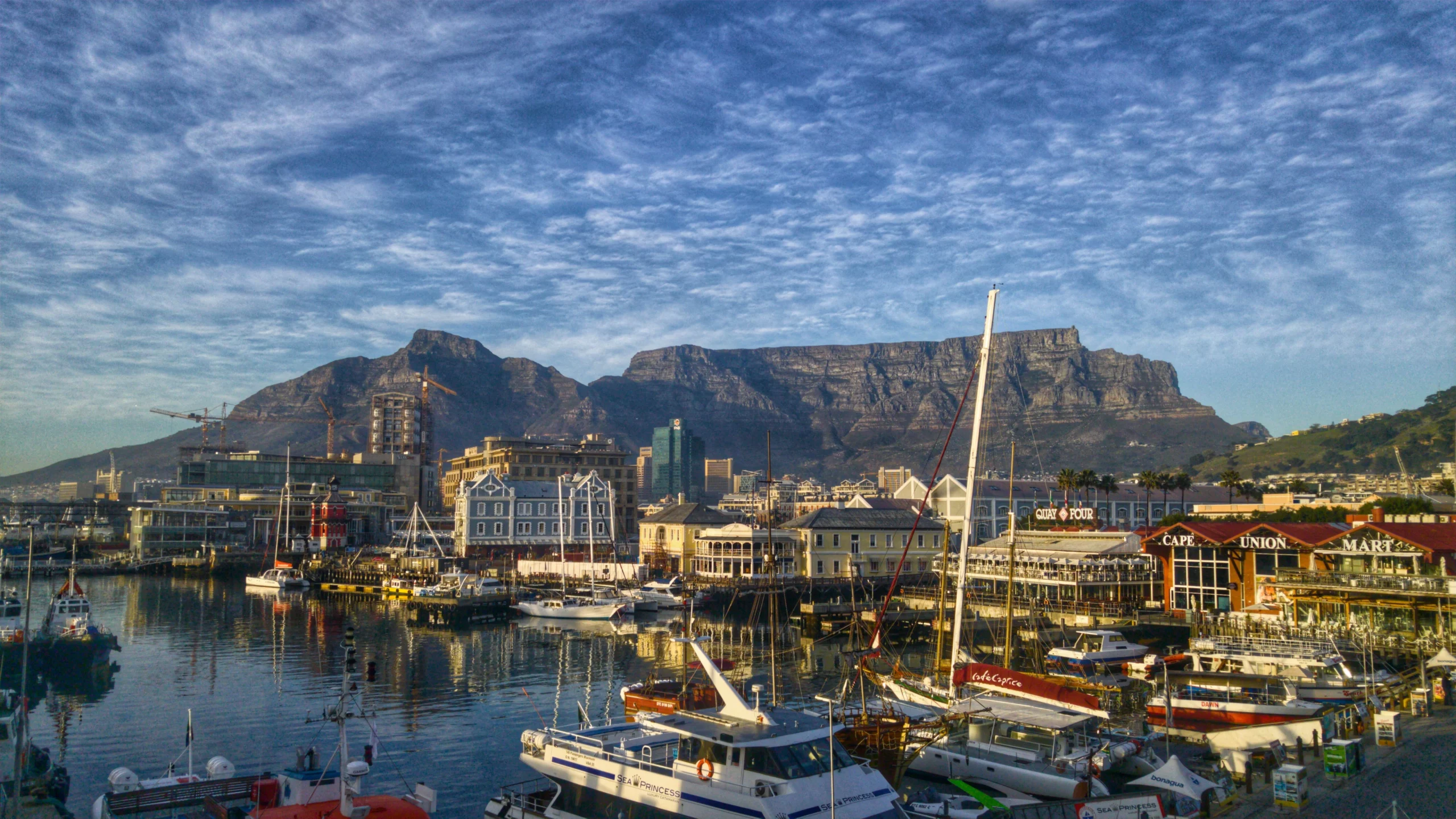
The Southern African Customs Union held its ninth heads-of-state summit at the Cape Town International Convention Centre this morning. Botswana, Eswatini, Lesotho, Namibia and South Africa sent presidents and prime ministers to the same hall for the first time in three years.
The bloc itself is one hundred and sixteen years old, established in 1910 under British colonial administration to pool customs revenues across what would become four states and one kingdom. Its combined gross domestic product, around four hundred and twenty billion United States dollars, outweighs the next two African customs unions combined.
Its revenue-sharing rule is, as one Cape Town columnist put it this week, “the planet’s only modelance tool hard-coded into national budgets.” Salaries paid to teachers in Lesotho, drought-relief trucks dispatched in Windhoek, and rural clinics in Mbabane all draw from the same monthly transfer.
President Cyril Ramaphosa opened the summit with a speech that did not bury the lead. The Union, he said, must move beyond its “traditional role” as a customs arrangement and become “the premier platform for regional economic resilience and self-reliance.”
The summit’s secretariat says regional gross domestic product is expected to grow at two point six four percent in 2026 and two point one percent in 2027. Behind those modest numbers lies a concrete agenda.
The Trans-Kalahari Railway, which Botswana and Namibia have been advancing for years, is now framed as the kind of cross-border infrastructure the region needs at scale. The Lesotho Highlands Water Project, by which Lesotho’s water and South Africa’s payment have flowed across the border for decades, is held up as a working model of shared infrastructure.
Cross-border special economic zones launched this year are intended to do for industry what the older shared infrastructure did for water and electricity. A new Regional Development Fund, in partnership with the African Development Bank, is meant to give the bloc its own pool of capital for projects that match its priorities.
But this is the first summit in years where the bloc has spoken explicitly in the language of resilience and self-reliance. That language is not new in Africa; it is the language of every important African political moment since 1960.
What is new is the consensus among the five member governments that the global system is no longer reliable enough to leave their development plans to its mercies. The bloc is responding by giving itself more of its own machinery.
Nairobi: a court tells Washington no
The same morning that Ramaphosa was opening the Cape Town summit, the Kenyan High Court was holding a hearing that ended with the country’s health minister formally confirming the halt of a United States-funded Ebola quarantine facility at Laikipia Air Base near Nanyuki, about two hundred kilometres north of Nairobi.
The facility had been announced in May after the World Health Organization declared the Ebola outbreak in the Democratic Republic of Congo and Uganda a public health emergency of international concern. As of mid-June there were 344 confirmed cases in the DRC and fifteen in Uganda.
The United States had decided that any American citizens exposed to Ebola while in Africa would not be brought home for treatment. They would, the State Department announced, be quarantined in Kenya instead.
Secretary of State Marco Rubio’s statement at a Cabinet meeting in May was direct. “We cannot and will not allow any cases of Ebola to enter the United States.”
Kenyans, including the country’s medical-professionals’ union, read those words the same way. The Kenya Medical Practitioners, Pharmacists and Dentists Union issued a statement saying it would not “watch Kenya be treated as a containment colony.”
“If it is too dangerous for America,” the statement added, “it is too dangerous for Kenya.” Two civil-society groups, Katiba Institute and the Kenya Law Society, filed separate challenges at the Nairobi High Court.
President William Ruto initially defended the agreement on the grounds that the United States provides substantial health-sector aid to the country. The streets of Nanyuki took a different view.
Hundreds of demonstrators gathered at the Laikipia base on Monday June first, with two protesters reportedly killed and others injured when the demonstration turned violent. The court issued a stop-work order that Friday.
On Tuesday June ninth Justice Patricia Nyaundi extended the order and demanded that all agreements and operational protocols related to the facility be disclosed before the next hearing. The Kenyan government was found in contempt for initially ignoring her order.
This week, the health minister confirmed to the court that all preparations had ceased. The facility, largely complete with fifty isolation beds, will not open.
The legal and political mechanics of that outcome are worth dwelling on. A sub-Saharan African country, working through its own constitutional courts, forced the world’s largest economy to withdraw from a quietly negotiated arrangement on Kenyan territory.
The judge who delivered the ruling was a Kenyan jurist applying Kenyan law. The civil-society groups that brought the case were Kenyan organisations.
The protesters who died on June first were Kenyan citizens who decided their soil would not, this time, be the back office of a foreign crisis. None of this would have happened in the structural-adjustment era of the 1980s.
That it happened now, with a court enforcing its own order against its own president and an American secretary of state, is the news.
Paris: six economies, still under judgement
The Financial Action Task Force concluded its sixth and final plenary under the Mexican presidency of Elisa de Anda Madrazo in Paris on June nineteenth. From July first the chair passes to Giles Thomson of the United Kingdom.
The watchlist of jurisdictions under “increased monitoring” — the so-called grey list — saw two additions and two removals. Bosnia and Herzegovina and Iraq were added.
Algeria and Namibia were removed. Twenty-two jurisdictions now sit on the list.
Six of them are African: Angola, Cameroon, Côte d’Ivoire, the Democratic Republic of Congo, Kenya and South Sudan. Three more — Iran, North Korea and Myanmar — sit on the more serious “black” list of high-risk jurisdictions subject to a call for action, unchanged at this plenary.
For an African finance minister, listing on the grey list is not a small thing. It triggers enhanced due-diligence requirements on every international financial transaction touching the country.
Correspondent banks raise the cost of clearing transactions. Foreign direct investment slows.
Sovereign borrowing costs rise. The International Monetary Fund’s own research suggests that grey-listing reduces gross capital inflows to a country by roughly seven and a half percent of gross domestic product.
The list is administered by an inter-governmental body in Paris whose membership consists chiefly of the wealthy democracies of the global north. The African countries on the list have no vote in their own listing.
They can negotiate action plans with FATF-style regional bodies — for Namibia and Algeria, that meant the Eastern and Southern African and Middle East-and-North-African affiliates respectively — and they can spend years implementing those plans before they earn removal. Namibia and Algeria both did exactly that, and both were rewarded this month with delisting.
But the underlying architecture of judgement is not changed. Six African economies remain on a list designed and administered elsewhere.
What the three stories share
There is a pattern across the three. In each case an African institution is asserting its own authority against a system whose terms were set elsewhere.
The Cape Town customs union is rebuilding its own development capacity rather than borrowing it from Europe or Washington. The Nairobi court is asserting that Kenyan territory is governed by Kenyan law even when an American agency would prefer it otherwise.
The grey list is the case where the African position is harder, because the listing system is the one that is hardest for any single African government to walk away from. But Algeria and Namibia’s exits show that the system can be navigated.
In all three cases, the question of sovereignty is not about secession from the global order. It is about the terms on which African countries engage with it.
That is a more sophisticated argument than the post-colonial sovereignty debates of the 1960s. It is also, by the evidence of this week, an argument that more African institutions feel able to make on their own behalf.
The counter-case, taken seriously
Sovereignty asserted is not always sovereignty earned, and engagement on one’s own terms can be costly. A Kenya that turns away an American facility may find itself short of American help in the next outbreak; the money-laundering watchlist exists because the risks it tracks are real; and a customs union that builds its own development fund may find capital prefers established multilateral frameworks.
That is the case made by the World Bank and the International Monetary Fund, and it is partly right.
But the opposite extreme has a record too. The African countries that let external lenders and rule-setters dictate their development for three decades did not, on the evidence, grow faster or escape the crises that era was meant to prevent.
The argument is not whether to engage, but how, and on whose terms.
What Latin America has to learn from this
The continent of fifty-four African states is, in different ways, the same continent of thirty-three Latin American and Caribbean states. The terms of engagement with the global order, the cost of capital imposed by external watchlists, the question of whose courts and whose institutions set the rules at one’s own borders — these are the questions of the global south, and they have been for a hundred years.
Latin America has more institutional capacity, on average, than Africa. It also has a longer track record of trying to assert its own terms, with results that range from the partial successes of Brazilian industrial policy to the catastrophic failures of Venezuelan currency control.
The lesson Africa is offering the region this week is not that sovereignty is always right. It is that sovereignty is always at issue, and that the countries that get serious about exercising it are not always punished by the global system; sometimes they are simply, slowly, allowed to make their own way.
That is the more hopeful reading of the African week. It will not always be available.
When it is, the countries that recognise the opening are the ones that escape the gravitational pull of dependency. The countries that do not, do not.
More: Kenya news in English, every day from The Rio Times.
Frequently Asked Questions
What happened at the Cape Town summit?
The Southern African Customs Union — Botswana, Eswatini, Lesotho, Namibia and South Africa — held its ninth heads-of-state summit, with President Ramaphosa urging it to become a platform for “resilience and self-reliance.” The 116-year-old bloc launched a regional development fund and cross-border economic zones.
Why did Kenya halt the US Ebola facility?
After protests in which two people died, Kenyan civil-society groups won a High Court order against a US-funded quarantine facility at Laikipia Air Base. Kenyans objected to being treated as a “containment colony” for an outbreak the US would not bring home.
What is the FATF grey list and who is on it?
It is a watchlist of countries under increased monitoring for money-laundering and terror-financing controls, which raises their cost of capital. Six African economies remain on it — Angola, Cameroon, Côte d’Ivoire, the DRC, Kenya and South Sudan — while Algeria and Namibia were just removed.
The Year of Fortification — the series
The Year of Fortification: 2026’s Pivot From Open to Closed
The Chip Enclosure: How Pax Silica Walls Off China
The Court and the Cornerstone: Two Ways to Make a Moment Last
Connected Coverage
Angola Puts Its State Giants Up for Sale to Break the Oil Habit
This article was produced by The Rio Times’ automated newsroom system. How we use AI · Report an error · Editorial responsibility: Matthias Camenzind, Editor-in-Chief
LatAm Markets: Live Signals → — real-time movers, turnover leaders and FX across Latin America.