Venezuela’s Ruling Party Secures Near-Total Electoral Control Amid Arrests and Voter Apathy
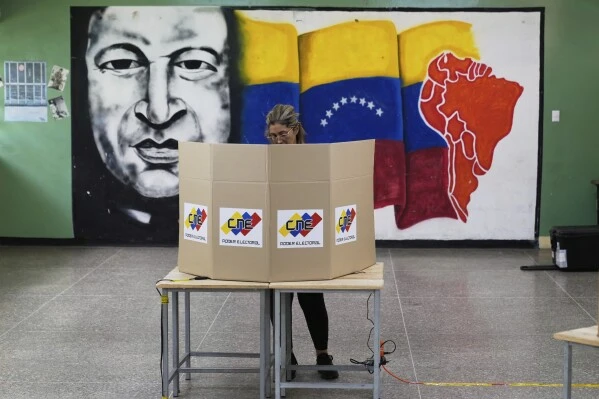
Venezuela’s National Electoral Council (CNE) declared the ruling United Socialist Party (PSUV) victorious in regional and legislative elections on May 25, 2025, claiming 82.68% of parliamentary votes and 23 of 24 governorships.
With 42.63% of eligible voters participating, the results face widespread skepticism due to documented irregularities, opposition boycotts, and prior electoral fraud.
The CNE, controlled by President Nicolás Maduro’s allies, reported irreversible trends after tallying 93.01% of data, though independent observers noted empty polling stations and a lack of transparency.
The PSUV’s dominance follows a pattern of institutional manipulation. In July 2024, Maduro claimed a disputed presidential win despite opposition tallies showing rival Edmundo González Urrutia securing 67.1% of votes.
The Carter Center confirmed discrepancies, citing the CNE’s refusal to publish polling-station records or allow audits. María Corina Machado, the opposition leader, called the 2025 vote a “farce,” urging abstention to protest Maduro’s grip on power.
Her coalition reported 85% abstention in key regions, contrasting the CNE’s 42.63% turnout figure. Authorities arrested over 70 opposition figures before the election, including Juan Pablo Guanipa, accused of leading a “terrorist network.”
Security forces deployed 400,000 personnel, while state media broadcast staged voter queues. Machado, in hiding since 2024, labeled the process a regime-led “trap” to legitimize Maduro’s authoritarian rule.
Venezuela’s 2025 Elections Deepen Crisis Amid Repression
The EU and UN condemned the elections, citing repression and arbitrary disqualifications of candidates. Economic collapse exacerbates public disillusionment.
Hyperinflation and a $3 monthly minimum wage have driven mass emigration, with remaining voters citing apathy toward a system perceived as rigged.
The CNE’s claims of 94–96% support in states like Apure and Monagas conflict with grassroots reports of deserted polling sites. Meanwhile, Maduro’s consolidation of power risks further isolating Venezuela economically, as sanctions and reputational damage deter foreign investment.
The 2025 results mirror 2020’s legislative vote, where low opposition participation enabled PSUV victories. With control over the judiciary, military, and electoral bodies, Maduro’s regime continues leveraging state machinery to suppress dissent.
International analysts warn that without enforceable democratic safeguards, Venezuela’s crisis will deepen, perpetuating instability in a nation rich in oil but crippled by governance failures.
More: Latin America news in English, every day from The Rio Times.
This article was produced by The Rio Times’ automated newsroom system. How we use AI · Report an error · Editorial responsibility: Matthias Camenzind, Editor-in-Chief