Peru Keeps Its Central Bank Anchor as Fujimori Retains Velarde

Markets
Key Facts
—The decision. President-elect Keiko Fujimori asked Julio Velarde to stay on as central bank chief, and he accepted on July 6.
—The tenure. Velarde has led the bank since 2006 and has now served under ten presidents, with Fujimori the eleventh.
—The term. The new appointment would run five years, covering 2026 to 2031.
—The catch. The pick still needs ratification by Peru’s new two-chamber Congress, which begins work late in July.
—The reserves. Peru’s international reserves crossed one hundred billion dollars this year, among the strongest buffers in the region.
One of the most closely watched questions over the Peru central bank has just been answered. Julio Velarde, the man markets treat as the face of Peruvian stability, is staying put.
Peru is the world’s third-largest copper producer, behind Chile and the Democratic Republic of the Congo, and one of Latin America’s steadier economies, despite years of political chaos. Much of that steadiness is credited to its central bank and the economist who has run it since 2006. Yet as our reporting has shown, the institutional anchor Velarde represents masks a deeper disconnect: the bank consistently ranks among the world’s best, while Peru’s broader economic competitiveness languishes near the bottom of global league tables.
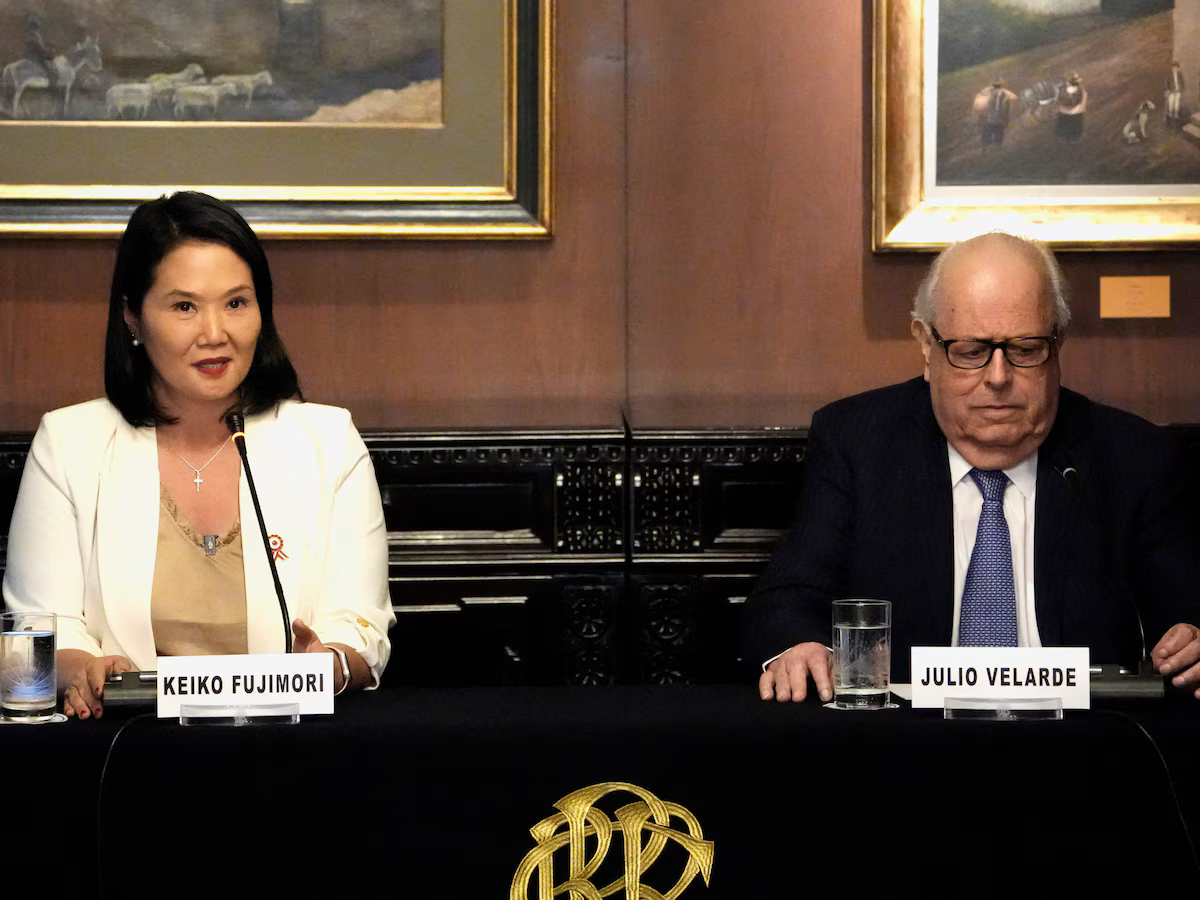
On Monday, July 6, president-elect Keiko Fujimori went in person to the bank’s headquarters in central Lima. There she asked Julio Velarde to serve another term.
He accepted on the spot, calling himself honored by the request, according to remarks at a joint press conference.
Why the Peru central bank decision matters
Velarde is one of the longest-serving central bankers in the world. At seventy-four, he has now held the post through ten presidents, and Fujimori, sworn in later this month, will be the eleventh.
His record is the reason both markets and politicians keep asking him to stay. Under his watch the bank steered Peru through the 2008 financial crisis, the pandemic and repeated bouts of political turmoil while keeping inflation broadly in check.
Fujimori framed the reappointment as a gift to confidence. She said the decision would be welcomed by Peruvians and by international financial institutions, praising the bank’s work in taming inflation and holding the sol steady.
The signal is continuity. Investors had spent months treating the central bank leadership as the single biggest swing factor for Peruvian assets, so keeping Velarde removes a major source of uncertainty as a new government takes over.
The caveats behind the calm
The appointment is not final yet. Under Peru’s constitution the president proposes the central bank chief, but the new two-chamber Congress, which starts work late in July, must ratify the choice.
Velarde himself has flagged the real risk, and it is not monetary. He warns that the monetary side is strong, but a weak fiscal position could undermine the economy over time if public spending is not controlled.
Weather is the other cloud. Both Fujimori and Velarde pointed to a possible strong El Niño as a hazard for the incoming government.
El Niño is the periodic Pacific warming that scrambles Peru’s fishing and farming. Its return would test the new team early on.
For a foreign investor, the takeaway is reassurance with an asterisk. The hand on the monetary tiller is steady and well known, but the budget and the weather are where the next surprises are most likely.
The market backdrop helps explain the relief. Peru’s international reserves crossed one hundred billion dollars for the first time this year, one of the largest buffers relative to output anywhere in the region.
Those reserves give the bank room to defend the sol. Through last year and into 2026 it bought billions of dollars in the currency market, building a cushion ahead of an election cycle markets feared could rattle the exchange rate.
Velarde’s own reluctance made the decision notable. He had hinted for months he might step down, saying that under several of the candidates who ran he would not have agreed to stay.
That reluctance lent extra weight to his acceptance now. The wider lesson is about institutions.
In a decade that has churned through presidents and cabinets, an independent central bank with a constant at its head has stood out. It is the thing that let Peru keep borrowing cheaply and growing at all.
There is a political read too. By choosing continuity at the bank, Fujimori signals early that her government wants to be judged on orthodox, market-friendly management rather than rupture.
That matters given how narrow her mandate is. She takes office having won by a whisker and facing a divided Congress, so a trusted face at the central bank buys her credibility she would otherwise earn slowly.
Who runs the Peru central bank now?
Julio Velarde has led the Banco Central de Reserva del Perú since 2006. He agreed to stay on for another five-year term after president-elect Keiko Fujimori asked him to continue on July 6, and the appointment still needs Congress to ratify it.
Why do markets care about the Peru central bank chief?
Velarde is widely credited with anchoring Peru’s monetary stability through years of political upheaval. Keeping him signals policy continuity and reassures investors about the sol and local bonds, which is why the leadership question had been the dominant variable for Peruvian assets.
Connected Coverage
Fujimori’s plan for Peru: $5bn in investment a year, 500,000 jobs
More: Latin America news in English, every day from The Rio Times.
Frequently Asked Questions
Who is Julio Velarde and why is he staying on at Peru's central bank?
Julio Velarde has led Peru's central bank since 2006. On July 6 he agreed to serve another five-year term, from 2026 to 2031, after president-elect Keiko Fujimori personally asked him to continue. He will serve under his eleventh president and is credited with keeping inflation broadly under control through crises, including the 2008 financial crash and the pandemic.
Is Velarde's reappointment already official?
Not yet — the appointment still needs to be ratified by Peru's new two-chamber Congress, which begins work late in July. Until Congress approves the choice, the reappointment is not final.
What are the biggest risks to Peru's economy even with Velarde staying on?
Velarde himself has warned that a weak fiscal position and uncontrolled public spending are the main threats to the economy over time. Both he and Fujimori also flagged a possible strong El Niño — the Pacific warming event that disrupts Peru's fishing and farming — as another hazard the incoming government will need to manage.
This article was produced by The Rio Times’ automated newsroom system. How we use AI · Report an error · Editorial responsibility: Matthias Camenzind, Editor-in-Chief