USA & Canada Intelligence Brief — Thursday, September 17, 2026
Executive Summary
USA & Canada Intelligence Brief for 17 September 2026: the Federal Reserve's rate-setting committee ends a two-day meeting, Brussels offers Canada the word associate member and Ottawa does not take it, the House votes a third time on Iran war powers, and American diesel passes...
USA & Canada Intelligence Brief — Thursday, September 17, 2026
Key Facts
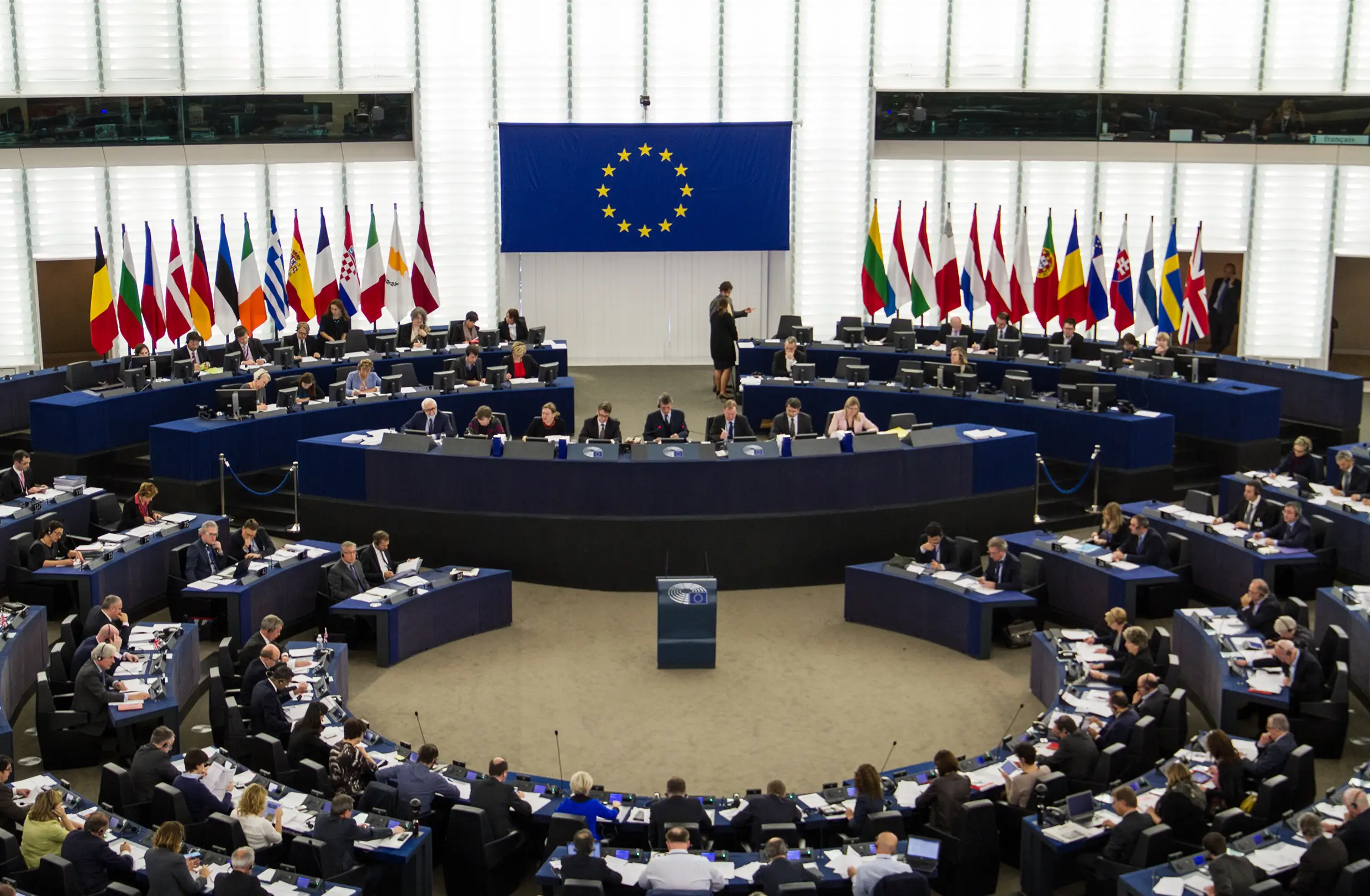
Mark Carney addressed the European Parliament in Strasbourg at 11.30 a.m. Strasbourg time, an hour his office had published the day before. A prime minister kept an appointment made before the threat arrived.
Donald Trump had threatened tariffs a day earlier if he thought the arrangement “at all a hostile act”, and had signed a procurement memorandum on Canadian goods. Two governments spent the day describing each other to third parties.
Read across the Prime Minister of Canada’s own speech text and media advisory, two White House fact sheets, and the Federal Reserve’s projections and press-conference transcript. Then United States Treasury and Department of Labor releases, Bank of Canada rates, Elections Alberta, and our Washington, Ottawa and Strasbourg reading.
Ottawa Answers From Another Continent
Ursula von der Leyen had told the same chamber on 16 September that Canada should become “the first associate member of the European Union”. She said the two “share one ocean, one set of values, one way of seeing the world”.
Carney told the chamber that Canada welcomes the ambition Ursula von der Leyen set out on 16 September, in his office’s published text. Euronews reported him saying the same day that the terminology is Europe’s to choose.
That text says Canada and Europe are “not fair-weather allies” and do not pursue zero-sum deals. He said he is not proposing a third bloc “in order to become a great-power rival – only with better manners”.
The same text sets out critical minerals, defence industrial capacity, artificial intelligence and computing, energy security, space and payments as the fields for cooperation. He offered liquefied natural gas and hydrogen “at large scale” to European buyers.
It says Canada has deposits of “over 34 critical minerals” and is among the top producers of the ten most essential ones. A resource list is the part of an alliance that can be counted.
Afterwards he said Canada is “not in a position, nor seeking, to become a full member of the European Union”, United Press International reported on 17 September. Euronews quoted him saying that what matters is the substance.
Asked about Trump’s criticism, he said Canadians are united that “nobody is going to tell us what language we speak”, the Associated Press reported. The same report quotes him saying: “No one is going to dictate our culture or with whom we can strike agreements internationally.”
Euronews reported on 17 September that Article 217 of the European Union’s treaties is the route officials name for association agreements. Ireland’s foreign minister Helen McEntee said she welcomed the announcement “to explore associate membership for Canada”.
France’s foreign minister Jean-Noël Barrot said the status “will need to be debated, examined in detail and analysed” before France takes a position. Euronews reported that Spain backed the offer on the same day.
Backing the offer and backing its legal form are two different questions. No member state had published a position on the legal form, so far as this desk could establish by midday on 17 September.
A European Commission spokesman answered Washington that the partnership is “not against anyone else, but for our common strength”, Euronews reported. Roberta Metsola announced on 14 September that the Parliament will open an office in Ottawa, the Canadian Press reported.
Washington Shuts A Door It Owns
Trump signed a presidential memorandum on 16 September 2026 titled “Restoring Reciprocity in Government Procurement”. The White House fact sheet of the same date sets out what it directs.
It directs the Office of Management and Budget and the United States Trade Representative to remove “Canadian-origin items” from the federal civil procurement system. The fact sheet the desk read carries no deadline for that work.
The phrase it uses is the federal civil procurement system, which on its face does not reach defence or state contracts. It names no other part of federal buying.
That fact sheet says Canadian companies hold preferential access to over 280 billion United States dollars of the American government procurement system. Trump’s own post put the annual figure at more than 50 billion dollars, BNN Bloomberg reported on 16 September.
The two numbers are not the same measure, because one describes access and the other describes yearly awards. Neither document the desk read shows how either was calculated.
Gabriel Brunet, a spokesman for Dominic LeBlanc, said Canada would “review these measures” in the interest of Canadian businesses and workers. The Canadian Press carried that response on 16 September.
Mélanie Joly said Canada is “still engaging with U.S. counterparts” but that “we need to stand on our two feet”. BNN Bloomberg carried those words on the same day.
The two governments were still talking as the measures landed, on Joly’s own account. A door shut in procurement is not a table cleared.
The White House fact sheet of 8 September bans certain Canadian alcoholic beverages and dairy products from the American market on 29 September 2026. It rests the measures on Section 338 of the Tariff Act of 1930.
That same fact sheet took rock salt and cement off the tariff list on 15 September, and added all-terrain vehicles and further dairy products. A list that moves both ways is still being argued over.
That fact sheet says the tariffs apply “regardless of whether a good originates under the U.S.-Mexico-Canada Agreement”, and puts Canadian retaliation at about US$20 billion of American exports. The Council of the European Union lists an EU-Canada summit for 29 and 30 October 2026, and its listing names no venue.
The United States Census Bureau put American purchases of Canadian goods at US$233.7 billion in the first seven months of 2026. The two measures name alcoholic beverages, dairy products and federal civil purchasing.
Spirits Canada said on 9 September that about half of Canadian spirits production depends on American demand. It puts the sector’s employment at nearly 48,800 full-time equivalent jobs across Canada.
Spirits Canada’s president, Cal Bricker, said in July that tariffs “impact farmers, manufacturers, hospitality businesses, retailers, governments and ultimately consumers in both countries”. A measure arrives as a number and lands on a payroll.
The memorandum and the ban fall within a fortnight of each other, and both come before that summit. A government that shuts one market is arguing for another.
The Market Answers The Committee
The United States Treasury’s daily reading put the two-year government borrowing rate at 4.74 per cent on 16 September, from 4.67 per cent the day before. The ten-year rate moved from 5.00 to 5.01 per cent over the same two days.
The thirty-year rate fell from 5.36 to 5.35 per cent on that reading. Short money answered the committee and long money did not.
Lenders for two years now ask for more, and lenders for thirty years ask for slightly less. The desk reads that as a market pricing the committee’s resolve rather than its failure.
The Associated Press put the Standard and Poor’s 500 index at 7,551.81 at the close on 16 September, down 0.4 per cent. The Dow Jones industrial average closed at 51,461.90 and the Nasdaq composite at 25,978.42.
The Dow fell 631.21 points, or 1.2 per cent, on those same Associated Press figures. The industrial index took the decision harder than the technology index did.
The Bank of Canada’s daily rate put the Canadian dollar at 1.3947 per United States dollar on 16 September, from 1.3917 on 15 September. A currency reads a rate gap before a parliament does.
The committee’s statement went out at 2 p.m. New York time on 16 September, and Trump posted on Truth Social at 4.38 p.m. New York time. Two hours and thirty-eight minutes separated the decision from the demand.
He wrote that American rates should be “1%, or less”, and Axios reported that he did not insult the chairman he appointed. The post ends in capitals: “LOWER THE INTEREST RATES FOR THE UNITED STATES OF AMERICA, AND FAST!”
Kush Desai, a White House spokesman, called the decision “rather unfortunate” on Fox News on 16 September. He said it was not “backed by a particularly compelling economic case”.
He added that higher rates would “stop any significant progress” the country has made under the President. A government that cannot set a rate can still grade it.
The Chairman Says Less, On Purpose
The Federal Reserve published the preliminary transcript of Chairman Kevin Warsh’s press conference of 16 September 2026. The version the desk read carries his opening statement and no questions.
It ends on his own line, “And with that, I’ll take a few of your questions”. A chairman who dislikes central-bank talk has cut his own.
That statement has him saying that the plain fact is that inflation is “too high and has been for too long”. It carries his line that the committee’s unanimous vote “shows our resolve to achieve price stability on a timelier basis”.
American Banker’s live coverage quotes him calling data-point dependence “a dangerous preoccupation” and saying that trends matter. He is arguing for fewer words rather than different ones.
The Summary of Economic Projections of 16 September puts the median federal funds rate at 4.1 per cent for the end of 2026. Its full range of participants runs from 3.9 to 4.4 per cent.
The midpoint of the range set that day is 3.875 per cent, which rounds to the bottom of that projection range. No participant projects a lower rate by the end of this year.
The central tendency, which drops the three highest and three lowest projections, runs from 4.1 to 4.4 per cent for 2026. American Banker reported that sixteen of eighteen participants expect at least one further rise this year.
The table records eighteen participants, and says one of them did not submit projections for 2028 and 2029. The document names no participant anywhere.
The United States Department of Labor reported on 17 September that initial claims for unemployment benefit fell to 196,000 in the week to 12 September. The release puts the previous week’s level at an unrevised 206,000.
The four-week moving average stood at 203,250, and insured unemployment fell to 1,730,000 in the week to 5 September. The first labour reading after the decision argued for the decision.
The Pipeline Turns Before The Pump
Brent crude for November settled at US$105.83 a barrel on 16 September, down 2.7 per cent from US$108.75 a barrel. West Texas Intermediate for October settled at US$102.43, down 3.2 per cent from US$105.83 a barrel.
Those are settlement figures on Bloomberg’s wire, published by Rigzone on 16 September. The desk carries settlements because an intraday quotation changes while a page stands still.
Saudi Arabia is seeking to return about half the capacity of its damaged East-West pipeline within days, and full operations in six weeks. A person familiar with the matter told Bloomberg so on 17 September.
Reuters reported on 17 September that Saudi Arabia is offering Asian refiners more crude through ship-to-ship transfers off Oman’s Sohar port. It cited people familiar with the matter, and said the repair timetable remained unclear.
United States Energy Secretary Chris Wright said the line would restart soon, CNBC reported on 15 September. Crude answered the sentence before the pipeline did.
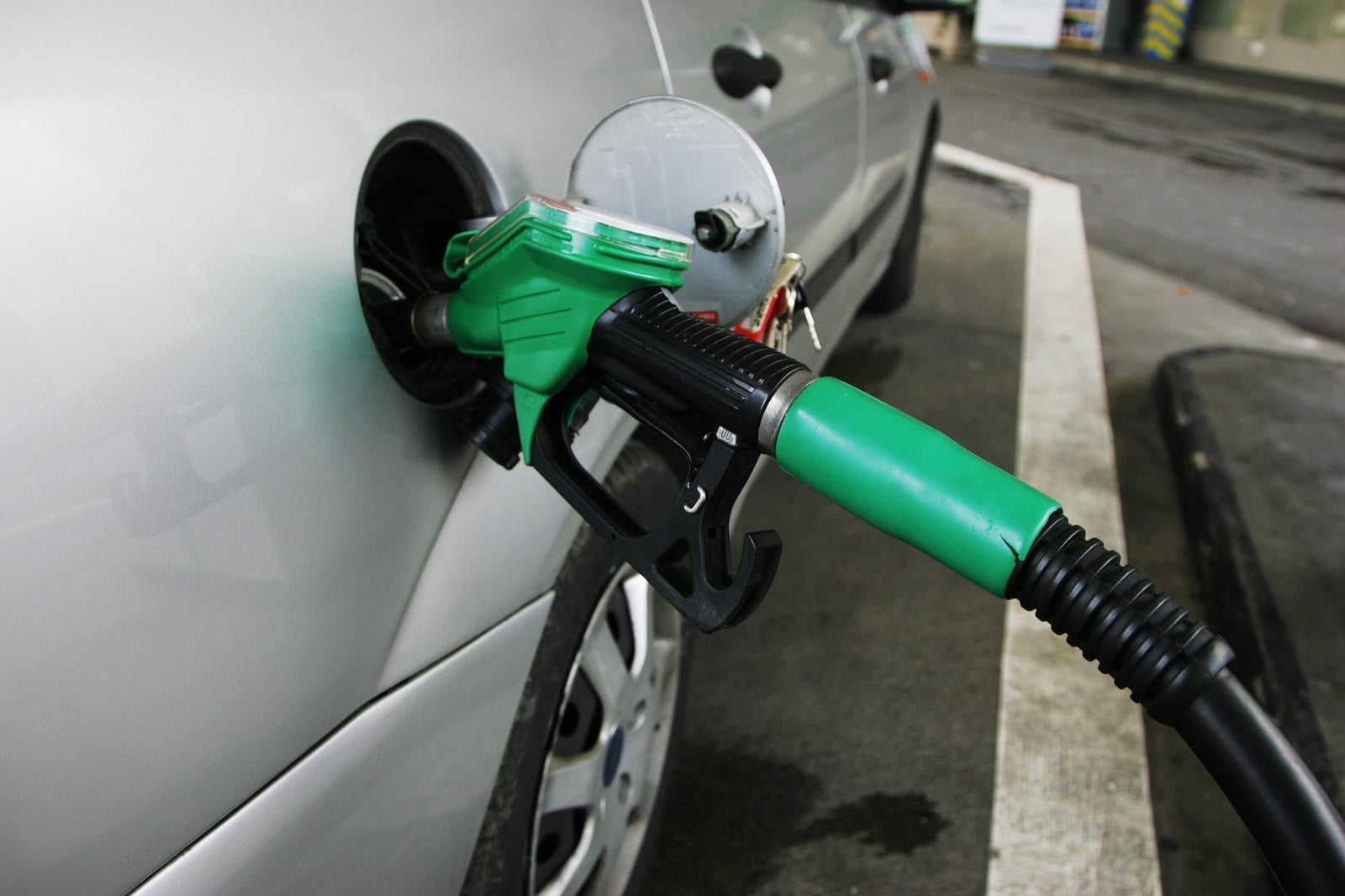
The American Automobile Association put the national diesel average at US$6.3103 a gallon for 16 September, against US$5.9424 a week earlier. Its page still carried that date when the desk read it on 17 September.
Regular petrol stood at US$4.3672 a gallon against US$3.1862 a year earlier, on the same association figures. A barrel falls in an afternoon and a pump falls over a month.
Two Senators Name A Country
Senators Tim Kaine and Adam Schiff filed a war powers resolution on 16 September 2026 to bar hostilities in or against Oman. Kaine’s own release of that date carries the text.
The resolution says Congress “has not declared war upon the Sultanate of Oman”, Stars and Stripes reported on 16 September. Kaine’s release quotes him saying the President has ordered strikes “in more countries around the world than any President in recent history”.
Schiff said in the same release that Congress “has not authorized any of these commitments of our armed forces”. Two senators have put a name to the next war before it starts.
The Senate’s published schedule for Thursday 17 September lists votes on a college sports bill and on a district judgeship, and no war powers vote. The chamber was due to convene at 10 a.m. Washington time.
The House of Representatives passed a different war powers resolution on Tuesday 15 September by 220 votes to 204. The clerk records roll call 307 on H.Con.Res. 93, which directs the removal of American forces from hostilities with Iran.
A concurrent resolution never reaches the President’s desk, which is why it cannot be vetoed and cannot bind. Congress is building a record rather than a limit.
Alberta Prices Its Own Exit
Alberta’s government released a report on 16 September costing separation at C$50 billion to C$170 billion, about US$36 billion to US$122 billion. The province’s own release puts that range over the first five years after separation.
The University of Calgary’s School of Public Policy wrote it for C$1.5 million, about US$1.1 million, of provincial money. It says a new state would need at least 70,000 civil servants.
The report models two paths and puts the effect on provincial output after twenty years between plus 3.4 and minus 16.2 per cent. Jason Nixon, the finance minister, said the government supports “a strong and sovereign Alberta within a united Canada”.
Elections Alberta puts ten questions to voters on 19 October, one asking whether the province should begin the legal process for a binding separation vote. A government that commissions the bill is not expecting to pay it.
Quebec votes on 5 October, and Éric Grenier’s tracker put the Parti Québécois near 29 per cent on 16 September. His model projected an average of 46 seats across ten thousand simulations, short of a majority.
Two provinces hold votes this autumn while Ottawa negotiates with two capitals abroad. A federation argues loudest about itself when it is busiest elsewhere.
What This Means From Latin America
Brazil’s Copom cut the Selic rate (Brazil’s benchmark interest rate) to 13.75 per cent on 16 September in a unanimous vote. The Federal Open Market Committee raised its own target range on the same afternoon.
The distance between those two decisions is the distance between an inflation that is falling and one that is not. Regional borrowers now pay more in dollars and less at home.
American diesel at US$6.3103 a gallon for 16 September is the freight cost that carries Brazilian soy and Chilean fruit north. Food prices in this region follow that number after a delay of weeks.
Canada spent Thursday accepting a European offer twelve days before American import bans on its alcohol and dairy begin. Several governments in this region have made the same calculation with less ceremony.
Mexico is the third party to the agreement whose origin rules that fact sheet of 8 September sets aside. A rule that does not shield Ottawa is worth reading in Mexico City.
What We Are Watching
- Carney landing back in Ottawa tonight — his office’s media advisory puts him leaving Strasbourg at 4.30 p.m. Strasbourg time and reaching the National Capital Region at 7 p.m. Ottawa time. What he says on landing is Canada’s first answer to the procurement memorandum.
- The American import bans that start on 29 September — the White House fact sheet of 8 September sets bans on certain Canadian alcoholic beverages and dairy products from that date. It says Canada has placed retaliatory tariffs on about US$20 billion of American exports.
- The Bank of Canada’s next interest rate decision — Governing Council left the policy interest rate at 2.25 per cent on 2 September and decides again on 28 October. Governor Tiff Macklem speaks in Halifax on 21 September at 11.20 a.m. Eastern time.
- The next Federal Reserve meeting in late October — the committee’s own calendar lists 27 and 28 October, with the next projections at the meeting of 8 and 9 December. The median path published on 16 September runs above the range set that day.
- Quebec’s provincial election on 5 October — Élections Québec confirms polling day, and Éric Grenier’s tracker put the Parti Québécois near 29 per cent on 16 September. A minority result would put a sovereignty question back into federal arithmetic.
- Alberta’s ten-question referendum on 19 October — Elections Alberta lists the questions, one of which asks whether the province should begin the legal process for a binding separation vote. A yes would start a process rather than end one.
- The Canada-Europe summit at the end of October — the Council of the European Union lists it for 29 and 30 October 2026, without naming a venue. That is where the word offered in Strasbourg either acquires content or does not.
More from the Rio Times Intelligence Desk on 17 September 2026: Africa · Asia · Europe. For how these stories developed, see the USA & Canada Intelligence Brief for 16 September and 15 September.
North American politics and trade policy and their bearing on this hemisphere run through our pillar coverage of The United States & Canada. That section carries the daily record behind this brief.
Frequently Asked Questions
What did Mark Carney tell the European Parliament, and what did he not agree to?
He told the chamber in Strasbourg on 17 September 2026 that Canada welcomes Europe’s ambition for an alliance. That wording is in his office’s own published text. Ursula von der Leyen had offered that same chamber the day before to make Canada “the first associate member of the European Union”. She said the two “share one ocean, one set of values, one way of seeing the world”. His office’s media advisory of 16 September set the address at 11.30 a.m. Strasbourg time. It set a joint media availability with Parliament President Roberta Metsola at 12.30 p.m. The text says Canada and Europe are “not fair-weather allies” and do not pursue zero-sum deals. It says he is not proposing a third bloc “in order to become a great-power rival – only with better manners”. It says Canada seeks resilience so that no one can “control our open markets, impair our sovereignty, threaten our territorial integrity, or undermine our freedoms”. He set out critical minerals, defence industrial capacity, artificial intelligence and computing, energy security, space and payments as the fields for cooperation. He offered liquefied natural gas and hydrogen “at large scale” to European buyers. Euronews reported him leaving the choice of terminology to Europe. United Press International reported him saying afterwards that Canada is “not in a position, nor seeking, to become a full member of the European Union”. Euronews quoted him saying that what matters is the substance. Euronews also reported that Article 217 of the Union’s treaties is the legal route officials name. Ireland’s foreign minister Helen McEntee said she welcomed the announcement “to explore associate membership for Canada”, and Spain backed the offer. France’s foreign minister Jean-Noël Barrot said the status “will need to be debated, examined in detail and analysed” before France takes a position. Backing the offer and backing its legal form are two different questions. No member state had published a position on the legal form, so far as this desk could establish by midday on 17 September.
What has Washington done to Canadian trade this week, and when does it bite?
Two things, on two dates. Donald Trump signed a presidential memorandum on 16 September 2026 titled “Restoring Reciprocity in Government Procurement”. The White House fact sheet of that date directs the Office of Management and Budget and the United States Trade Representative to act on it. They work with the Federal Acquisition Regulatory Council to remove “Canadian-origin items” from the federal civil procurement system. The fact sheet the desk read carries no deadline. It says Canadian companies hold preferential access to over 280 billion United States dollars of the American procurement system. Trump’s own post put the annual figure at more than 50 billion dollars, BNN Bloomberg reported. The two numbers measure different things, and neither document shows its working. Separately, the White House fact sheet of 8 September bans certain Canadian alcoholic beverages and dairy products from 29 September 2026. It rests those measures on Section 338 of the Tariff Act of 1930. It says the duties apply “regardless of whether a good originates under the U.S.-Mexico-Canada Agreement”. Gabriel Brunet, a spokesman for Dominic LeBlanc, said Canada would “review these measures” in the interest of Canadian businesses and workers. The Canadian Press carried that. Mélanie Joly said Canada is “still engaging with U.S. counterparts” but that “we need to stand on our two feet”, which describes a channel still open. The United States Census Bureau put American purchases of Canadian goods at US$233.7 billion in the first seven months of 2026. The two measures name alcoholic beverages, dairy products and federal civil purchasing, and the 8 September fact sheet took rock salt and cement off the tariff list on 15 September. Spirits Canada said on 9 September that about half of Canadian spirits production depends on American demand, and puts the sector at nearly 48,800 full-time equivalent jobs. Spirits Canada’s president, Cal Bricker, said in July that tariffs “impact farmers, manufacturers, hospitality businesses, retailers, governments and ultimately consumers in both countries”. For a Latin American reader, the practical point is that a neighbour inside a trade agreement is being treated as a competitor within it.
How did markets and politicians answer the Federal Reserve’s rise?
Short borrowing costs rose and long ones did not. The United States Treasury’s daily reading put the two-year government borrowing rate at 4.74 per cent on 16 September, from 4.67 per cent the day before. The ten-year rate moved from 5.00 to 5.01 per cent, and the thirty-year rate fell from 5.36 to 5.35 per cent. The Associated Press put the Standard and Poor’s 500 index at 7,551.81 at the close on 16 September, down 0.4 per cent. It put the Dow Jones industrial average at 51,461.90, down 631.21 points or 1.2 per cent, and the Nasdaq composite at 25,978.42. The Bank of Canada’s daily rate put the Canadian dollar at 1.3947 per United States dollar on 16 September, from 1.3917 the day before. Trump posted on Truth Social at 4.38 p.m. New York time that American rates should be “1%, or less”. The post ends in capitals with a demand to lower them. Kush Desai, a White House spokesman, called the decision “rather unfortunate” on Fox News. He said it was not “backed by a particularly compelling economic case”. The Federal Reserve then published the preliminary transcript of Chairman Kevin Warsh’s press conference of that day. The version the desk read carries his opening statement and ends before the questions. The Department of Labor reported on 17 September that initial claims for unemployment benefit fell to 196,000 in the week to 12 September, from an unrevised 206,000.
What would Alberta’s referendum on 19 October actually decide?
Whether to start a process, not whether to leave. Elections Alberta puts ten questions to voters on 19 October 2026. One asks whether Alberta should remain a province of Canada. The alternative is that the provincial government begin the legal process required under the Canadian Constitution for a binding referendum on separation. A vote for that second option would open the process rather than end it. Alberta’s government released a report on 16 September costing separation at C$50 billion to C$170 billion, about US$36 billion to US$122 billion. The province’s own release puts that range over the first five years after separation. The University of Calgary’s School of Public Policy wrote it for C$1.5 million, about US$1.1 million, of provincial money. It says a new state would need at least 70,000 civil servants. The report models two paths and puts the effect on provincial output after twenty years between plus 3.4 and minus 16.2 per cent. Jason Nixon, the finance minister, said the government supports “a strong and sovereign Alberta within a united Canada”. Quebec votes separately on 5 October. Éric Grenier’s tracker put the Parti Québécois near 29 per cent on 16 September, and projected an average of 46 seats, short of a majority. Where we do not know, we say so, and we correct in the open when we are wrong.
Sources: Prime Minister of Canada, The White House, Federal Reserve, United States Department of the Treasury. Also United States Department of Labor, Bank of Canada, Banco Central do Brasil, Council of the European Union. Then United States Senate, Clerk of the House of Representatives, Elections Alberta, Élections Québec, American Automobile Association, United States Census Bureau, Government of Alberta, Spirits Canada. And Reuters, Associated Press, The Canadian Press, Axios, Euronews. Plus BNN Bloomberg, United Press International, American Banker, Stars and Stripes, Rigzone, CNBC, The Writ. Reporting window 14–17 September 2026.
This article was produced by The Rio Times’ automated newsroom system. How we use AI · Report an error