U.S. Shifts Gears in Bangladesh Amid Geopolitical Jockeying
The U.S. has renewed its outreach to Bangladesh, signaling a strategic shift in the region.
The Biden administration’s Indo-Pacific strategy focuses on economic ties and climate change. At the same time, it balances concerns over democracy and human rights.
Last year, U.S. Assistant Secretary of State Donald Lu visited Bangladesh, emphasizing democracy before contentious elections.
Despite threats of visa restrictions, Prime Minister Sheikh Hasina secured a fourth term amid election manipulation allegations. Both the U.S. and the U.K. criticized the elections as “not free and fair.”
This year, Lu returned to Bangladesh with a different message. He focused on bolstering economic partnerships and climate initiatives, avoiding meetings with opposition leaders and rights groups.
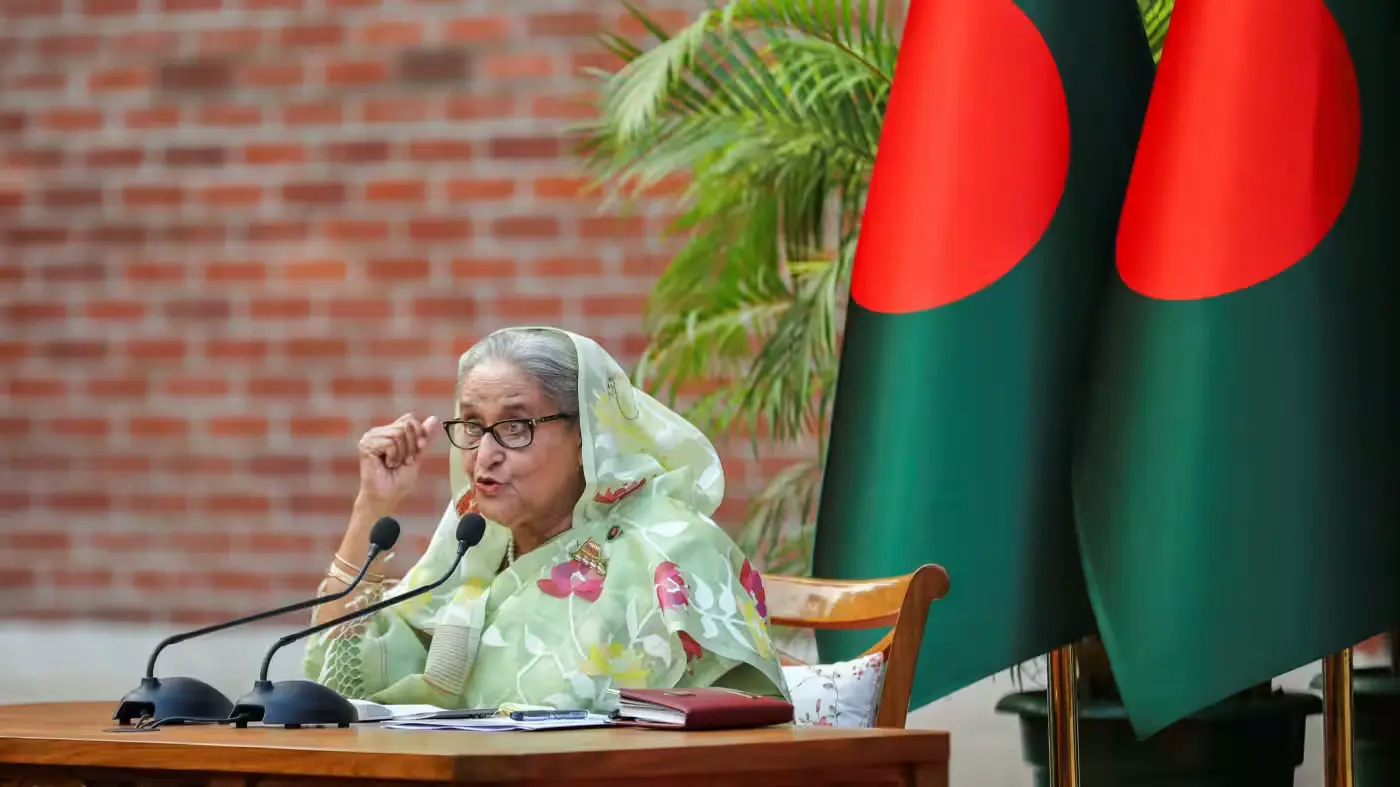
This shift suggests the U.S. is accepting Bangladesh‘s political reality to reset relations.
Lu acknowledged that previous election warnings had increased tensions. He emphasized the need to “move forward” and “rebuild trust.”
Bangladesh, a significant apparel exporter to the U.S., holds strategic importance for Washington.
Positioned between India and Myanmar, it is seen as a valuable ally in containing China’s regional influence.
Just a month after the controversial January election, President Joe Biden expressed a “sincere desire” to work with Hasina.
They aim to address various issues, including a shared vision for a free and open Indo-Pacific.
Navigating Complex Dynamics
Over the past the past five decades, the two countries have developed complex ties encompassing economic, security, and transnational issues like climate change.
The U.S. remains a top destination for Bangladeshi exports, crucial for its growing economy. Washington has also provided over 61 million COVID-19 vaccine doses to Bangladesh.
Despite positive aspects, 2021 was challenging for U.S.-Bangladesh relations. The U.S. imposed sanctions on Bangladesh’s Rapid Action Battalion for human rights violations.
The Biden administration did not invite Bangladesh to the virtual Summit for Democracy. This highlighted concerns over democratic backsliding and human rights abuses.
Bangladesh maintains important relationships with India and China, balancing these with its ties to the U.S. India seeks strategic and economic cooperation.
In contrast, China invests in Bangladesh’s infrastructure and military. Bangladesh leverages its U.S. ties to negotiate better terms with both India and China.
However, increasing U.S.-India collaboration through frameworks like the Quad complicates this balance.
U.S. and Chinese Interests in Bangladesh
Recently, U.S. Undersecretary for Political Affairs Victoria Nuland visited Dhaka. She signed a draft defense cooperation agreement.
On the same day, Prime Minister Hasina inaugurated a Chinese-funded power plant. This event underscored Bangladesh’s balancing act between major powers.
Infrastructure development remains Bangladesh’s priority. China offers significant support. However, the U.S. is Bangladesh’s largest export market, vital for its economy.
While the U.S. prioritizes business and geopolitical interests in Bangladesh, it still addresses corruption and human rights issues.
The recent sanctions on retired Bangladeshi army chief Aziz Ahmed and his family for corruption highlight this approach.
Analysts believe the U.S. aims to maintain influence over Bangladesh’s government while avoiding major diplomatic stress.
The renewed U.S. outreach to Bangladesh reflects a strategic recalibration. This approach balances immediate economic and strategic interests with longer-term concerns about democracy and human rights.
This article was produced by The Rio Times’ automated newsroom system. How we use AI · Report an error
Read More from The Rio Times