U.S. Dollar Strengthens Amid Central Bank Actions and Fiscal Concerns in Brazil
As August concluded, the financial markets were abuzz with significant economic data releases from Brazil and the United States.
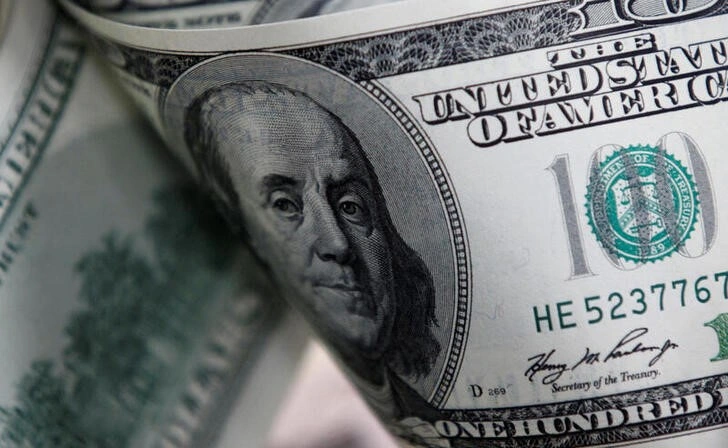
Amid these developments, the U.S. dollar, tracked by the USDBRL rate, climbed for the fifth consecutive session, settling at R$ 5.6350, a slight increase of 0.21%. The day saw the dollar peak at R$5.6919, marking a 1.22% rise.
This uptrend mirrored global movements, with the DXY index, which measures the dollar against a basket of six major currencies, rising by 0.35%.
In the broader context of the month, however, the dollar saw a marginal decrease of 0.36% despite a weekly increase of 1.84%.
Central Bank Interventions Shape Market Dynamics
The day’s dollar trajectory was notably influenced by two strategic interventions by Brazil’s Central Bank. The first occurred in the morning when the bank injected $1.5 billion into the spot market.
The afternoon saw further action with the sale of 15,300 traditional currency swap contracts, equivalent to $765 million, from an available 30,000 contracts valued at $1.5 billion.
In addition, these operations are akin to trading dollars in futures markets, which are pivotal in setting spot market rates.
These interventions were primarily driven by two factors. The first factor is the anticipated capital outflows linked to the rebalancing of the MSCI Brazil ETF, which now includes Brazilian companies listed abroad like XP and Nubank.
The second factor is the volatility around the end-of-month Ptax rate, which is crucial for futures contract settlements in early September.
Economic Indicators and Market Reactions
Domestically, the economic landscape was also stirred by the release of several indicators.
Notably, the consolidated public sector in Brazil reported a primary deficit of R$ 21.3 billion for July. This marks a slight improvement from June’s 2.4% deficit relative to GDP to 2.3% in July.
This scenario unfolds as fiscal risks loom, given rising mandatory spending and challenges in aligning fiscal outcomes with established ceilings.
The employment sector offered a glimmer of optimism, with the unemployment rate dropping to 6.8% for the three months ending in July. This is the lowest rate for this period since records began in 2012.
This robust job market performance coincides with the Central Bank’s acknowledgments of unexpectedly strong economic activity.
Global Economic Influences and U.S. Monetary Policy
Internationally, economic indicators also played a role in currency valuations. The U.S. Personal Consumption Expenditures (PCE) index rose by 0.2% in July month-over-month, aligning with expectations.
Annually, the PCE reached 2.5%, slightly above the Federal Reserve’s target of 2%. These figures reinforced expectations that the Fed might initiate a monetary easing cycle in September.
Additionally, the market anticipated a potential reduction in interest rates by 0.25 percentage points, with odds favoring this outcome at 69.5%.
In Summary
Amid this web of economic narratives, the interplay between domestic interventions, fiscal concerns, and global economic indicators underscores the complexity and interconnectedness of today’s financial markets.
The Brazilian Central Bank stays vigilant and stands ready to take further action in the currency market if needed.
This highlights the delicate balance central banks worldwide must maintain while navigating economic uncertainties and market expectations.
This article was produced by The Rio Times’ automated newsroom system. How we use AI · Report an error
LatAm Markets: Live Signals → — real-time movers, turnover leaders and FX across Latin America.
Read More from The Rio Times