A Short History of the Petro, Venezuela’s Cryptocurrency
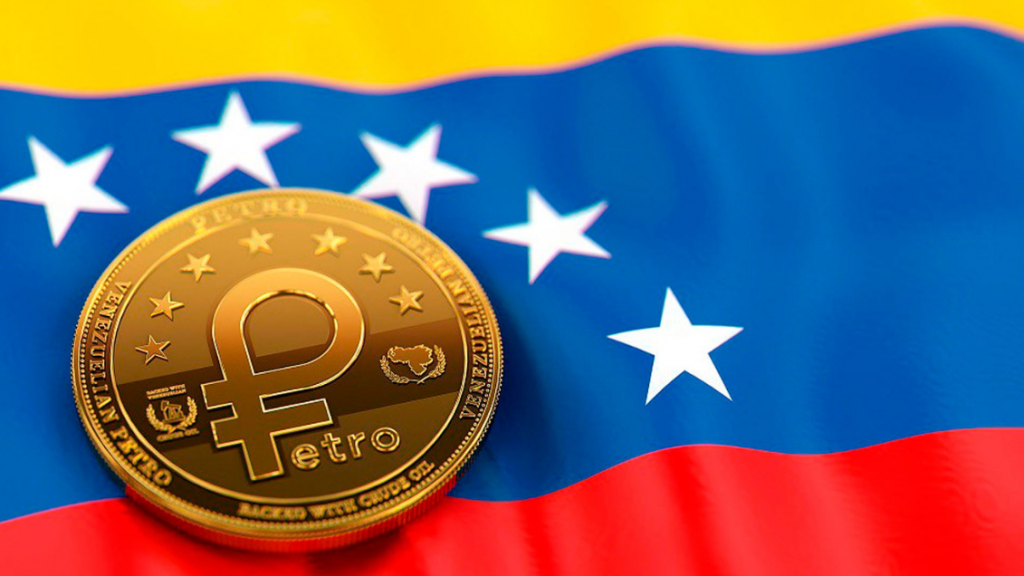
RIO DE JANEIRO, BRAZIL – In reaction to the economic crisis in Venezuela, which has been ongoing since 2013, the government of President Nicolás Maduro officially began selling a specially created cryptocurrency, called the Petro, in February 2018.
On the one hand, this was intended to circumvent the tightened economic sanctions imposed by the USA, which made it more difficult for the government to access international capital.

On the other hand, by theoretically linking the Petro to the price of oil, the government pledged to provide a stable alternative to its national currency, the “bolívar fuerte”, which at the time was plagued by increasingly high inflation. Since its inaugural sale, the Petro has been the subject of much debate: its usefulness, even its existence, has been challenged.
Through the progressive extension of its functions and the addition of various anchors, many economists began to speak of “the Petro”. In order to be able to better assess the significance and impact of the Petro, its development in the context of Venezuela’s general economic situation will be outlined below.
Pre-sale allegedly raised US$ 5 billion in bids
From February 20th, 2018, according to Maduro, 38.4 million of the total of 100 million Petros were initially available for pre-sale. In a second round, all Petros except for a remainder of 17.6 million were to be sold in an Inicial Coin Offering (ICO).
The selling price (less some initial discounts) was set at US$60, which was equivalent to the value of one Venezuelan barrel of crude oil in mid-January 2018. According to the official white paper, Venezuelan oil reserves were deposited as collateral. This distinguished the Petro from other cryptocurrencies. However, how far its owners would actually get hold of the allegedly deposited oil was not further explained in the white paper.
As a result, a number of crypto-rating websites rated the Petro as fraudulent (scam) from the outset. However, according to President Maduro, the pre-sale of the Petro alone would have attracted offers worth US$5 (R$22) billion by March 2018. However, many uncertainties and doubts about the authenticity of the Petro and the revenues generated could not be dispelled at that time, as neither an official list of buyers nor transactions could be proven. Notwithstanding these discussions, US President Donald Trump decreed a ban on all transactions with the cryptocurrency in March 2018.
Currency reform to fight ongoing hyperinflation
Despite the introduction of the Petro, the economic crisis in Venezuela worsened further in 2018, resulting in hyperinflation of more than one million percent for the year. This was triggered by a sharp increase in the money supply by the Venezuelan Central Bank over the years, which was repeatedly criticized from an economic policy perspective.
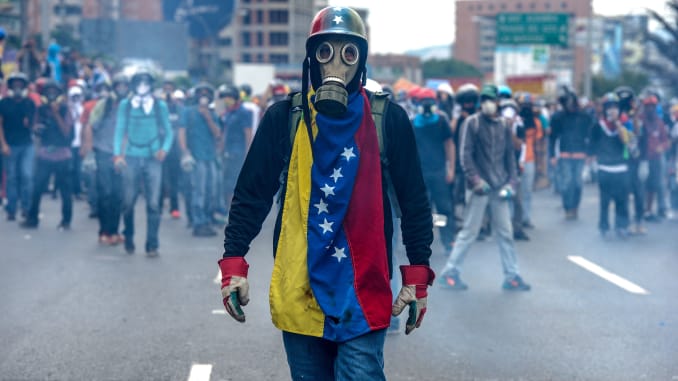
The liberalization of the fixed exchange rate system and the abolition of the fraud-prone preferential exchange rate for selected imports also had no lasting effect on inflation: despite the earlier introduction of larger banknotes in 2017, cash became scarce and unusable. As a result, the US dollar became increasingly widespread as a means of payment. The government initially reacted with a currency reform and devaluation.
On August 20th, 2018, it introduced the Bolívar Soberano (Sovereign Bolívar, VES) at a ratio of 1 in 100,000 to the Bolívar Fuerte and pledged to link the VES to the Petro to counter inflation.
The Petro’s many faces
It was here that the first contradictions in the concept of the Petro began to come to light. President Maduro announced that from then on the Petro would also be used: a) as a currency unit for pricing goods and services, and b) to stabilize the inflation-plagued minimum wage.
The minimum wage was to remain stable from then on and be worth half a Petro. The government wanted to fight the inflationary spiral by trying to link the VES, the Petro and the dollar and to set the minimum wage at half a Petro. The initial point of this balance in August 2018 was as follows:
The Petro had been previously set by the government at a rate of US$60. The exchange rate of the new VES to the dollar was to be 60:1. The value of the Petro divided by two was US$30, multiplied by the exchange rate of the VES to the dollar (60:1), resulting in a minimum wage of 1,800 VES. The fixed basis for the proposed conversion and setting of prices in Petros was set at 1:3,600.
Anchors were loosened
But the VES’ underlying exchange rate of 60:1 against the dollar did not hold up at the state auctions nor on the black market. By the end of November 2018, the dollar no longer cost 60 VES, but rather 151 VES at state auctions and 406 VES on the black market. As a result, the VES prices for consumer goods, most of which are imported in dollars, also rose.
The Petro in VES also inevitably increased in value. The only factor lagging behind this development was the minimum wage, which was originally calculated at the 60:1 exchange rate of VES to the US dollar and was now rapidly losing value.
From December 1st , the minimum wage was raised from 1,800 to 4,500 VES, and further steps were to follow. In parallel, but with little awareness on the part of the public, the fixed conversion rate for prices in Petro was adjusted from 1:3,600 to 1:9,000. However, since the imposed dollar value of the Petro remained unaffected, this effectively resulted in a devaluation of the VES and cancelled out the pledged link to the Petro.
Creeping dollarization in the background
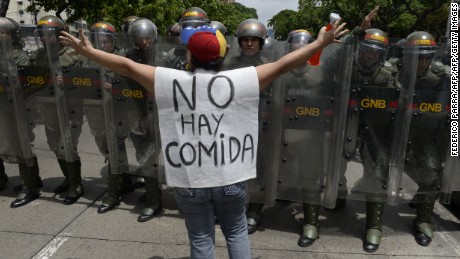
After a brief stagnation period, inflation regained momentum and larger VES banknotes needed to be introduced again in June 2019. Caught in this inflation and devaluation spiral, the government was forced to make a paradigm shift: After years of rejecting the US dollar, until considering its relegation as a payment and accounting unit for Venezuela’s international business, President Maduro spoke positively for the first time in a television interview about a potential dollarization and its advantages to the Venezuelan economy.
In doing so, he indirectly abandoned the stabilization of the VES. At that time, according to estimates, 40 percent of all business in Venezuela was being conducted in the US currency. But since these statements, no steps have been taken in this direction.
The Petro is real
Contrary to many initial assumptions from the foreign press and the opposition, the Petro is an actual cryptocurrency, with which, according to the Venezuelan Central Bank (BCV), millions of real transactions have now been conducted. The state guarantees its acceptance for government services, tax payments, and so on.
When at the end of 2019 half a Petro was distributed as Christmas bonus to all pensioners and public servants, there were big queues. The stores accepting the Petro as a means of payment and using BCV’s Biopago payment system were pleased with increased sales despite technical issues.
Do sellers stick to the Petro?
But after the Biopago system was suspended in early January 2020, it was announced that the state would no longer buy the Petros by paying in Bolivares. From then on, companies as well as individuals had to try to sell their Petros through an online exchange, in order to convert them into Bolívares. However, the demand for Petros was limited and the sellers were afraid to be left sitting on their Petros.
Suppliers and importers, who bring the bulk of goods into the country, and international companies, still did not accept Petros. In addition, expected business with oil, other raw materials or debt repayments in Petros, for instance with Russia or China, did not materialize. As a result of this economic uncertainty, some traders raised often arbitrary and highly inflated prices in Petro, which the state could neither control nor prevent and which cast a shadow on potential price developments for the Petro in the future.
Lack of confidence in the economy
The third option for Petros owners is now to save them for trading at a later time. The usefulness of this option, like all other options, will depend on how the Petro is accepted as a means of payment in the future and becomes convertible into other currencies. As long as the Petro is only accepted by the government and remains without demand at home and abroad, ownership of Petros is not very attractive and will raise circulation and acceptance issues.
A recent indicator of the low level of confidence in the Petro was the increasing demand for dollars for the payment of Christmas bonuses and short-term transactions at the turn of the year 2020. The exchange rate of the US dollar on the black market doubled in a few days. This presumably occurred because the state paid the Petro sales of traders in VES and thus increased the money supply. The traders immediately took the newly created money to the black market to swap for US dollars and pushed up demand.
Economic issues behind the Petro remain
To date, the Petro has hardly changed anything in the internal troubles of the Venezuelan economy. The government’s pledges to counter price inflation, the devaluation of the minimum wage and the new VES currency, have not yet been kept and turned out to be pure wishful thinking. Critics were quick to point out that the measures against rising prices and inflation would remain purely cosmetic unless a comprehensive plan for economic rebound was put in place.
Although, purely hypothetically, the Petro could make Venezuela’s payment transactions cashless and end the shortage of means of payment, even then the causes for inflation would remain unaffected. Moreover, the formula, the willingness of the government and, as time progresses, the means for a fundamental economic rebound in Venezuela are lacking: debt repayments are putting pressure on the budget and currency reserves; US sanctions are making it difficult to raise new debt for investment; the oil sector, despite a recent rebound, only produces half of what it did in 2015; and there is even public speculation about a previously unthinkable partial privatization of the state-owned oil company PDVSA.
Will the government change its policy?
The policy of deferring or refraining from unpopular economic adjustments for fear of losing votes has placed the government in a serious quandary. While the population’s economic position worsened dramatically, foreign debts have continued to be paid.
Many people have left the country: the disputed figures range from 1.3 to 3 million refugees. Since the onset of the crisis, the Venezuelan government has stood by and watched as the scope for effective economic reform has become increasingly narrow. The government complained of an economic war, favored political rather than economic explanations, took many measures that brought little improvement, and lagged well behind events.
It remains to be seen to what extent the government is willing and able to improve the country’s economic situation within the scope of its dwindling possibilities. In any case, such an improvement is hardly to be expected in the medium term.
More: Latin America news in English, every day from The Rio Times.
This article was produced by The Rio Times’ automated newsroom system. How we use AI · Report an error
LatAm Markets: Live Signals → — real-time movers, turnover leaders and FX across Latin America.
Read More from The Rio Times