The militarization of southern Chile decreed by Boric has reached its first anniversary
Although before assuming the presidency, he was critical of the militarization of the Wallmapu – a historic Mapuche territory in the Mapudungun language – May 17 marked one year since President Gabriel Boric decreed a constitutional state of emergency in southern Chile.
Sputnik spoke to analysts to determine if the measure had had any effect.
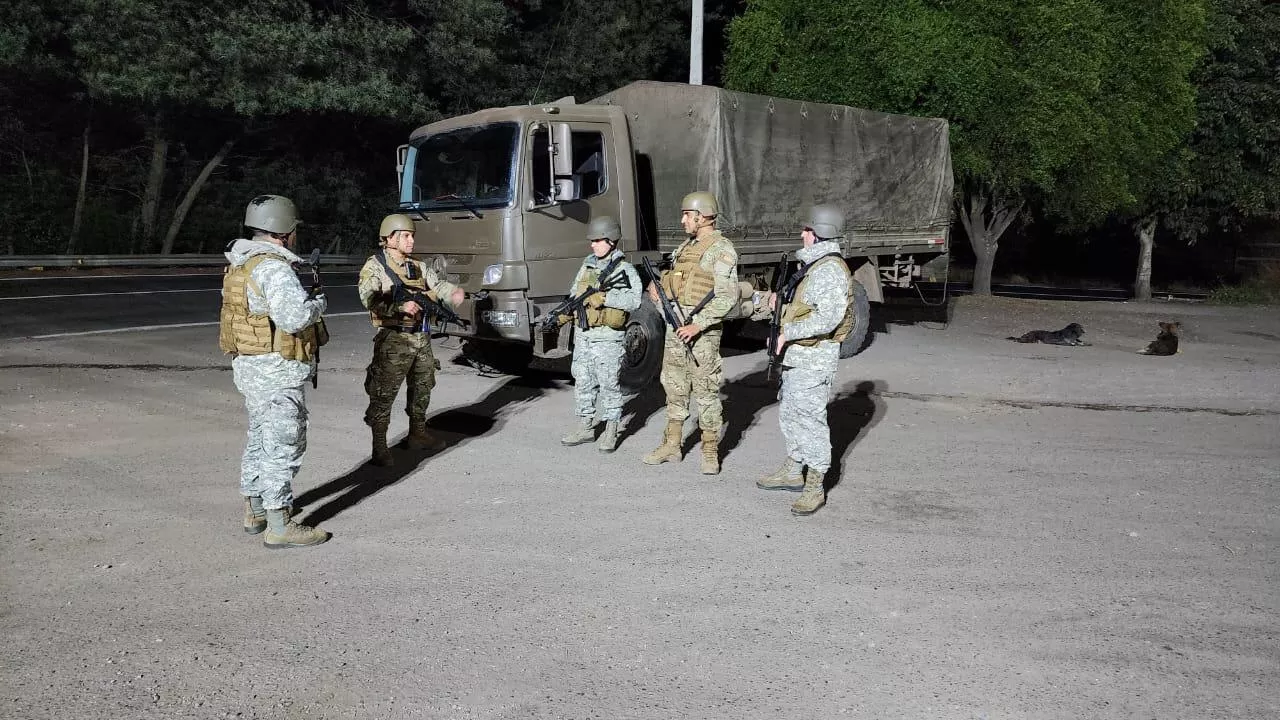
In his presidential campaign, the current president had indicated his disagreement with the “militarization of Araucanía” ordered by the Government of Sebastián Piñera (2010-2014 and 2018-2022) in October 2021.
The State of Exception allows the deployment of the Armed Forces to collaborate with Carabineros (militarized police) in managing security tasks.
This tool, Piñera believed, is intended to combat “organized crime and terrorism that has taken root in these territories”.
Piñera’s resolution was in response to the arson attacks, attacks on logging companies, and other criminal acts that have occurred in recent years in the country’s Southern Macro-zone, which some political and business sectors have attributed to Mapuche settlers.
Boric stated at the time that the decision was a “failure of state policies and only deepens the mistakes that have been made. Therefore, it seems to me that it is a bad path”.
When the current president took office, he decided not to renew his predecessor’s measure.
However, on May 17, 2022, the Government again decreed a state of emergency in southern Chile, which has since been extended 23 times and has just completed its first year.
The constitutional State of emergency is in force in the provinces of Arauco and Bío Bío – both in the Bío Bío Region – and the Araucanía Region.
These are an area of historical belonging of the Mapuche people, whose struggle is mainly focused on the restitution of their ancestral lands.
For decades, there has been a territorial dispute in this area known as Wallmapu, which confronts the Chilean State, Mapuche communities, and forestry companies.
In a conversation with Sputnik, Mapuche academic Natalia Caniguan, a researcher at the Center for Intercultural and Indigenous Studies (CIIR), pointed out the absence of “logic” insofar as “it has been implemented consecutively for a year now”.
The state of exception loses “its sense of being because it is not applied to resolve a specific situation, but rather it has effectively become part of the daily routine in this territory, the constant militarization, the roadblocks and so on,” said the researcher.
She also said that the extension of the measure responds to a “lack of conviction on the part of the Government regarding how to deal with the Mapuche issue.”
“It does not want a political focus, but only a security focus, and with that, to continue replicating the measures we have seen for many years”.
“When it is said that there is a state of exception and the exception is transformed into normality, there is a contradiction,” said political analyst Eduardo Araya, an academic at the Pontifical Catholic University of Valparaiso (PUCV) and Ph.D. in political science, in a dialogue with Sputnik.
“There is a political problem that a state of exception alone will not solve. But in the meantime, as acts of violence affect civil society, the State has to demonstrate that it is doing something,” added Araya.
The analyst explained that people’s perception of insecurity is at the top of the public agenda.
“All the more reason for the state to appear to be doing something. And even if the State knows that by that route [state of exception], it will not solve the problem in the end”.
GOVERNMENT DATA
The Undersecretary of the Interior, Manuel Monsalve, participated on May 16 in signing the Declaration of Joint Work for the execution of the National Policy and Plan Against Organized Crime at the Gendarmerie premises.
There, he spoke to the press about this year of militarization in the South.
The official of the Boric Administration informed that the acts of violence have decreased in the regions where the state of exception is in force.
He assured that “a critical situation” remains despite highlighting reduced attacks.
“There is 30% less rural violence in the South Macrozone. ”
“There is an effect of the measures that the Government has taken”, said the Undersecretary, and added that this “2023, we continue with a downward trend”.
Finally, Monsalve assured that “the state of exception strategy will be strengthened”.
For Caniguan, the measure has worn out and has become “ineffective”, despite the decrease in violent acts reported by the Government.
The academic highlighted that there were other “organic” processes in the region and not “necessarily the state of exception is the one that is reducing violence in the area”.
Araya explained that insecurity is not a question of percentages.
“It makes no sense for you to tell civil society or a person in Araucanía that before, we guaranteed 30% of their security and now 50%.”
“That doesn’t make sense to the person who lives in that area. Because the security problem is a perception, you either have it, or you don’t”, he stated.
THE OPPOSITION’S DEMANDS TO BORIC
A group of parliamentarians from the Independent Democratic Union (UDI) demanded that the executive decree a state of siege in the region of La Araucanía and the provinces of Arauco and Bío Bío.
“Since mid-April to date, arson and terrorist attacks have intensified in the southern regions of our country, even to the point of threatening the physical integrity of dozens and hundreds of citizens,” the parliamentarians warned in a document delivered to La Moneda, the seat of Government, on May 15.
“For the same reason, in his capacity as President of the Republic, we believe that it is indispensable that he decrees new measures to combat the terrorist groups operating in the south, one of them being a state of siege, considering that the current state of emergency has been insufficient”, they criticized.
Araya commented that decreeing a state of siege in the area is “no solution” since the resolution of the problem “is that there be no violence.
The nature of the conflict has demonstrated the State’s lack of capacity to have intelligence as a preventive action. It has improved, but it is still insufficient”.
“For example, intelligence has improved concerning dismantling gangs that do timber theft and smuggling.”
“But in the core of the terrorist organizations themselves, which have also been fragmenting, where the State has little intelligence,” the academic said.
The analyst commented that dialogue must take precedence at some point, but it is unclear whether the current Government has done anything concrete.
The CIIR academic explained that the UDI’s position of requesting a state of siege does not seem strange to her since it has been the tonic of that sector.
“With the rise of the ultra-right in our country, these proposals have a foundation in this political context that is being experienced.”
“However, I believe that they are media measures, which do not go to the bottom of the situations that need to be solved, which require a political and not a security perspective”, concluded Caniguan.
With information from Sputnik
News Chile, English news Chile, Chilean politics
More: Chile news in English, every day from The Rio Times.
This article was produced by The Rio Times’ automated AI newsroom. Editorial responsibility: Matthias Camenzind, Publisher and Editor-in-Chief. The Rio Times also runs Ask Rio Times, which answers from 100,000+ of our own articles, the daily Latin America Power Map, and prediction-market odds on elections and markets.. How we use AI · Report an error