Tariffs and Transshipment: Vietnam’s Balancing Act as U.S. Clamps Down on Chinese Trade Evasion
A TikTok clip from Malaysia recently captured workers grinding off Chinese markings from cargo, hoping to rebrand goods as “Made in Malaysia” before export.
This scene, echoed in Vietnamese ports, exposes the lengths to which exporters go to dodge U.S. tariffs. But the game is changing fast.
Documents, customs records, and government statements show Vietnam now faces mounting U.S. pressure to halt these practices or risk losing access to its most valuable market.
On April 2, 2025, the U.S. imposed a 46% tariff on Vietnamese goods, pausing enforcement for 90 days but demanding action against origin fraud.
Vietnam responded with urgency. Customs intercepted over 2,000 semi-finished Chinese products at the border, sending them back due to improper documentation.
The trade ministry issued new rules tightening the issuance of “Made in Vietnam” certificates, especially for companies with sudden surges in export applications.
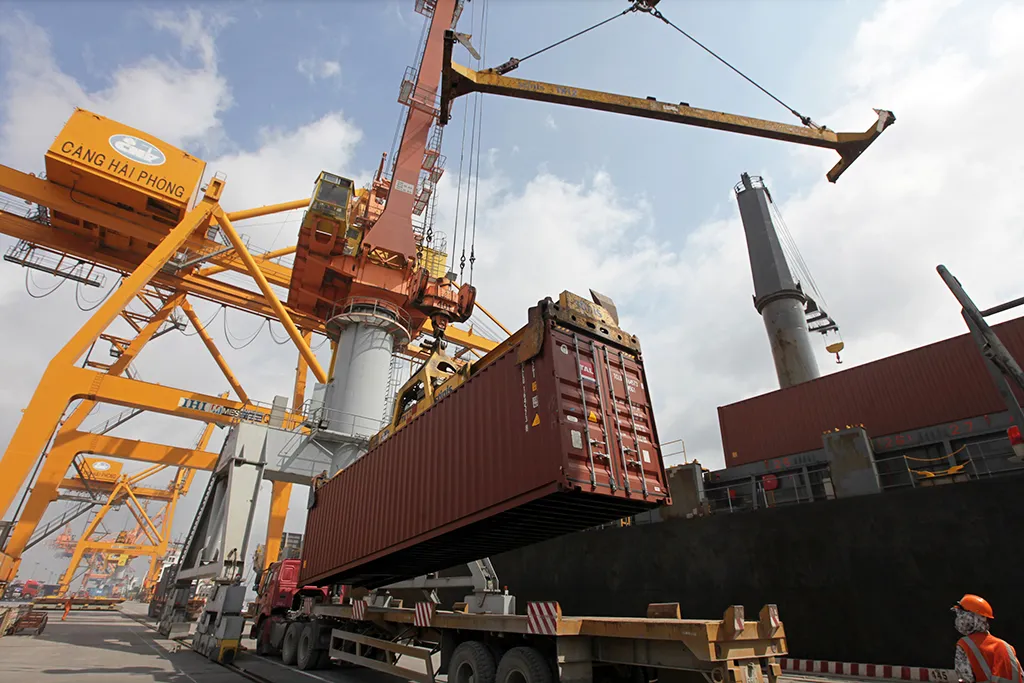
Factories now face more inspections, and officials propose extra measures to prevent illegal transshipment. Vietnam’s crackdown comes as the U.S. accuses China of using Southeast Asian nations as back doors to the American market.
Nearly 40% of Vietnam’s imports come from China, and U.S. authorities have documented cases of Chinese goods—aluminum, steel, timber—being relabeled in Vietnam to skirt tariffs as high as 374% on Chinese exports.
In one high-profile case, Vietnamese customs discovered 1.8 million tons of aluminum, worth $4.3 billion, imported from China and other countries, much of it sitting in warehouses under investigation for origin fraud.
U.S. Tariffs Pressure Vietnam and Southeast Asia
The U.S. has made clear that countries enabling Chinese tariff evasion will face joint punishment, including possible export suspensions. This threat has spurred not only Vietnam but also Thailand, Malaysia, Singapore, and Cambodia to tighten controls.
Korea and Japan have reported similar schemes and are stepping up enforcement. China, seeing its trade routes blocked, sent President Xi Jinping on a tour of Vietnam, Malaysia, and Cambodia in mid-April, signing 45 agreements with Vietnam on AI, railways, and agriculture.
Yet, Vietnamese leaders remained guarded, issuing vague joint statements and avoiding direct criticism of U.S. policy. Instead, Vietnam’s prime minister met with the U.S.-ASEAN Business Council, emphasizing the country’s “unique bond” with the U.S. and signaling readiness to negotiate a bilateral trade deal.
Vietnam’s economy stands at a crossroads. The U.S. is its largest export market, accounting for $123 billion in surplus last year and about 30% of its GDP.
Analysts warn that a full 46% tariff could shave up to 1 percentage point off GDP growth, which has already been revised down to 6% for 2025. Inflation remains at 4%, but the dong faces pressure as investors watch the standoff.
Vietnam’s leaders have little room for error. They rely on China for manufacturing inputs but need the U.S. for export growth. By cracking down on transshipment and tightening rules, Vietnam signals it will not risk its American market for short-term gains from China.
The U.S. tariffs, more than any diplomatic overture, have forced Vietnam and its neighbors to choose sides—revealing the hard limits of China’s regional influence when faced with the realities of global trade enforcement.
All details and figures in this report are based strictly on official documents, customs data, and direct statements from government authorities.
This article was produced by The Rio Times’ automated newsroom system. How we use AI · Report an error
Read More from The Rio Times