Supreme Court Chief Justice Suspends Witzel’s Impeachment; ALERJ to Appeal
RIO DE JANEIRO, BRAZIL – Federal Supreme Court (STF) Chief Justice Dias Toffoli granted Wilson Witzel‘s defense counsel’s petition and ordered a new special committee to conduct his impeachment process in the Legislative Assembly. The ruling was handed down on Monday, July 27th.

The Justice agreed with the plaintiff’s argument that there was no compliance with the requirement of poltical party proportional representation in the committee. A new committee should now be formed. This, in practice, gives the governor of Rio de Janeiro more time. Toffoli considered the approaching deadline for Witzel to submit his defense to the committee, which would end on Wednesday.
“I am of the opinion that there is a legal basis for the argument of violation of the provisions contained in STF’s Stare Decisis Precedent 46, and the authority of the decision delivered in ADPF-MC No. 378/DF by Appelate Judge Elton Martinez Carvalho Leme, Reporter of Writ of Mandamus No. 0045844-70.2020.8.19. 0000, in progress before the Special Institution of the Rio de Janeiro State Court of Justice, by legitimizing the creation of the special impeachment committee with no regard for the required proportional configuration of political parties and parliamentary blocs. and without a plenary vote on the names proposed by the leaders, albeit in a symbolic manner,” said the STF Chief Justice.
According to Witzel’s petition, the president of the Rio Legislative Assembly (ALERJ), André Ceciliano, violated the federal law that defines the trial for [impeachable] crimes of responsibility and judgments by the STF by creating a special committee without a vote and lacking party proportionality. One of the examples of case law mentioned by the attorneys was that of ex-president Dilma Rousseff, the procedure for which was defined by the Supreme Court.
Last week, ALERJ petitioned for Witzel’s plea not to be granted – although it conceded that the committee analyzing the impeachment was not exactly proportional to party representation in the state legislature.
“With all due respect, why should a committee tasked with giving an opinion – that is, to pronounce itself – on a complaint for a crime of responsibility be so large as to exceed 35.7 percent of the plenary composition of the Rio de Janeiro House? There is simply no need for it,” said the House. The argument failed to convince the Chief Justice.
ALERJ to appeal Toffoli’s decision on Witzel’s impeachment
The Legislative Assembly of Rio decided on Tuesday morning, July 28th, to appeal Justice Dias Toffoli’s decision.
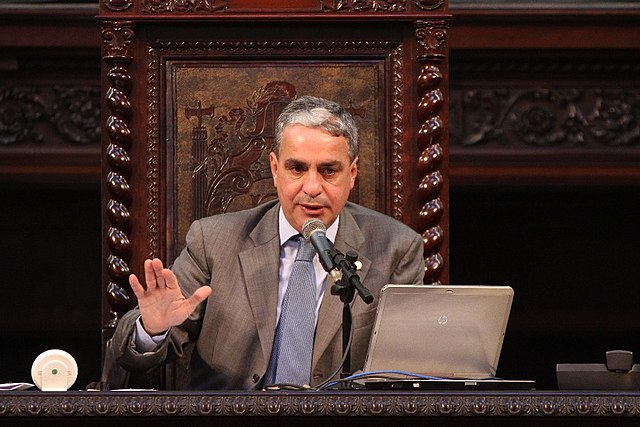
The ALERJ president, André Ceciliano, met on Tuesday morning, July 28th, with the state Prosecutor General to decide on action before the injunction granted by Toffoli, the justice on duty during the judicial recess. “The governor has the right to appeal, but we will do everything that must be done regarding the progress of the process,” Ceciliano said. The rapporteur of the case in the STF is Justice Luiz Fux, who is from Rio de Janeiro and has a good rapport with the legal class of Rio de Janeiro – Governor Witzel is a former judge.
“The House will argue that the process established by Law 1079/50 (Impeachment Law) is being observed, with all parties represented on the special committee that analyzes the complaint and ensures the governor’s broad defense,” the ALERJ said in a statement. “A meeting between party leaders was held yesterday afternoon to define the date on which the appeal will be filed.”
The timing of the appeal involves the fact that the STF is still in recess, where the Chief Justice hears all appeals directed to the full court. It would not make much sense to appeal the decision to Toffoli himself, thus making it more logical to lodge the appeal next week, when the full STF will be back in session.
Witzel had until this week to present his formal defense to the committee. With Toffoli’s unanimous decision, he has bought more time.
His attorneys argue that the impeachment process in the House has disregarded precedents set by the Court in other proceedings. The special committee, for instance, should be formed taking into account the size of each party’s representation in the House – rather than with a deputy from each party, which was the case.
In practise, Toffoli’s ruling pushes the case back to its initial stage, requiring the creation of a new committee. The representatives of each party would need to be elected by their respective benches.
In addition to his legal victory, Witzel went on to politically nod to deputies – something that, according to legislators, the governor was reluctant to do from the outset. Last week he renamed former federal deputy André Moura to the Chief of Staff in order to strengthen political dialogue with the Assembly. Moura’s dismissal in May added even more fuel to a fire that already burned the Rio de Janeiro official, who was accused of being involved in corruption cases in the healthcare sector.
Although the mood has improved with Moura’s return, there is an understanding in the ALERJ that, in practical aspects, nothing changes in the governor’s political situation. He is estimated to have a maximum of 14 votes in the full chamber, but in order to prevent him from being impeached, he would need 36 out of 70.
His appointment comes at a time when the government is also distributing administrative posts and changing aspects of the administration that used to be criticized. Among them was the influence of the first lady Helena Witzel, who had a room next to her husband’s office and was seen as having a strong influence on him – more than the secretaries, despite holding no official position in the government. Since the Federal Police operation against the couple in May, however, she has become more discreet and has not shown up in Witzel’s office.
Source: Veja; Estadão Conteúdo
More: Brazil news in English, every day from The Rio Times.
This article was produced by The Rio Times’ automated newsroom system. How we use AI · Report an error
Read More from The Rio Times