Latin America Steel Falls Across the Board as Usiminas Drops 2.70%
Key Facts
- Usiminas fell 2.70% to R$6.86 (about US$1.32), joining Brazil’s other big listed steelmakers in the red on Thursday, September 24, 2026.
- Gerdau dropped 1.84% to US$4.79 as investors weighed softer long-steel demand against Brazil’s construction outlook.
- CSN’s New York shares fell 3.51% to US$1.1 reflecting persistent pressure on flat steel from cheap imported supply.
- Ternium eased 0.82% to US$55.53 as Mexican auto demand supported the name but could not offset regional Chinese supply.
- The SLX steel-producers ETF closed at US$104.83, up 0.03% showing a global steel board that was broadly flat on the day.
- Steel-import penetration hit 22.5% in Brazil in the first half of 2026 even though the country keeps a 25% tariff on imports above quota across 19 product categories.
Today’s Focus
Latin American steel fell across the board on Thursday, September 24: Usiminas, Gerdau, CSN and Ternium all slipped. The decline reflects a market still fighting cheap Chinese supply, uneven construction demand and a tariff wall that protects but does not fully insulate domestic producers.
The broader steel complex was flat, with the SLX ETF at US$104.83, up 0.03%. That steadiness masks real pain in flat-steel names: CSN’s ADR fell 3.51% to US$1.1, the weakest move among the Latin American producers tracked here.
Brazil’s 25% tariff on above-quota steel imports and anti-dumping duties on several Chinese flat products remain the central support for local mills. Yet import penetration of 22.5% in the first half of 2026 shows foreign supply still has room to move and to cap domestic pricing power.
For outsiders, the message is that Latin American steel is a story of product mix. Long steel tracks construction; flat steel tracks cars and appliances. Right now, flat steel is the harder trade.
What matters today. Whether Brazilian and Mexican tariff walls can keep import penetration from rising further while China continues to supply nearly half of Latin America’s steel imports.
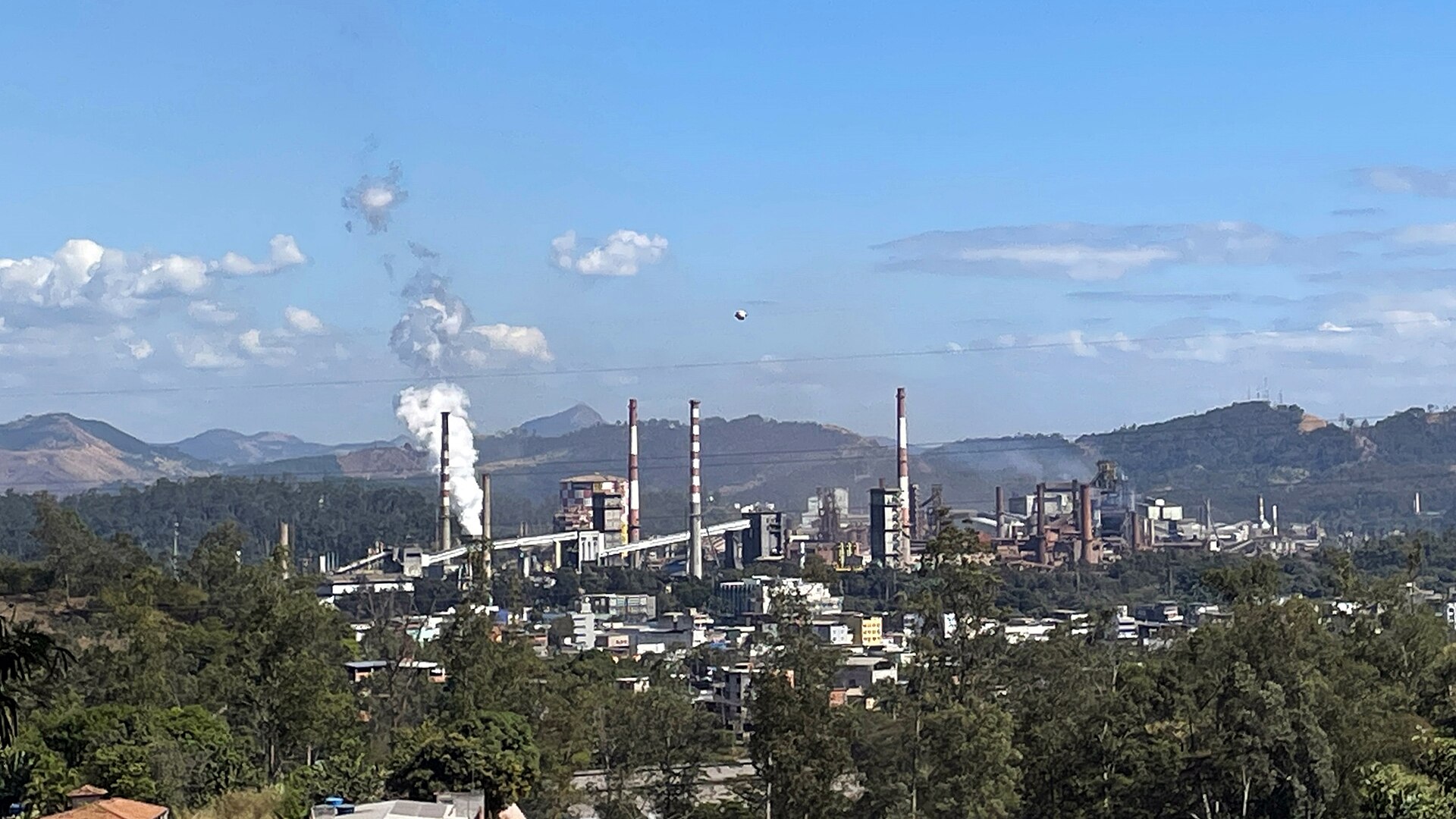
01 The session in one read
Thursday, September 24 pushed Latin American steel lower across the board. Usiminas fell 2.70% to R$6.86 (about US$1.32), and Brazil’s other big listed mills and Mexico’s Ternium lost ground as well.
The broader steel-producers ETF was flat: SLX closed at US$104.83, up 0.03%. The quiet global tape hid a regional question about which producers can defend margins against cheap Chinese supply.
T
h
e
b
o
a
r
d
s
h
o
w
s
a
m
a
r
k
e
t
r
e
w
a
r
d
i
n
g
U
s
i
m
i
n
a
s
f
o
r
i
t
s
l
e
v
e
r
a
g
e
t
o
B
r
a
z
i
l
i
a
n
a
u
t
o
m
o
t
i
v
e
a
n
d
m
a
c
h
i
n
e
r
y
d
e
m
a
n
d
,
b
u
t
p
u
n
i
s
h
i
n
g
C
S
N
d
e
s
p
i
t
e
a
s
i
m
i
l
a
r
p
r
o
d
u
c
t
m
i
x
.
T
h
e
d
i
f
f
e
r
e
n
c
e
i
s
b
a
l
a
n
c
e
–
s
h
e
e
t
a
n
d
s
e
n
t
i
m
e
n
t
,
n
o
t
a
c
l
e
a
n
s
e
c
t
o
r
s
i
g
n
a
l
.
G
e
r
d
a
u
‘
s
d
e
c
l
i
n
e
f
i
t
s
a
c
o
n
s
t
r
u
c
t
i
o
n
c
y
c
l
e
t
h
a
t
h
a
s
n
o
t
y
e
t
t
u
r
n
e
d
d
e
c
i
s
i
v
e
l
y
h
i
g
h
e
r
.
T
h
e
v
a
r
i
a
b
l
e
t
o
w
a
t
c
h
i
s
t
h
e
n
e
x
t
m
o
n
t
h
l
y
i
m
p
o
r
t
–
p
e
n
e
t
r
a
t
i
o
n
p
r
i
n
t
f
o
r
B
r
a
z
i
l
:
i
f
i
t
k
e
e
p
s
r
i
s
i
n
g
a
b
o
v
e
2
2
.
5
%
,
d
o
m
e
s
t
i
c
f
l
a
t
–
s
t
e
e
l
p
r
i
c
i
n
g
w
i
l
l
s
t
a
y
c
a
p
p
e
d
e
v
e
n
w
i
t
h
t
a
r
i
f
f
s
i
n
p
l
a
c
e
.
02 The board
Gerdau’s New York shares fell 1.84% to US$4.79, the clearest sign that investors are not yet convinced Brazilian construction demand is strong enough to lift long-steel prices. CSN’s ADR did worse, down 3.51% to US$1.1, as the flat-steel producer absorbed another day of pressure from imported sheet and coil.
Ternium slipped 0.82% to US$55.53, holding up better than its Brazilian flat-steel peer but still in the red. The Mexican producer benefits from auto demand and nearshoring-related factory construction, yet even that support was not enough to overcome the regional supply overhang.
| Asset | Level | Change |
|---|---|---|
| Steel (SLX ETF) | US$104.83 | +0.03% |
| Gerdau | US$4.79 | -1.84% |
| CSN (ADR) | US$1.1 | -3.51% |
| Ternium | US$55.53 | -0.82% |
Source: RT close, 2026-09-24. Where a commodity has no spot feed, an exchange-traded tracker or leading producer is shown as a labelled proxy.
Live Market IntelligenceThe live market board
Rio Times · Live Market Intelligence
Latin America — Cross-Market Board
| Instrument | Last | Change | YoY | Prev. | High | Low | Volume |
|---|---|---|---|---|---|---|---|
| IBOV | 183,965.91 | -0.99% | +21.85% | 185,814.09 | 168,310 | 167,142 | — |
| IPSA | 11,300.53 | -1.30% | — | 11,449.63 | 11,210 | 10,984 | 1,513,213,483 |
| IPC MEX | 64,264.16 | -0.02% | +12.17% | 64,276.72 | 66,121 | 65,405 | 108,886,187 |
| MERVAL | 2,939,964 | -1.00% | +30.51% | 3,022,485 | 3,042,365 | 2,991,150 | — |
| COLCAP | 2,609.40 | -0.12% | — | 9.04 | 9.05 | 9.02 | 4,133 |
| BVL PERÚ | 59,677.00 | +0.43% | — | — | — | — | — |
| USD/BRL | 5.16 | +0.01% | -5.13% | 5.16 | 5.18 | 5.14 | — |
| EUR/BRL | 5.95 | +1.01% | -5.83% | 5.89 | 5.98 | 5.94 | — |
| USD/MXN | 17.06 | -0.24% | -8.58% | 17.10 | 17.08 | 17.01 | — |
| USD/CLP | 913.98 | +0.04% | -5.67% | 913.65 | 915.11 | 906.68 | — |
| USD/COP | 3,140 | +0.03% | -22.04% | 3,139 | 3,141 | 3,105 | — |
| USD/PEN | 3.36 | -0.66% | -4.82% | 3.38 | 3.38 | 3.35 | — |
| USD/ARS | 1,493 | +0.10% | +12.96% | 1,491 | 1,494 | 1,480 | — |
| USD/UYU | 40.27 | +1.24% | +1.80% | 39.77 | 40.27 | 40.23 | — |
| USD/PYG | 5,939 | +1.68% | -19.54% | 5,841 | 5,939 | 5,925 | — |
| USD/BOB | 11.64 | -0.76% | +72.04% | 11.73 | 11.72 | 11.64 | — |
| USD/DOP | 58.34 | +1.25% | -3.44% | 57.62 | 58.34 | 58.04 | — |
| USD/CRC | 445.92 | +0.89% | -9.71% | 441.97 | 448.50 | 445.92 | — |
Live Company IntelligenceGerdau S.A — the full investor dossier
Valuation & profitability
Price & risk
$16.0852-wk high
$26.44
Revenue trend · 6y
Ownership
Dividend
03 What moved it
The central driver remains China. Chinese mills supplied 45.4% of Latin America’s steel imports in 2025, and regional import penetration reached 40.4% that year, keeping a lid on how aggressively domestic producers can raise prices.
Brazil’s policy response is a 25% tariff on steel imports above quota across 19 product categories, extended through June 2027, plus five-year anti-dumping duties on several Chinese flat-steel products and wire rod. That has slowed but not stopped foreign supply: import penetration hit 22.5% in the first half of 2026.
Product mix explains the divergence. Gerdau’s rebar and structural sections depend on Brazilian construction. CSN and Usiminas make more flat steel, which tracks automotive, machinery and appliance demand. One of those two flat-steel names rallied, the other did not, suggesting company-specific positioning rather than a uniform sector signal.
04 The Latin American read
For Mexico, Ternium’s small decline fits a market where tariffs of up to 50% on 1,463 products from countries without free-trade agreements, including steel, protect domestic producers. Mexican auto demand and nearshoring factory construction provide a floor, but they have not been strong enough to offset pressure from Chinese supply redirected from other markets.
For Brazil, the lesson is that tariffs alone do not guarantee pricing power. The 22.5% import penetration in the first half of 2026 means foreign steel still sets the marginal price for many flat products, squeezing CSN and Usiminas even when volumes hold up.
For foreign investors, the Latin American steel trade is a bet on two separate cycles: Brazilian construction for long steel, and North American autos plus regional manufacturing for flat steel. The first is still waiting for a clear turn; the second is active but crowded with imported supply.
05 The names to watch
Gerdau is the purest construction proxy among the Brazilian names. Its New York shares at US$4.79 reflect a market that wants more evidence that infrastructure and housing demand will absorb long-steel output before re-rating the stock.
CSN’s ADR at US$1.1 is the most exposed to the flat-steel import fight. The company carries the added complexity of its mining and cement arms, but the steel division is where the China pressure shows up first.
Usiminas, at R$6.86 (about US$1.32), shed 2.70% on the session. Its automotive-linked flat-steel book gave it no shelter, though one day’s gain does not settle the question of whether domestic prices can rise with imports still flowing.
Ternium at US$55.53 remains the relative safe harbour, with Mexican tariff protection and auto demand cushioning the downside. Its risk is the same as its peers: Chinese volumes that can arrive through third countries or non-quota product lines.
06 The outlook
The next move in Latin American steel will likely come from import data rather than demand headlines. If Brazil’s import penetration keeps climbing from 22.5%, domestic flat-steel mills will struggle to lift prices even in a growing automotive market.
For long steel, watch Brazilian construction permits and infrastructure tenders. A delayed construction recovery would keep Gerdau range-bound despite trade protection. The global steel tape, as measured by SLX above US$104, offers little momentum of its own, leaving Latin American names to trade on local policy and end-market signals.
07 What to watch
- Brazil import penetration: A further rise above 22.5% in monthly data would signal that tariffs are still not tight enough to support domestic flat-steel pricing.
- China steel export volumes: Any sign of reduced Chinese export tax rebates or quota tightening could ease the supply overhang across Latin America.
- Mexican auto production: Stronger US vehicle demand would support Ternium and give flat-steel producers a genuine demand offset to cheap imports.
- Brazil construction permits: A sustained upturn in residential and infrastructure permits is the clearest trigger for Gerdau’s long-steel margins to recover.
Frequently Asked Questions
Why did CSN fall further than Usiminas?
Both make flat steel and both fell on Thursday: Usiminas lost 2.70% to R$6.86 while CSN’s ADR fell 3.51% to US$1.1, reflecting company-specific positioning rather than a clean sector trend.
How big is China’s role in Latin American steel?
China supplied 45.4% of Latin America’s steel imports in 2025, with regional import penetration at 40.4%, making Chinese pricing the single biggest external factor for local mills.
Does Brazil’s tariff actually keep imports out?
Brazil applies a 25% tariff on above-quota steel across 19 product categories, but import penetration still reached 22.5% in the first half of 2026, showing the wall slows rather than stops foreign supply.
What is SLX and what does it track?
SLX is the VanEck Steel ETF, a basket of global steel producers. It closed at US$104.83, up 0.03% on Thursday, September 24, and serves as the broadest read on the sector outside individual company shares.
Market data: RT
This article was produced by The Rio Times’ automated newsroom system. How we use AI · Report an error
LatAm Markets: Live Signals → — real-time movers, turnover leaders and FX across Latin America.
Read More from The Rio Times