Startups from Argentina, Brazil and Chile won 2021 LATAM innovation competition prizes
RIO DE JANEIRO, BRAZIL – The most critical innovation contest in Latin America has held its fourth edition in a new way – an exciting online event that united the 15 finalists in 2021.
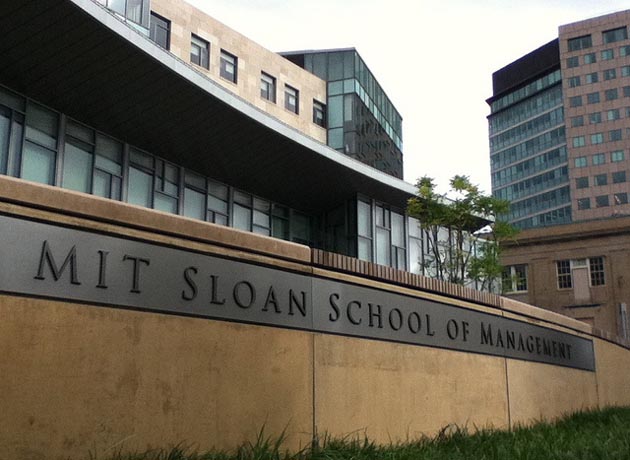
The 100K LATAM competition is organized by the Instituto Tecnológico de Buenos Aires (ITBA), with the support of the MIT (Massachusetts Institute of Technology) Sloan Latin America Office, whose main objective is to promote the development of startups with the capacity to generate impact in Latin America and the Caribbean.
This year the competition received projects from 15 countries in the region (Argentina, Bolivia, Brazil, Chile, Colombia, Costa Rica, Ecuador, Guatemala, Honduras, Mexico, Panama, Paraguay, Peru, Uruguay, and Venezuela), which were divided into three categories according to the degree of maturity of the idea: Pitch, Accelerate and Launch.

The 15 finalist startups from Brazil, Chile, Argentina, Bolivia, Colombia, and Mexico competed to be the winners in three categories to offer innovative solutions in health, environmental impact, energy, circular economy, and social media. The Pitch category, which seeks to support ideas or projects in the initial development phase, awarded the winner US$5,000. The Accelerate category, designed to accelerate the introduction to the market of projects in the development phase, provided $20,000 to the winning startup, and the main category, Launch, sought to support the Launch of projects with a higher degree of development and allocated a sum of $55,000 to the winner.
“We are very pleased to organize together with MIT this competition from the region and for the region, which this year celebrates four years of success,” said Andrés Basilio Agres, rector of ITBA, during the presentation of the competition. Lee Ullman, director of the MIT Sloan Latin American office, said: “The competition is becoming more and more important with more innovators bringing new ideas to the region. There are sponsors, students, and universities that want to push innovation in Latin American countries. A network of universities is pushing this contest, which seeks to help entrepreneurs develop their innovative ideas.”
Gustavo Pierini, one of the jurors and an alumnus of MIT in the United States who brought the competition to Argentina, said, “We never imagined in 2017 that we would develop this successful event that lasts over time and is now in its fourth edition. It is the largest entrepreneurship competition in Latin America.”
Before the winners were announced, Adriana Noreña, Google’s vice president for Latin America, summarized in three keys how to change the mindset in the region and make it more productive. “In a post-pandemic world, entrepreneurship generated by small and large companies is key to economic recovery in each country and the world. We also need to improve the post-pandemic gender diversity gap. We have made progress in narrowing it over the last ten years, but it is still large. And the pandemic did not contribute to reducing it. Finally, we believe very much in diversity and inclusion of social classes, races, and religious inclinations. That makes us better at bringing the best products to the globalized world.”
WINNERS 2021
In the Pitch category, the winner was the Argentinean project Present Chemistry from Rosario, which proposes a simple process to increase the added value of soybean hulls, obtaining components of different qualities that can be used in the paper, construction, food, cosmetics, and even pharmaceutical industries. Esteban Morilla was in charge of the presentation of the idea.
In the Accelerate category, where ideas begin to take shape and take shape, the winner was the Brazilian project Microciclo Biotecnologia, which represents a sustainable solution to oily industrial waste, based on mixtures free of genetic modifications obtained from natural environments, enabling the reuse of decontaminated water in the company’s internal processes. Carolina Fonseca Minnicelli was the presenter of the idea that seeks to provide a solution to the problem of environmental pollution.
In the last and most important category, Launch, the winner was Photio, from Chile, which consists of an additive for paints, asphalt, plastics, and concrete, which provides decontaminating properties based on a technology that uses solar radiation as a source of energy to replicate the photosynthesis process.
“It is a solution that consists of a set of nanoparticles that are added to paints or asphalt, which in the presence of UV radiation, either naturally, by exposing them to solar radiation, or artificially, using structures designed to optimize the capture with UV lamps, allow the decontamination of gases emitted by all types of sources at industrial and household level,” said Constanza Escobar of Photio.
Engineer Sebastián Mur, Dean of the ITBA School of Innovation and President of the 100K LATAM Evaluation Committee, said at the end: “We are very proud of the social and environmental commitment of the 15 finalist projects. We believe they all have great potential to generate a real impact in Latin America and the Caribbean.”
The finalists in each category were:
Launch: This category sought to support ventures with a higher level of development. The first prize will receive US$55,000 and the finalists: US$5,000 (each). The finalists were:
-Quelp (Chile) is an algae-based innovation and biotechnology food tech. They work directly with harvesting communities through fair prices, achieving responsible management of the natural meadows of these organisms.
-Ecomm-App (Argentina) is an online platform that helps small and medium-sized merchants in Latin America increase their online sales, manage their inventory in real-time, and bill all their orders massively in seconds.
-Innova Space (Argentina), a startup from Mar del Plata, proposes launching the first Low-Cost Pico Satellite Constellation in Latin America to provide worldwide communications access for Internet of Things devices.
-WAS Company (Mexico) aims to generate and integrate high social and environmental impact, technology-based solutions focused on the construction industry.
Accelerate: This category seeks to support ideas or ventures in the development or first sales phase. The first prize will receive US$20,000 and the finalists: US$2,000 (each). The finalists were:
-Bottleyes (Ecuador) seeks to reduce the environmental impact of the production of plastic bottles by creating affordable eyeglasses with excellent characteristics made from such materials, thus democratizing visual health.
-ArejaBus (Brazil), a project consisting of a hybrid ventilation system that uses the movement of buses to improve the thermal sensation and air quality for users of urban public transportation.
-Wheels Med (Colombia), an initiative that designs and manufactures electric mobility devices for people with disabilities to improve their mobility and quality of life.
-CKAPUR (Argentina), a product that sustainably increases crop yields and enables planting in degraded soils based on microorganisms that promote plant growth in more extreme conditions. This reduces the use of agrochemicals, making a positive contribution to the environment and promoting sustainable agriculture.
Pitch: The purpose of this category is to support ideas or ventures in the initial development phase. It awards US$5,000 to the first prize and US$1,000 to each of the finalists:
-Smoothie Bowl (Peru) consists of developing a biotechnological process applied to plants, which allows fats and carbohydrates to be transformed into high-quality proteins for the production of highly nutritious and accessible foods.
-Neuroflav (Argentina) consists of a synthetic compound derived from natural products capable of improving different aspects of neurodegenerative diseases of drugs currently available on the market.
-Munay (Bolivia), a venture designed to provide support to women entrepreneurs who do not have access to financing. Through a digital platform, it seeks to connect a community of entrepreneurs, kumpitas (donors), and ñañays (volunteer women specialists).
-Fungipor (Argentina), a producer of 100% compostable packaging alternatives to polystyrene, made using a biotechnological process with mushroom mycelium and agroindustrial waste.
With information from Infobae
More: Argentina news in English, every day from The Rio Times.
Editorial responsibility: Matthias Camenzind, Editor-in-Chief · Editorial standards · Report an error
LatAm Markets: Live Signals → — real-time movers, turnover leaders and FX across Latin America.