Spain Declares Three Bolivian Diplomats ‘Persona Non Grata’
RIO DE JANEIRO, BRAZIL – The Spanish government yesterday declared three members of the Bolivian diplomatic body as ‘persona non grata’ in response to Bolivia’s decision announced on Monday to expel two Spanish diplomats.
“In a reciprocal gesture to the hostile Bolivian interim government in declaring two Spanish diplomats ‘persona non grata’, Spain in turn decided to declare three Bolivian diplomatic and consular officials accredited in the country as ‘persona non grata’ and to grant them 72 hours to leave the country”, the Spanish executive informed in a statement.

Spanish diplomats are accused by Bolivia of trying to help former members of the government of ousted President Evo Morales to leave the Mexican embassy, where they have been refugees since the former Bolivian leader resigned last November.
According to the Bolivian interim government, which also declared Mexico’s ambassador to La Paz Maria Teresa Mercado yesterday as “persona non grata,” the ultimate goal would be for Morales’ supporters to leave the country.
Madrid categorically denies such accusations. “Spain categorically rejects any insinuation of an alleged intent to interfere in Bolivia’s internal political affairs.
For Spain, any statement in this respect is a slander designed to undermine our bilateral relations with false conspiracy theories,” the Spanish government said.
The Spanish diplomats in question are Cristina Borreguero, the head of business, and Álvaro Fernández, the Spanish consul.
The La Paz authorities also granted the two Spanish representatives and the Mexican ambassador 72 hours to leave Bolivian territory.
Mexico, for its part, denounced the “political” nature of the decision announced earlier by the interim Bolivian President, Jeanine Añez.
The declaration of ‘persona non grata’ means, in diplomatic terms, the loss of credentials to represent a state or organization and, consequently, the loss of authorization to remain in the country.
According to the Bolivian government, Cristina Borreguero, the Spanish business administrator, and Álvaro Fernández, the Spanish consul, accompanied by “hooded and presumably armed men”, were at the Mexican embassy on Friday and tried to enter the premises illegally.
The diplomats were prevented from entering the La Rinconada residential complex, sparking moments of tension between the Bolivian and Spanish police, who were escorting the diplomats.
Some amateur videos of the occasion were posted on social media and show at least two vehicles, identified as belonging to the Spanish embassy, and people, allegedly belonging to the Special Operations Group of the Spanish National Police Force, with their faces covered.
The videos also show angry neighbors shouting insults, which led the media to show up and police officers to cover their faces.
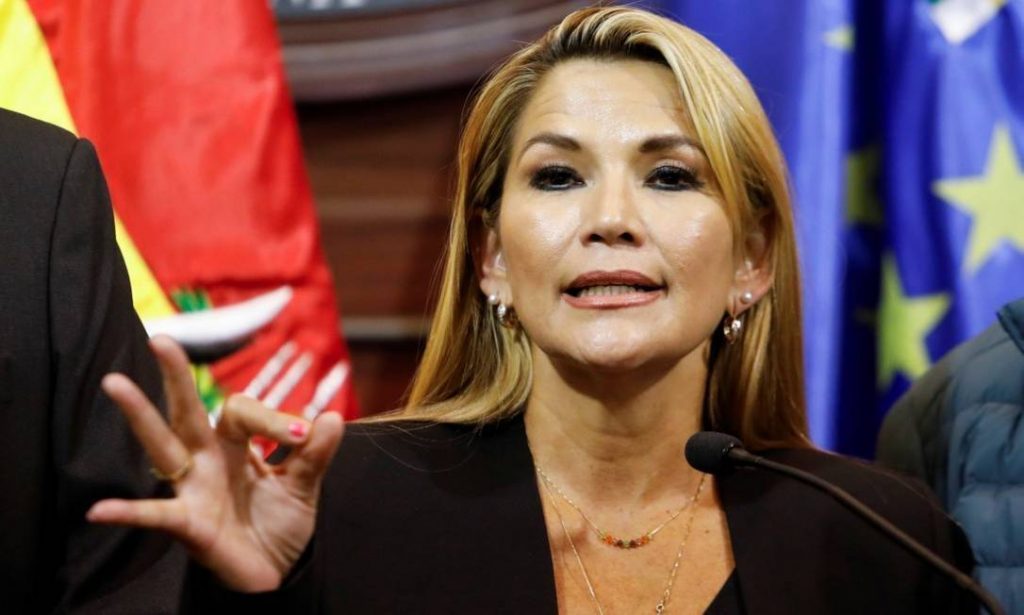
Bolivian Interior Minister Karen Longaric described the visit as “an abuse” and said the act “overstepped” the country’s sovereignty.
Both Mexico and Spain explained the visit as “a courtesy” of a diplomat in charge of representing Spanish commercial interests.
Former members of Evo Morales’ government are accused of crimes of sedition, terrorism and electoral fraud and banned from leaving the country safely.
In power since 2006, Evo Morales, Bolivia’s first indigenous president, was declared the winner for a fourth consecutive term in the October 20th elections, a poll that would be marked by allegations of fraud by the Bolivian opposition.
Morales resigned on November 10th after three weeks of opposition-led protests against his re-election and after losing the support of the army and police.
The former Bolivian president, who denounced the proclamation of Senator Jeanine Añez as interim president as a “coup d’état,” then moved to Mexico as a political exile.
Currently, Evo Morales is in Argentina, where he received refugee status.
On December 18th, the Bolivian Prosecutor’s Office issued an arrest warrant against Evo Morales as part of an ongoing investigation for sedition and terrorism.
More: Latin America news in English, every day from The Rio Times.
This article was produced by The Rio Times’ automated newsroom system. How we use AI · Report an error
Read More from The Rio Times