South Korea’s Red Dawn: How a Landmark Election Could Reshape the World
Imagine a crisp morning in Seoul, June 4, 2025. The city wakes to the news that Lee Jae-myung—a populist politician with bold ideas and a controversial reputation—has won South Korea’s snap presidential election.
The Han River glimmers under the rising sun, but the mood is anything but calm. Billboards advertising cutting-edge gadgets from Samsung now share space with slogans calling for economic reform.
A lone protester waves a banner outside Camp Humphreys, demanding U.S. troops depart, while diplomats in Beijing and Pyongyang quietly celebrate.
South Korea, long a beacon of democracy and a steadfast U.S. ally, stands on the brink of transformation, leaving the world wondering how this pivotal nation will redefine its role in East Asia—and beyond. This scenario isn’t mere conjecture; it’s rooted in the high-stakes reality of South Korea’s snap election on June 3, 2025.
Triggered by the impeachment of President Yoon Suk-yeol after his December 2024 martial law decree—a desperate bid to thwart opposition ‘obstruction’—nationwide protests erupted, leading to his ousting in April 2025.
The election has since thrust Lee Jae-myung, leader of the opposition Democratic Party (DP), into the spotlight. Polls show him leading with 34%, buoyed by public frustration over inequality and political scandals.
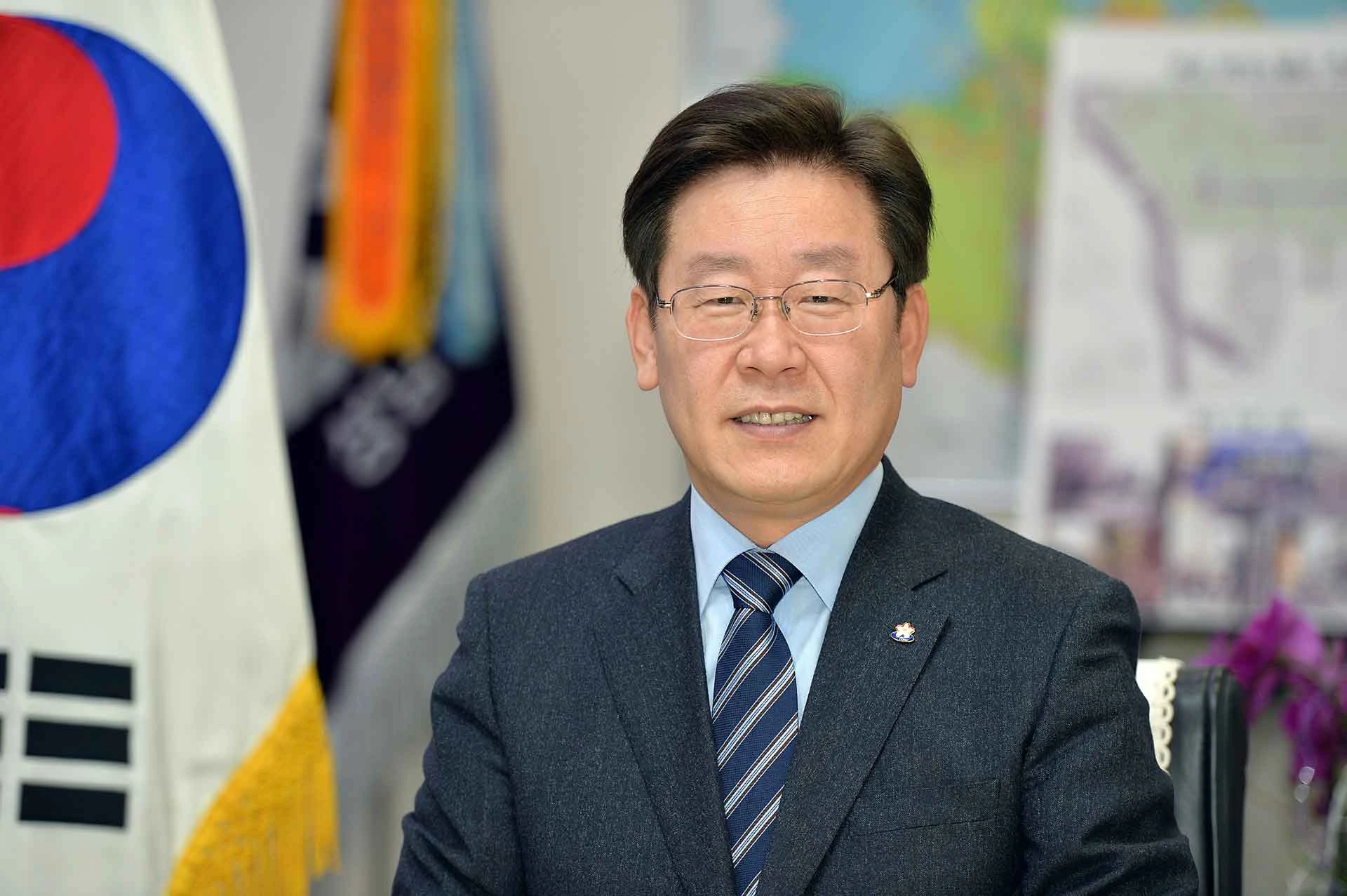
But Lee’s ascent raises questions that go far beyond domestic politics. His platform—focused on economic redistribution and diplomatic recalibration—could profoundly reshape South Korea’s identity and its alliances in an increasingly volatile region.
Lee Jae-myung: A Politician Forged by Struggle
Born in 1964 to a poor family in Andong, Lee Jae-myung’s journey from factory worker to lawyer to mayor of Seongnam is emblematic of grit and ambition. As mayor, he earned recognition for bold social programs aimed at addressing inequality.
His near-win in the 2022 presidential race against Yoon Suk-yeol solidified his status as a major political force, and his leadership of the DP during its parliamentary landslide in 2024 further cemented his influence.
Lee’s platform resonates with many South Koreans disillusioned by widening economic disparities and the dominance of chaebols—powerful family-owned conglomerates like Samsung and Hyundai.
His promises to curb their influence and invest heavily in technology and job creation have struck a chord with voters seeking change. Yet, it is Lee’s foreign policy vision that has sparked intense debate both at home and abroad.
A Diplomatic Pivot?
Lee’s critics have accused him of being overly sympathetic to China and North Korea—claims that raise eyebrows given South Korea’s central role in the U.S.-led security architecture of East Asia.
While Lee has not explicitly called for dismantling alliances, his emphasis on dialogue over deterrence with Pyongyang suggests a departure from Yoon’s hardline stance.
Analysts point to his support for reviving elements of the Sunshine Policy—a strategy of engagement with North Korea—as evidence of his willingness to chart a more independent course.
Yet some argue Lee’s pragmatism—seen in his affirmation of the U.S. alliance’s importance—could temper any drastic realignment, balancing Seoul’s economic ties with China against its security needs.
Toward China, Lee has expressed skepticism about aligning too closely with U.S.-led efforts to contain Beijing, particularly regarding Taiwan—a stance that could signal a shift toward neutrality rather than confrontation.
With China as South Korea’s largest trading partner, Lee may prioritize economic pragmatism over ideological alignment. Such moves could redefine Seoul’s role as a middle power balancing between competing giants.
Strains on U.S.-South Korea Relations
Lee’s rhetoric on sovereignty has fueled speculation about potential friction with Washington. While there is no verified evidence that he has referred to U.S. troops as an “occupying force,” his calls for greater autonomy in defense policy suggest he may push for adjustments to the longstanding military presence on the peninsula.
This could complicate joint deterrence efforts against North Korean aggression and weaken trilateral cooperation with Japan. Relations with Tokyo could face even greater strain under Lee’s leadership.
He has been outspoken in criticizing Japan over historical grievances stemming from its colonial rule of Korea, labeling military cooperation as pandering to “far-right pro-Japanese acts.” Such rhetoric risks undermining recent progress in strengthening ties between Seoul and Tokyo—a key pillar of regional security.
Domestic Challenges to Reform
Even if Lee secures a decisive victory, implementing his ambitious agenda will be no easy feat. South Korea’s chaebols wield significant economic and political influence, and any attempt to curtail their power could face fierce resistance from business elites and conservative lawmakers.
Similarly, the military establishment—deeply intertwined with U.S.-South Korea security arrangements—may push back against any drastic shifts in defense policy.
Lee’s ability to navigate these institutional hurdles will determine whether his presidency ushers in sweeping change or falls victim to gridlock. While he may not fully realize his vision overnight, even incremental shifts could reverberate across Asia.
Regional and Global Implications
A recalibrated South Korea under Lee Jae-myung would send shockwaves through East Asia’s delicate balance of power. A reduced U.S.-South Korea alliance could embolden North Korea’s provocations or accelerate China’s regional ambitions, while isolating Japan might prompt Tokyo to ramp up its own military capabilities.
Globally, Washington would face challenges maintaining its Indo-Pacific strategy without Seoul’s full support—a scenario that could weaken collective deterrence against authoritarian regimes.
As Trump’s tariffs batter China and North Korea deepens ties with Russia, a wavering South Korea could tip the Indo-Pacific’s balance, testing U.S. resolve at a fragile moment.
For South Koreans themselves, this election is more than a choice between candidates; it is a referendum on their nation’s future direction amid mounting geopolitical pressures.
Why It Matters
South Korea stands at a crossroads—not just politically but geopolitically—as it prepares to vote on June 3, 2025. Its semiconductors power global technology, its military bases anchor U.S. strategy, and its democracy inspires a region shadowed by authoritarianism.
Lee’s choices could either reinforce this legacy or unravel it, with consequences stretching from Tokyo to Washington. The outcome will shape not only its domestic trajectory but also its role as a democratic anchor in an increasingly polarized region.
Whether Lee Jae-myung steers the nation toward greater independence or deeper alignment with old adversaries remains uncertain—but one thing is clear: this election carries implications far beyond Seoul’s city limits.
As dawn breaks over South Korea on June 4, the world will watch closely—not just for who wins but for what kind of nation emerges from this pivotal moment.
Read More from The Rio Times