South America’s first beer: Four hundred-year-old yeast revived
The first beer in South America was brewed in 1566 by the monks of the San Francisco de Quito monastery in Ecuador.
Thanks to the efforts of a researcher who managed to “bring back to life” the same yeast used in fermentation, the original product have been recreated in the style of the 16th century.
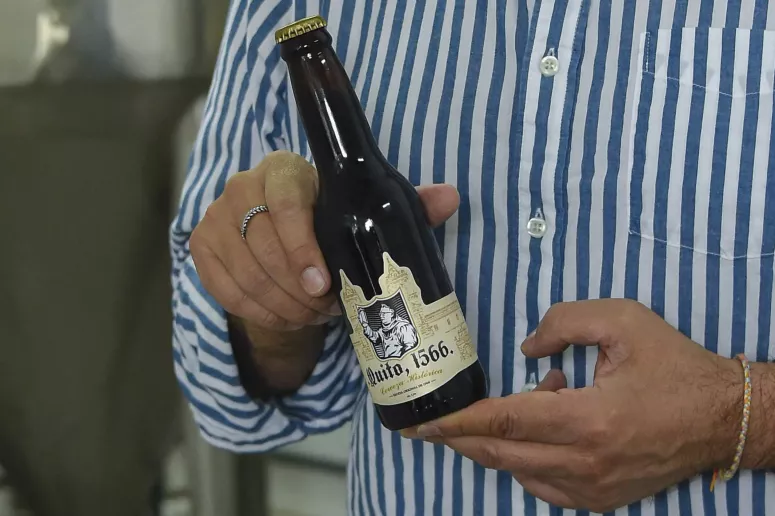
“You have to drink history,” smiles Javier Carvajal, researcher and professor at the “Pontificia Universidad Católica del Ecuador” (PUCE), as he proudly looks at one of the bottles of “Quito 1566,” the result of a project that took him almost half a lifetime to complete.
He had the idea of reviving this historic beer in 1992 when he read an article by the founder of the “Craft Brewers Association of the United States” in which he referred to the Franciscan monks of Quito as the first brewers in South America, although there is evidence of a brewery in Mexico dating back to 1544.

“I was surprised when I read that it was about Quito, the city where I was born. I could immediately imagine what this beer must have been like,” Carvajal said.
The answer took almost thirty years until he reached his goal in 2018, with a painstaking and patient process of “beer archaeology”, as the architect of research calls it, applying the knowledge acquired at the “Escuela Superior Cerveza y Malta” (ESCYM) in Madrid.
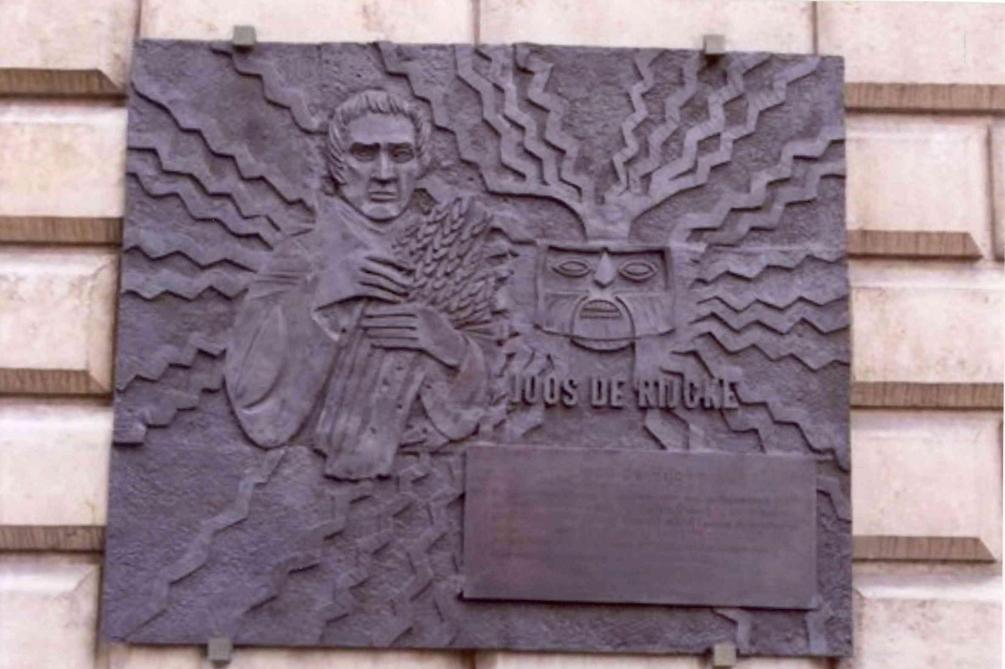
He first focused on Joos de Rijcke (Jodoco Ricke), a Franciscan friar who came to Quito from Flanders in 1535, when this region of Belgium was still part of the Spanish Empire, and who is considered the originator of this pioneering beer.
“They introduced wheat and barley to make flour to make wafers…but it wasn’t long before Flemish blood came to them, and with it the idea of making beer,” Carvajal says. “Joos de Rijcke was a wise man.”
He had the same education as King Charles V. He knew about the important things in life. He knew about the important things in life, such as brewing beer,” the researcher jokes, “and he started researching local ferments.”
That’s how Carvajal uncovered the “best-kept secret” of the San Francisco monastery: the old barrels in which Brother Jodoco brewed his beer, which is now part of the museum.
In 2008, he obtained a permit to extract some wood chips.
And in one of these small wood fragments, he found what he had been looking for for years: the original yeast, after many unsuccessful attempts to find microorganisms in this hundreds of years old wood.
“It was like looking for a needle in a haystack,” admits Carvajal, who didn’t stop until he found it and brought it back to life with a specially developed “resurrection technique” after several years of experimenting with yeasts found in vessels from pre-Hispanic and Iberian cultures in Castilla-La Mancha, Spain.
He applied three steps in a complex process to revive the inert, virtually mummified yeast and get it to replicate its DNA, where the flavor of the beer was encoded.
First, he restructured the walls of the cell membrane with biopolymers from other yeasts; then he hydrated them to get the membrane working again; and finally, he introduced molecules from other yeasts to get the cellular machinery going.
“The most important thing is that it’s a matter of life and death and cells that can be restored, rejuvenated and brought back to life… We could imagine the application of this technology in the field of tissue engineering, organ replacement, the revival of dormant cells and their resuscitation, as with stem cells,” Carvajal points out.
This innovative method produced a colony of yeast that confirmed the suspicion: Joos de Rijcke used an indigenous yeast related to that of chicha, the sacred fermented corn beverage of pre-Hispanic civilizations such as the Incas, which the monk believes is very similar to European beer.
But that was not enough, because the production of this beer combined two different technologies: the Central European tradition of cooking the grain and the Anglo-Saxon tradition of brewing (extraction through filtering).
“It is not brewed like all other beers and we had to reconstruct it with the same technology,” explains Carvajal, for which, under these conditions, he built a microbrewery that can produce between seven thousand and seven thousand five hundred bottles per month.
The result is “Quito 1566,” a beer with 5.5 percent alcohol, a dark color and “a unique taste,” says Carvajal, with a touch of acidity and bittersweetness, since it contains rock candy, a very flamenco ingredient, and the flavors of chicha that make it a mestizo drink.
The Pontifical Catholic University of Ecuador (PUCE) hopes to set up some sales channels in about two months, and the profits will be used to fund scholarships for its students.
“It’s a project that comes from science to train new scientists,” Carvajal concludes.
More: Ecuador news in English, every day from The Rio Times.
This article was produced by The Rio Times’ automated newsroom system. How we use AI · Report an error
Read More from The Rio Times