ExxonMobil Backs South Africa’s First LNG Import Terminal
SOUTH AFRICA · ENERGY
Key Facts
—First import hub. The planned South Africa LNG terminal at Richards Bay would be the country’s first facility for imported gas.
—ExxonMobil’s role. The US major signed a heads of agreement on June 17 as a potential gas supplier — not as an owner of the terminal.
—Who builds it. The Zululand Energy Terminal (ZET) is a joint venture between the Dutch tank-storage group Vopak and South Africa’s Transnet.
—Phase one. A floating storage unit of at least 170,000 cubic metres plus onshore regasification of about 3 million tonnes a year (~400 million scf/day).
—Timeline. Vopak targets a final investment decision in 2028, with commercial operations likely in the early 2030s.
—Why now. South Africa faces a gas-supply deficit around 2030 as Mozambique’s Pande-Temane fields decline.
—Exxon’s push. ExxonMobil wants to lift its global LNG supply above 40 million tonnes a year by 2030, with South Africa named a priority market.
ExxonMobil has signed a preliminary deal to supply the South Africa LNG terminal planned for Richards Bay, the country’s first import hub for the fuel. The agreement, announced on June 17, hands the project a marquee American backer as South Africa braces for a looming shortage of gas.
Inside the South Africa LNG terminal plan
The Zululand Energy Terminal would be South Africa’s first place to land imported liquefied natural gas. It is being developed by a joint venture between Vopak, a Dutch tank-storage company, and the state logistics group Transnet.
The terminal, planned for Richards Bay on the east coast, would import, store, regasify and distribute gas. Its customers would be power plants and industrial users that need a reliable fuel.
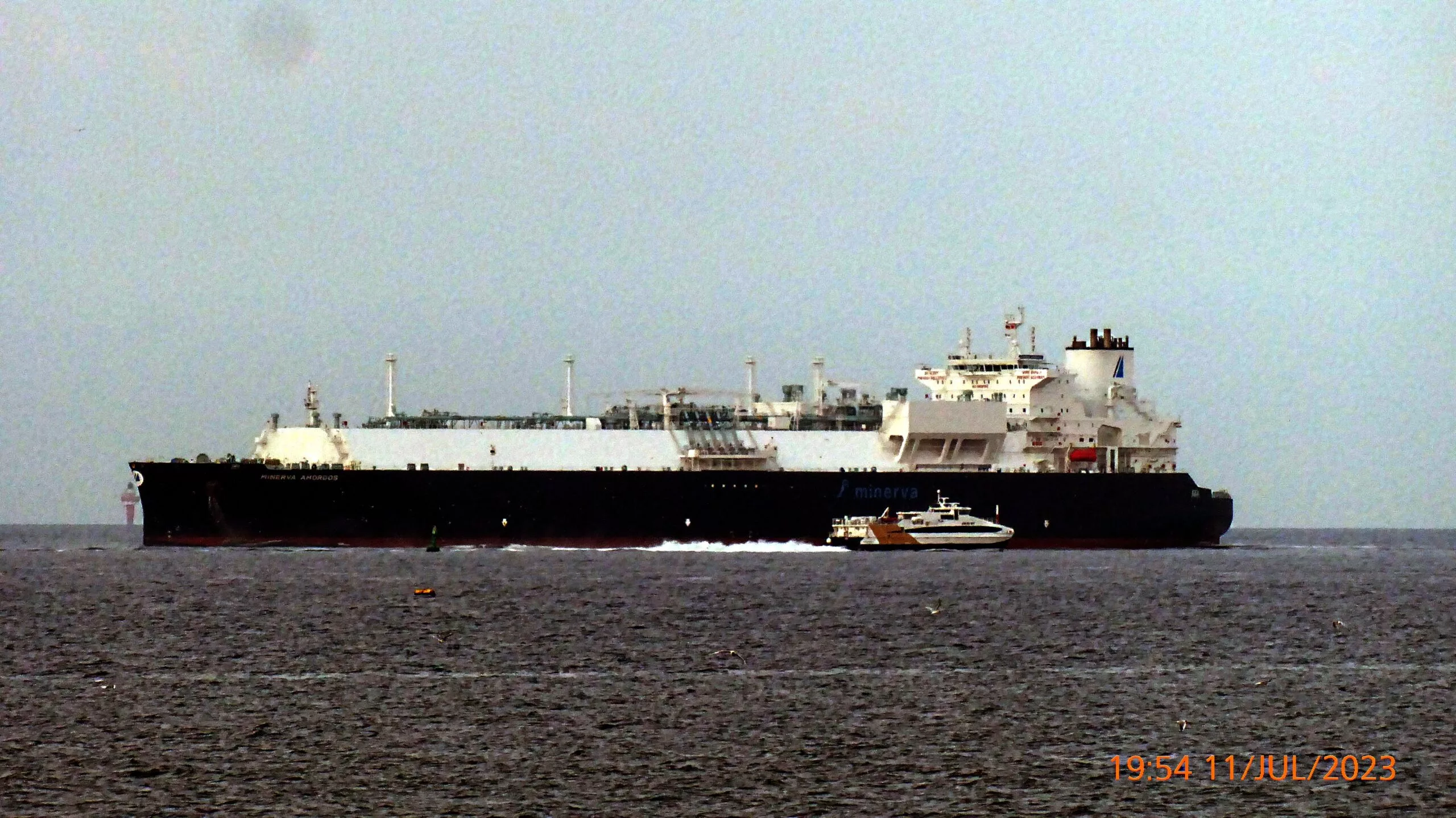
In its first phase, the project plans a floating storage unit of at least 170,000 cubic metres. An onshore regasification system would handle about three million tonnes of LNG a year, roughly 400 million standard cubic feet of gas a day.
What ExxonMobil actually signed
The June 17 agreement is a heads of agreement, an early-stage step rather than a binding contract. ExxonMobil would be a potential supplier of the gas, not an owner or equity partner in the terminal.
Its role would firm up only once the project reaches a final investment decision and definitive contracts are signed. Until then, the deal is a statement of intent from a heavyweight counterparty.
For ExxonMobil, the move fits a wider strategy. The company wants to grow its global LNG supply to more than 40 million tonnes a year by 2030, and it has flagged South Africa as a priority market.
South Africa’s looming gas cliff
The urgency comes from geology and geography. South Africa draws much of its gas from Mozambique’s Pande-Temane fields, whose output is set to decline around 2030.
That decline threatens electricity generation, factories, jobs and growth in a country already short of reliable power. Industry has warned for years that a gas shortfall is coming.
Importing LNG is one of the few ways to plug the gap quickly. A terminal at Richards Bay would let South Africa buy gas on the world market rather than depend on a single declining source.
A long road to first gas
None of this happens soon. Vopak has pointed to a final investment decision in 2028, and large import terminals usually take years to build and commission after that.
On that path, first gas would realistically arrive in the early 2030s. The ExxonMobil deal strengthens the commercial case but does not shorten the construction clock.
Preliminary deals can also slip, and final terms still have to be agreed. The signing is a milestone of confidence, not a guarantee of delivery.
An American foothold in Africa’s energy
For an outside reader, the supplier is as telling as the project. A US energy major is positioning to feed gas into one of the continent’s largest economies.
American LNG has been pushing into new markets as exporters chase demand beyond Europe and Asia. South Africa’s gas gap offers exactly that kind of opening.
It is a quieter form of the contest for influence in Africa than minerals or megaprojects. But energy supply, once locked in, is a durable kind of leverage.
Who would burn the gas
The terminal is aimed at two kinds of buyer. Power producers would use the gas to generate electricity, and factories would use it as fuel and feedstock.
South Africa’s industry has leaned on piped gas for chemicals, metals and manufacturing for decades. A reliable import route would shield those plants from the coming squeeze.
Richards Bay is well placed for the job, with a deep-water port and heavy industry nearby. Landing gas there keeps it close to the users who need it most.
Demand is the project’s foundation. Without committed buyers, a final investment decision in 2028 would be hard to justify.
More: South Africa news in English, every day from The Rio Times.
Frequently Asked Questions
What did ExxonMobil agree to in South Africa?
ExxonMobil signed a heads of agreement on June 17 to be a potential gas supplier for the planned Zululand Energy Terminal, South Africa’s first LNG import terminal.
Who is building the terminal?
The Zululand Energy Terminal at Richards Bay is a joint venture between the Dutch storage group Vopak and South Africa’s Transnet; ExxonMobil is a supplier, not an owner.
When would it start operating?
Vopak targets a final investment decision in 2028, which would put first gas in the early 2030s.
Why does South Africa need imported gas?
South Africa faces a gas-supply deficit around 2030 as Mozambique’s Pande-Temane fields decline, threatening power and industry.
How big would the terminal be?
Phase one envisages a floating storage unit of at least 170,000 cubic metres and onshore regasification of about three million tonnes of LNG a year.
Connected Coverage
A US major feeding gas into South Africa is one more front in the contest we track in Africa: The New Scramble. The energy story sits beside our wider Southern Africa coverage and our reporting on how falling oil money is reshaping Angola’s energy economy.
This article was produced by The Rio Times’ automated newsroom system. How we use AI · Report an error · Editorial responsibility: Matthias Camenzind, Editor-in-Chief