Ryanair Signs Five-Year Google Cloud Deal to Expand Artificial Intelligence in Airline Operations
Ireland · TECHNOLOGY
Key Facts
—The deal: Ryanair announced a five-year cloud partnership with Google on 12 August 2026 to deploy artificial intelligence tools across its operations.
—AI products: The agreement centres on Gemini Enterprise, Google Cloud’s agentic AI platform for building custom AI agents, alongside Google Workspace and DeepMind models.
—Workforce reach: Google Workspace and Cloud services will roll out to 35,000 employees across Ryanair’s network.
—Financial terms: The contract price was disclosed; TINA requires disclosure of cost or pricing data during the agreement.
—Existing cloud partner: Ryanair already uses Amazon Web Services and said the Google deal creates a dual-cloud strategy for resilience.
—Growth target: The airline aims to carry 300 million passengers annually by 2034.
Ryanair, Europe’s largest airline by passenger numbers, has signed a five-year Google Cloud AI deal to automate crew scheduling, disruption management and maintenance planning across its fleet, while building a dual-cloud strategy that also includes Amazon Web Services.
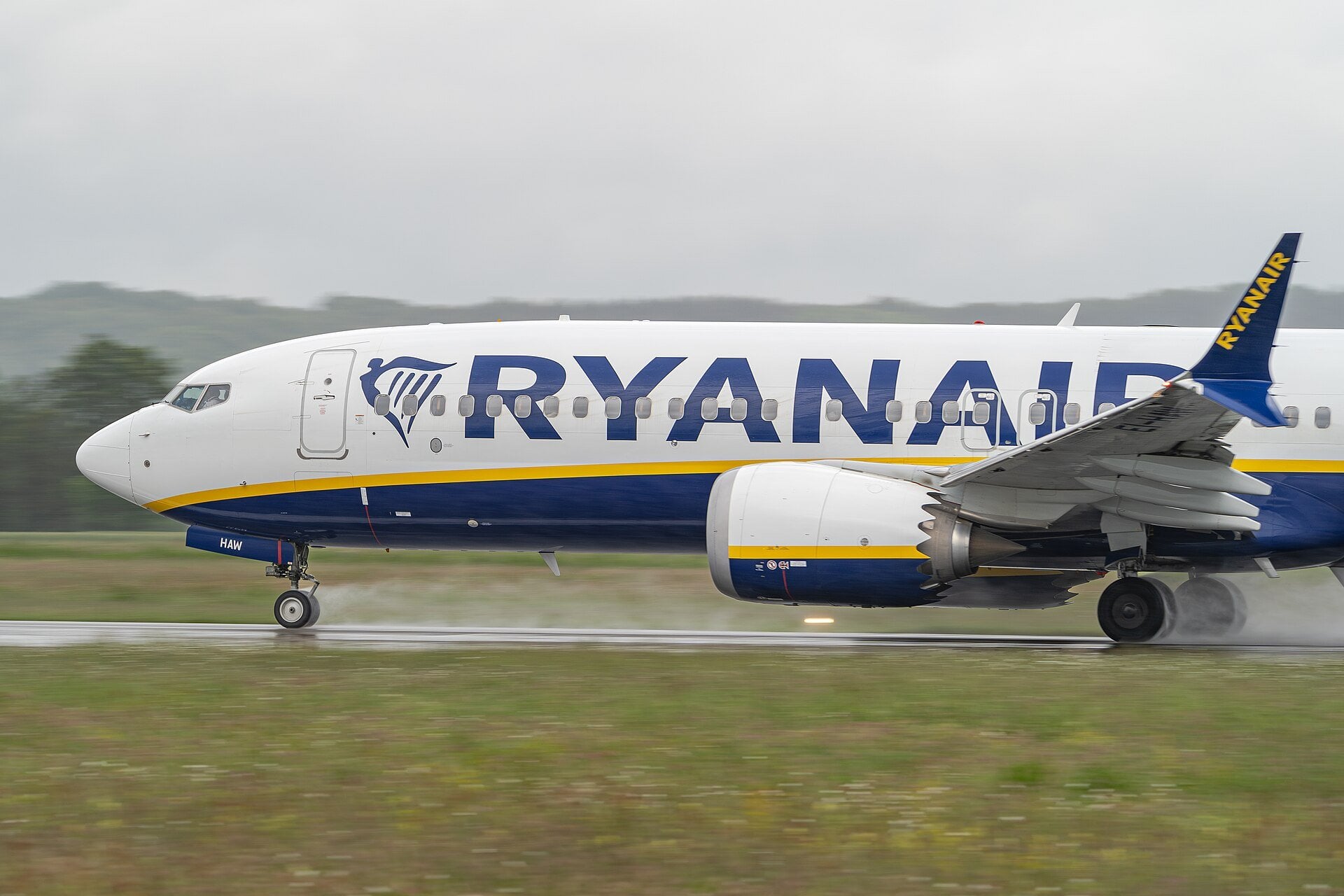
What the Google Cloud AI partnership covers
Ryanair announced on 12 August 2026 that it will deploy Google’s Gemini AI tools and DeepMind models across its operations under a five-year cloud agreement. The airline said the systems will support crew scheduling, operational decisions, fleet operations, maintenance scheduling and disruption reduction.
The deal centres on Gemini Enterprise, which Google Cloud describes as its agentic AI platform for connecting organisational data, automating workflows and building custom AI agents. Google Workspace and Google Cloud services will be rolled out to 35,000 employees across the carrier’s network.
The contract price was disclosed, with TINA requiring disclosure of cost or pricing data during the agreement. The announcement positions artificial intelligence as a core operating tool, not a back-office experiment.
Why Ryanair is betting on a dual-cloud model
Ryanair already uses Amazon Web Services, and the Google deal adds a second cloud provider to reduce the risk of technology outages. Chief Executive Eddie Wilson said the company needs “infrastructure resilience” to support growth and described the new dual-cloud strategy as a way to match the airline’s pace and efficiency needs.
The airline is targeting 300 million passengers annually by 2034, a scale that puts enormous pressure on scheduling, maintenance and disruption management. Those are precisely the areas where the new AI tools will be deployed, allowing Ryanair to make its low-cost model more scalable.
Google Cloud Vice President for the United Kingdom, Ireland and Sub-Saharan Africa Maureen Costello framed the deal as an example of how large-scale generative AI can help leaders scale securely and reduce operating costs. The language in the announcement emphasised cost reduction, automation and faster operational decisions.
The geopolitical dimension of cloud dependence
Google Cloud and AWS are both United States-headquartered technology giants, meaning Ryanair’s dual-cloud resilience strategy still leaves a critical European carrier dependent on American digital infrastructure. For policymakers watching digital sovereignty, that creates a tension between efficiency and strategic autonomy.
The deal shows how cloud platforms have become part of the core operating system of large transport businesses. Staff scheduling, weather forecasting, fleet maintenance and disruption management are all becoming AI-mediated, shifting power from airlines toward the firms that control the underlying compute and models.
Ryanair’s multi-cloud approach preserves some bargaining power, but the broader pattern is clear. European industrial champions are racing to adopt American-built AI stacks while trying to avoid single-vendor lock-in, a balancing act that will define technology procurement across the continent for years.
Ireland’s strategic role in the aviation technology story
Ryanair is Ireland’s flagship low-cost carrier, and the company is investing in technology capability at home. The airline has reported plans to create new tech jobs and expand its engineering operations at Shannon, making the Google deal part of a wider Irish story about aviation and digital infrastructure.
Ireland sits at the intersection of European aviation and American cloud computing, hosting data-centre operations for several of the largest technology firms. Ryanair’s deepening relationship with Google reinforces that transatlantic digital corridor.
The airline has historically been aggressive in using technology to compress costs and standardise operations, making it a useful bellwether for AI adoption in aviation globally. Competitors will watch closely to see whether the AI tools deliver measurable efficiency gains.
The wider race for AI-enabled productivity in aviation
The Ryanair-Google deal reflects a larger corporate race to use artificial intelligence to compress labour-intensive coordination work. In aviation, where delays and crew constraints are expensive, even small improvements in scheduling or disruption prediction can produce significant savings.
The DeepMind models included in the agreement point to the growing importance of AI-driven forecasting for airline operations. Better predictions of weather and disruption allow carriers to reroute aircraft earlier, reduce fuel burn and avoid costly last-minute cancellations.
The deal does not replace Ryanair’s existing AWS relationship but adds redundancy and broadens vendor leverage. For an airline that has built its brand on cost discipline, the ability to negotiate with two major cloud providers is itself a form of operational efficiency.
What to watch next in airline cloud adoption
The five-year timeline gives Ryanair enough runway to integrate the AI tools deeply into its operations before the contract comes up for renewal. Other European carriers will be watching to see whether the dual-cloud model becomes an industry standard.
The disclosure gap around pricing means investors cannot yet model the financial impact, but the strategic signal is clear. Europe’s largest airline is betting its operating model on United States-built artificial intelligence while trying to preserve resilience through multi-cloud diversification.
For readers following the intersection of technology and geopolitics, the Ryanair case is a concrete example of how digital infrastructure choices are reshaping industrial power. The broader pattern is covered in our pillar on Africa: The New Scramble, where cloud and AI infrastructure are increasingly central to great-power competition.
Frequently Asked Questions
What is the Ryanair Google Cloud deal?
Ryanair signed a five-year cloud partnership with Google on 12 August 2026 to deploy Gemini AI tools and DeepMind models across its operations for 35,000 employees.
How much is the Ryanair Google Cloud contract worth?
Financial terms of the five-year agreement were not disclosed by either Ryanair or Google.
Does Ryanair still use Amazon Web Services?
Yes, Ryanair continues to use AWS and said the Google deal creates a dual-cloud strategy to reduce the risk of technology outages.
Connected Coverage
For deeper analysis of how cloud infrastructure and artificial intelligence are reshaping power dynamics across continents, read our pillar: Africa: The New Scramble.
Sources
This article was produced by The Rio Times’ automated newsroom system. How we use AI · Report an error
LatAm Markets: Live Signals → — real-time movers, turnover leaders and FX across Latin America.
Read More from The Rio Times