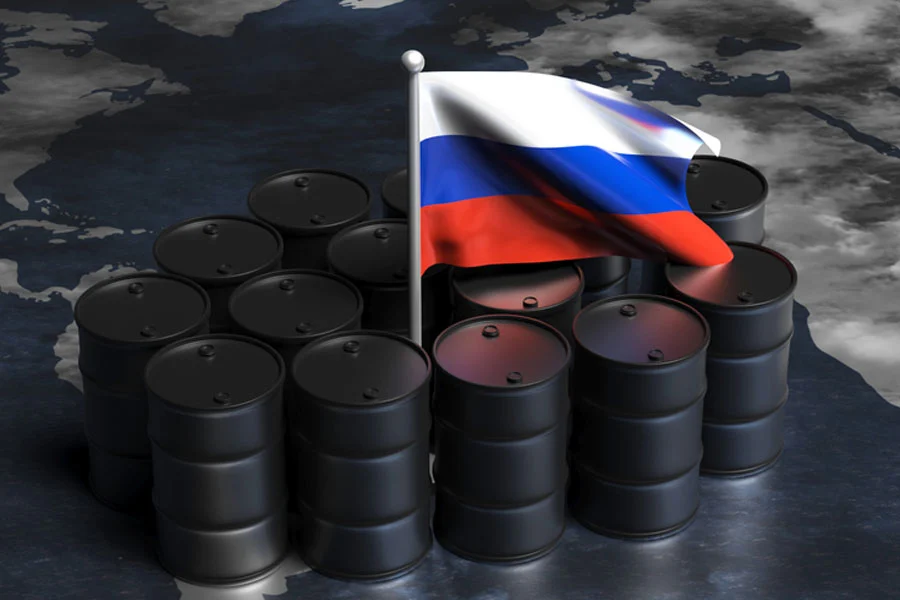
Deputy Prime Minister Alexander Novak confirmed that Russia will continue reducing oil exports throughout 2023.
The country aims to balance the global oil market. They will cut back on exports by 300,000 barrels daily until December. This announcement came on Sunday.
Despite exceeding export targets, Russia remains committed. It stands by its decision along with OPEC+ and Saudi Arabia. They will meet soon to discuss future policies.
Novak highlighted Russia’s efforts to stabilize oil markets. The move matches market predictions after recent price drops.
Earlier, Novak had shared plans to extend export reductions until year’s end.
Next month, Russia will review these policies. They will decide on further cuts or possibly increase production.
These export curbs add to Russia’s broader strategy. It’s a response to Western sanctions, including the G7’s price restrictions on Russian oil.
Background
The history of Russia’s oil export policies has been shaped by various global events and strategic alliances, particularly with OPEC+.
For decades, Russia has been a leading player in the global energy sector, using its vast oil reserves as a key element of its economic and geopolitical strategy.
The collaboration with OPEC+ started in 2016, aiming to manage the oil supply and influence prices effectively.
In 2020, the global oil market experienced unprecedented volatility due to the COVID-19 pandemic, leading to drastic cuts in production to prevent price collapse.
During this period, Russia and OPEC+ members agreed to significant reductions in output to stabilize the market.
The alliance faced challenges in maintaining unity, with disagreements often arising over production levels.
As the world began to recover from the pandemic, the demand for oil surged, prompting a gradual easing of production cuts.
However, Western sanctions in response to geopolitical conflicts, notably the situation in Ukraine, have introduced new complexities into Russia’s export strategy.
These sanctions have pushed Russia to find alternative markets and methods to sustain its oil revenues.
Russia’s oil industry, thus, stands at a crossroads, affected by sanctions and the need for new partnerships.
The extended cut in exports demonstrates Russia’s adaptability and continued influence over global oil markets.
As the country navigates through sanctions and seeks to maintain its position as a key energy supplier, its policies continue to impact the dynamics of the global energy landscape significantly.
This article was produced by The Rio Times’ automated newsroom system. How we use AI · Report an error
Read More from The Rio Times