Rio’s War on the Poor: A Tale of Two Cities
RIO DE JANEIRO, BRAZIL – Residents of Rio de Janeiro – even observers abroad – could be forgiven for experiencing some cognitive dissonance lately. The problem seems to lie in the patently irreconcilable interpretations promoted by multiple official sources, news media accounts and, often, the evidence of our own eyes, concerning what constitutes objective urban reality.
It seems, at the very least, to be a tale of two (distinct) cities.

On the one hand, public authorities – no less than the Governor and the President – are presenting a vision of a city that, if not exactly embodying the best of times, is certainly enjoying a steady decline in violent crime and murder. Rio is becoming a safe city – due, we are told, entirely to their security initiatives.
What to make, then, of the relentlessly aggressive police repression, intensifying violence and a growing tally of innocent deaths in many of the poorer parts of the city? For many communities, this would seem to be the very worst of times.
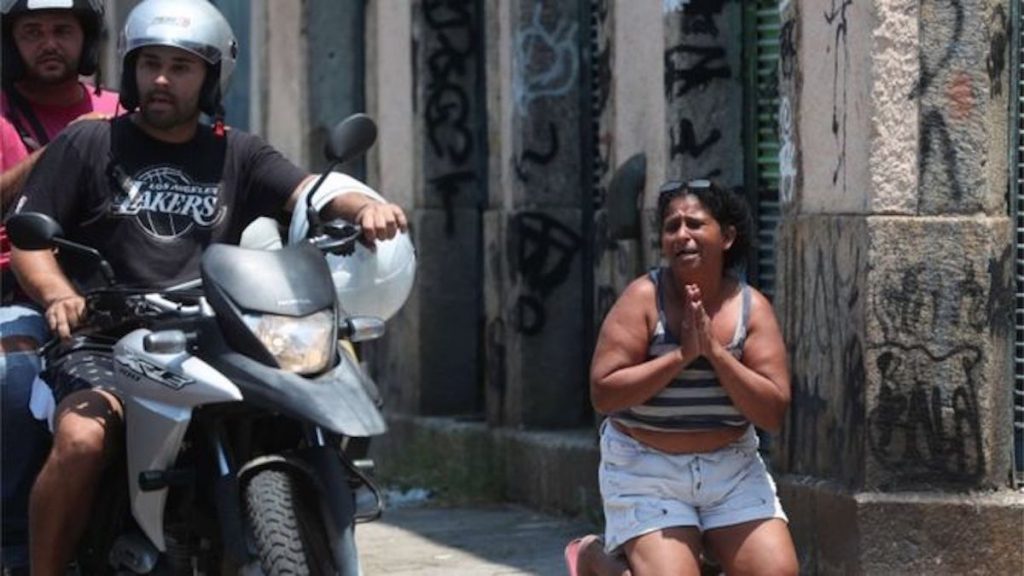
In this – heavily militarized – Rio de Janeiro, police interventions are a daily and dreaded reality. The lethal consequences of the escalating violence they engender are indiscriminate and widespread. Simply being poor can effectively constitute a capital crime.
The resulting images – of police firing heavy weaponry from helicopters into crowded urban communities, for example – replayed in the news media and across social media platforms are indistinguishable from those of foreign war zones.
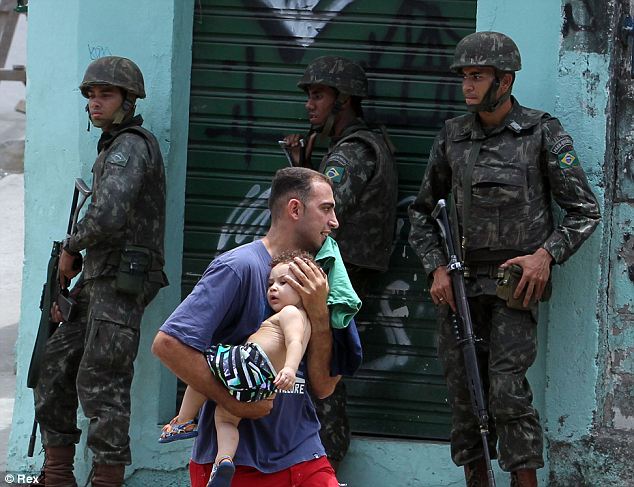
It as if the police are treating parts of the city as a real-life laboratory for urban combat in which the state has declared war on its own citizens.
In the face of the outcry, this brutality has elicited, Governor Witzel has veered between denial, blame-shifting, and unrepentant arrogance.
Referring to the UPP’s (Police Pacification Units) as a “failed project,” he has wholeheartedly endorsed President Bolsonaro’s signature soundbite: “A good criminal is a dead criminal.”
Not surprisingly, the aggressive rhetoric emanating from both state and federal administrations has further emboldened the police to use lethal force.
Undeterred by the consequences Witzel, like Bolsonaro, remains an outspoken advocate of the need to grant police more leeway in dealing with criminals. In practice, this means the Governor has endorsed police actions that have resulted in death – even before investigations into the events have been completed.
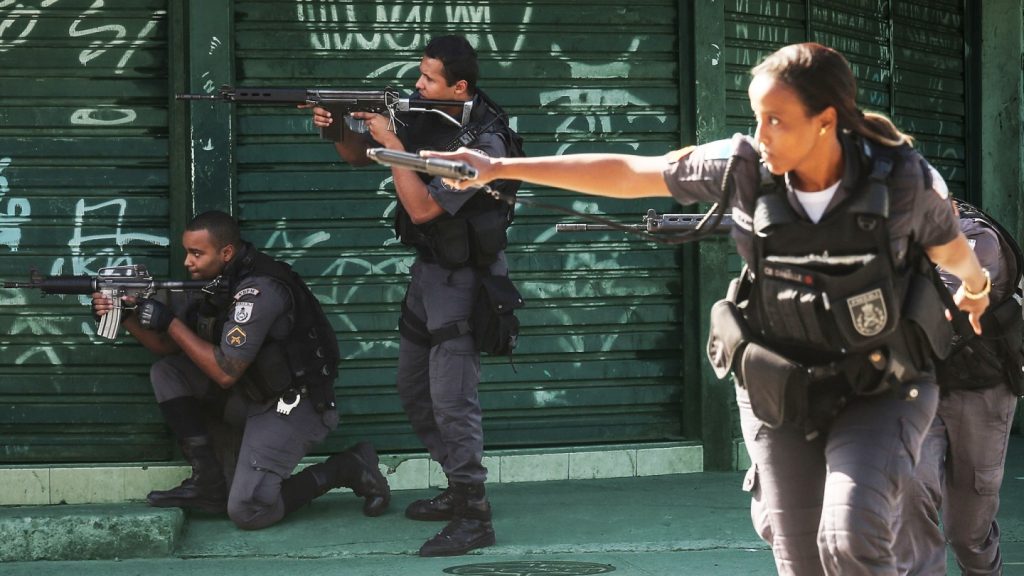
This was the case in February of this year when police killed 15 people in the Fallet-Fogueteiro favela, in central Rio. Subsequently, the Public Defenders Office pointed to evidence of police abuse in the action and complained of a failure to investigate the case thoroughly.
Uncharacteristically mute after the death of Ágatha Sales Félix last week, Governor Witzel finally broke his silence only to place the blame on recreational drug users. “Those who use narcotics in a recreational way … You are responsible for the death of the girl Agatha: you who use marijuana and cocaine give money to the genocides” he tweeted.
Reacting to the news that homicide rates fell 20 percent in 2019 compared to the same period the preceding year, Governor Witzel, like President Bolsonaro, sought to credit his ‘war on crime’ policies for the change. In his view, homicide rates fell because “the police have already sent their message” and, as a result, Rio’s police homicide rates will eventually fall also.
Given the stark difference between official representation and militarized reality, it is instructive to take a closer look at these much-invoked homicide statistics and the trends which lie beneath the totals.
Perhaps the first thing to reiterate (a point widely made – here and elsewhere) is that while overall homicide rates have indeed fallen, the numbers of homicides by police has risen dramatically.
There were 2,717 intentional homicides from January to August this year, down from 3,416 for the same period last year. During the same eight months of this year, Rio de Janeiro police killed 1,249, a figure that surpasses the yearly totals for every year since 2003 – except for last year when 1,534 police killings were recorded over 12 months.
Importantly these deaths are not distributed evenly across space. Predictably, they have been concentrated in the area’s poorest and most disadvantaged communities.
To give some idea of what these numbers mean for life in the communities where police presence is most oppressive, recent data from the ISP (Public Security Institute) reveals that half the deaths in the jurisdiction of the 16th State Police Battalion, which includes the Complexo do Alemão favela, were caused by the police.
Another important point to consider, is that decline (or escalation for that matter) is relative. The decline in overall homicide numbers in the last two years comes after 2017, a year in which there was an orgy of lethal violence between the country’s rival narco-trafficking gangs – the Red Command (CV) and the Primary First Command (PCC) – warring over the nation’s drug trade.
Arguably the fall in homicides in 2018 and 2019 could be interpreted as a correction – a return to the norm – rather than representing a significant new trend.
Likewise, there may be other causes for the lower numbers that predate both the Bolsonaro and Witzel administrations. Several states in Brazil – notably São Paulo – have for a decade or more experimented with a variety of public security projects which have in some cases had dramatic impacts on homicide rates.
In fact, greater and more permanent reductions might be achieved if the lessons from such programs were assimilated and replicated, in preference to a simplistic “shoot-to-kill” approach.
It is very unlikely that the Governor’s trigger-happy policing will resolve the problems that trouble the city’s poorest communities. Heavy-handed oppression may have a temporarily chilling effect on violent crime, but it is unlikely this will translate into long term change.
What it is more likely to do – apart from engendering more violence – is further undermine faith in the institutions of the state, respect for the law and the justice system.
More: Brazil news in English, every day from The Rio Times.
Editorial responsibility: Matthias Camenzind, Editor-in-Chief · Editorial standards · Report an error
Living in or visiting Rio de Janeiro? See this month's events and our Rio de Janeiro city guide with rents, safety and upcoming concerts.