Petrobras Beats Saudi Aramco on Profit Margin for the First Time
Key Facts
Petrobras, Brazil’s state-controlled oil company, has spent years answering questions about political meddling. A new study now says it earned more profit per dollar of sales than any other oil major.
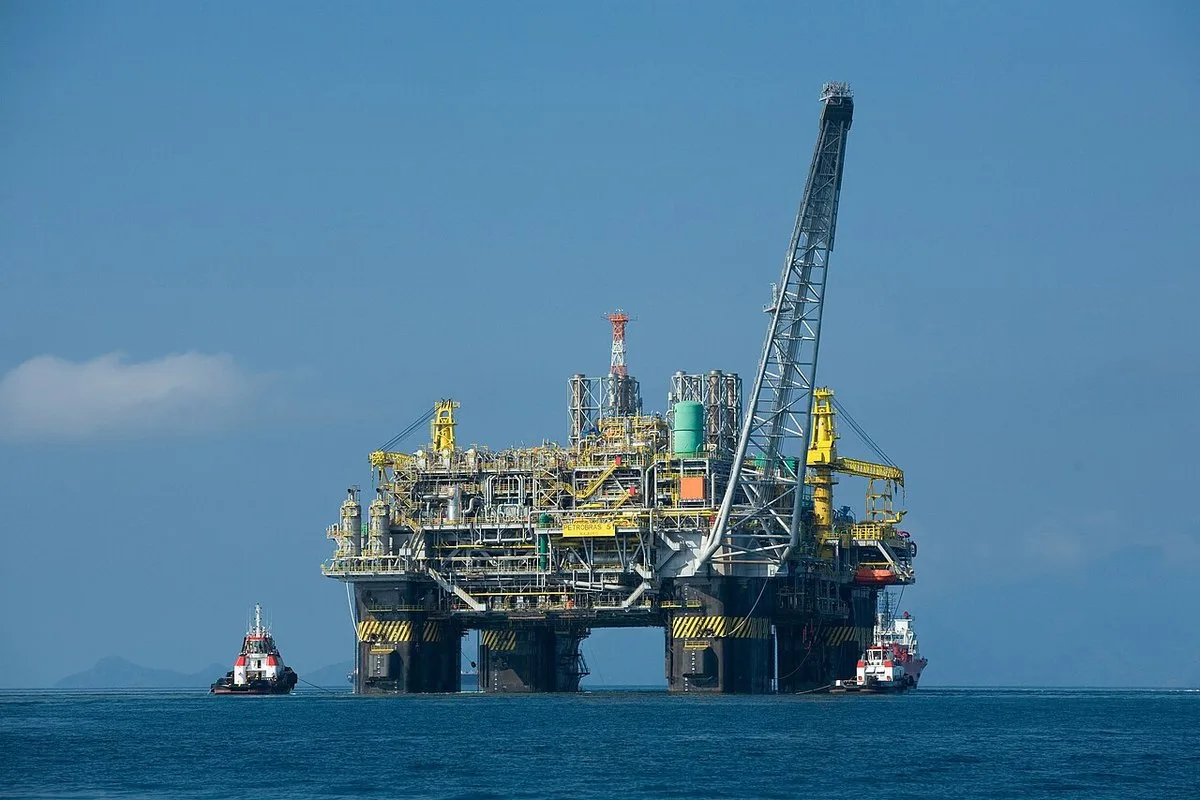
Petrobras kept 29.15% of its first-half 2026 revenue as net profit, beating Saudi Aramco, a study published on 16 September found. The FUP, Brazil’s main oil workers’ federation, commissioned it from Dieese, a union-funded statistics institute.
Why This Matters
Petrobras is Latin America’s largest oil producer and one of the most traded stocks on Brazil’s B3 exchange. The federal government controls it, so its profits, prices and dividends are political questions as much as commercial ones.
Saudi Aramco is the world’s most profitable oil company in absolute terms and the benchmark for low-cost production. Beating it on margin, even for six months, is a result that both managers and politicians will cite.
The timing adds weight, because Brazilians choose a president on 4 October 2026. The two leading candidates offer very different plans for the company, as set out below.
Live Company IntelligencePetroleo Brasileiro Petrobras SA ADR — the full investor dossier
Wall Street view
Valuation & profitability
Price & risk
$10.6552-wk high
$21.99
Revenue trend · 6y
Ownership
Dividend
What the Study Found
The study compared eight large listed oil groups using their published results for the first half of 2026. Petrobras came first with a net margin of 29.15%, and Saudi Aramco second with 25.48%.
Chevron followed at 18.01%, ExxonMobil at 16.33% and BP at 14.83%, according to Times Brasil. Equinor posted 12.84%, Shell 9.94% and TotalEnergies 9.44%, the same report said.
Aramco had led the ranking every year since the series began in 2020, with Petrobras usually second. In absolute profit, Aramco stayed far ahead with about US$65.4 billion in the half, the study found.
Petrobras ranked third on that measure at about US$16.6 billion, behind ExxonMobil’s US$18.7 billion. Chinese state groups Sinopec and PetroChina were left out of the comparison, according to CPG Click Petróleo e Gás.
Who Produced the Ranking
The work was coordinated by Cloviomar Cararine, an economist at Dieese who works with the oil workers’ federation. Dieese is a research body funded by Brazilian trade unions, best known for its wage and cost-of-living data.
The FUP represents Petrobras employees and has long opposed selling the company’s assets or shares. That does not make the arithmetic wrong, because margins follow directly from published revenue and profit.
It does mean the choice of peers, period and framing came from an interested party. The Rio Times could not find the full study document online, only press reports of its findings.
How a Profit Margin Works
A net profit margin is net profit divided by total revenue, shown as a percentage. Brasil 247 put it simply, since Petrobras kept US$29.15 of every US$100 in sales as profit.
The figure comes after operating costs, taxes, royalties and interest have all been paid. A high margin means a company turns sales into profit efficiently, not that it sells the most oil.
That is why Aramco can trail on margin while earning four times more money than Petrobras. Margins also swing with one-off items, such as asset sales, tax disputes or currency effects on debt.
Why Petrobras Pulled Ahead
Cararine linked the result to higher output, higher oil prices, lower overheads and Petrobras’ mix of production and refining. Petrobras reported net profit of R$32.7 billion (US$6.3 billion) for the first quarter of 2026.
It added R$52.4 billion (US$10.2 billion) in the second quarter, bringing the half to R$85.1 billion (US$16.5 billion). The company said second-quarter oil and gas output reached a record 3.34 million barrels of oil equivalent a day.
Its refineries ran at 101% of nominal capacity, meaning they processed slightly more than their rated throughput. InfoMoney reported that Brent averaged US$104.52 a barrel in the quarter, against US$67.82 a year earlier.
Chief financial officer Fernando Melgarejo called it one of the largest quarterly results in the company’s history. Dollar figures in this article use the Central Bank’s PTAX selling rate of R$5.1575 per dollar on 18 September 2026.
The Catch in the Comparison
Aramco’s first half was shaped by supply disruptions in the Gulf, which Petrobras’ Atlantic fields did not face. Aramco chief executive Amin Nasser said the company kept operating by using infrastructure such as its East-West pipeline.
Aramco reported adjusted net income of US$67.2 billion for the half, slightly above the study’s figure. Different accounting choices, adjusted or reported profit, can move a margin by a point or more.
Six months is also a short window in an industry where prices can halve within a year. The ranking therefore shows a strong half for Petrobras rather than a permanent change in the industry’s order.
Where the Money Goes
On 6 August, Petrobras approved R$17.4 billion (US$3.4 billion) in dividends and interest on equity for the second quarter. The payment falls in two instalments, on 23 November and 21 December 2026, Money Times reported.
The federal government holds 29.02% of Petrobras’ total capital and will receive about R$5.05 billion (US$980 million) of that payout. Counting the first quarter, the Treasury’s gross take for the half is about R$7.67 billion (US$1.49 billion).
The second instalment of the first-quarter payout is due on 21 September, according to the same report. Shareholder payouts announced for 2026 so far total R$26.43 billion (US$5.12 billion), Money Times said.
Petrobras also said it paid R$88.6 billion (US$17.2 billion) in taxes and government royalties in the second quarter. That makes the company one of the largest single sources of revenue for Brazil’s federal budget.
The Election and the Fuel Price Question
Fuel prices are among the most sensitive issues in any Brazilian campaign, especially diesel for trucks. On 18 September, the Petrobras board agreed to join a new federal diesel subsidy of R$1 (US$0.19) per litre.
The subsidy offsets a matching Petrobras price rise, so the price to distributors stays unchanged, Agência Brasil reported. The Rio Times explained the mechanism on 20 September, including a combined support of R$2.12 (US$0.41) per litre.
President Lula’s platform calls for Petrobras to return to fuel distribution and regain a larger share of national reserves, Agência iNFRA reported. The 76-page plan of opposition candidate Flávio Bolsonaro does not mention Petrobras by name, the same outlet found.
His programme instead favours private competition and the sale of onshore and mature fields, according to Agência iNFRA. A record margin gives each side an argument, either that state control works or that the company should be freer.
What It Means If You Follow Petrobras
For shareholders, the margin matters less than cash flow, since dividends are set at 45% of free cash flow. Higher oil prices and record output lifted that cash flow, but both can reverse quickly.
Foreign investors should watch whether the next government keeps the current dividend policy after taking office in January 2027. Changes to fuel pricing or the distribution business would hit margins before they show up in dividends.
Readers living in Brazil will feel Petrobras mainly through diesel and petrol prices at the pump. For now, the subsidy scheme keeps diesel prices stable while shifting part of the cost to the Treasury.
What Is Not Yet Known
It is not known whether the full study, with its exact data sources and definitions, will be published. Petrobras and Aramco have not commented on the ranking in the reports reviewed by The Rio Times.
It is not clear whether the diesel subsidy will be extended beyond its first 30 days. The next quarterly results will show whether the lead survives if oil prices fall.
Frequently Asked Questions
Did Petrobras really beat Saudi Aramco?
On net profit margin for the first half of 2026, yes, according to the FUP and Dieese study. Aramco still earned about four times more in absolute profit.
Who made the ranking?
Economist Cloviomar Cararine of Dieese, a union-funded research institute, for the FUP oil workers’ federation. It is not an independent market index.
How much profit did Petrobras make?
Petrobras reported net profit of R$85.1 billion (US$16.5 billion) for the first half of 2026. That combines R$32.7 billion (US$6.3 billion) in the first quarter and R$52.4 billion (US$10.2 billion) in the second.
Why does the election matter for Petrobras?
The government controls the company and appoints its management. President Lula wants a larger role for Petrobras, while Flávio Bolsonaro’s plan leans on private competition.
Sources: Times Brasil (CNBC), full margin ranking and absolute profits, Brasil 247, Dieese economist on the drivers, CPG Click Petróleo e Gás, methodology and exclusions, Agência Petrobras, second-quarter 2026 results, Agência Petrobras, first-quarter 2026 results, InfoMoney, second-quarter figures and Brent price, Aramco, second-quarter and half-year 2026 results, Money Times, dividends due to the federal government, Agência Brasil, Petrobras joins diesel subsidy, Agência iNFRA, Lula and Flávio Bolsonaro plans for oil and gas, Banco Central do Brasil, PTAX dollar rate
This article was produced by The Rio Times’ automated newsroom system. How we use AI · Report an error
LatAm Markets: Live Signals → — real-time movers, turnover leaders and FX across Latin America.
Read More from The Rio Times