One Brazilian Oil Field Now Out-Pumps Whole OPEC Nations
Energy
Key Facts
Petrobras Búzios, a single patch of seabed off the Brazilian coast, now pumps more oil than entire OPEC nations, and it just got there faster than almost anyone expected.
Petrobras, Brazil’s state-controlled oil company, said its Búzios field passed one point two million barrels of oil a day on June twenty-sixth. The field sits in the pre-salt, a band of crude trapped under thousands of metres of water, rock and salt in the Santos Basin south of Rio de Janeiro.
The number alone is striking, but the pace behind it is the real headline. Búzios had only just crossed one point one million barrels three days earlier, meaning it added a hundred thousand barrels a day in barely seventy-two hours.
Why Petrobras Búzios matters on a world scale
To put one point two million barrels a day in perspective, that is more than several full members of the OPEC oil cartel produce across their entire countries. Algeria and Venezuela, both long-standing members, each pump less than this one Brazilian field.
Búzios is what the company calls the largest deep-water oil field in the world, and it is now only the second field in Brazil’s history to break the one-million-barrel mark, after the nearby Tupi field.
That is a remarkable concentration of output in a single asset. Most countries reach that kind of volume by spreading drilling across vast onshore territory, while here it comes from a cluster of floating platforms anchored over one stretch of ocean.
The wider pre-salt region now accounts for roughly four in every five barrels Petrobras pumps. That dominance is what has carried Brazil up the global rankings, into the company of the world’s largest crude producers.
What is driving the Petrobras Búzios surge
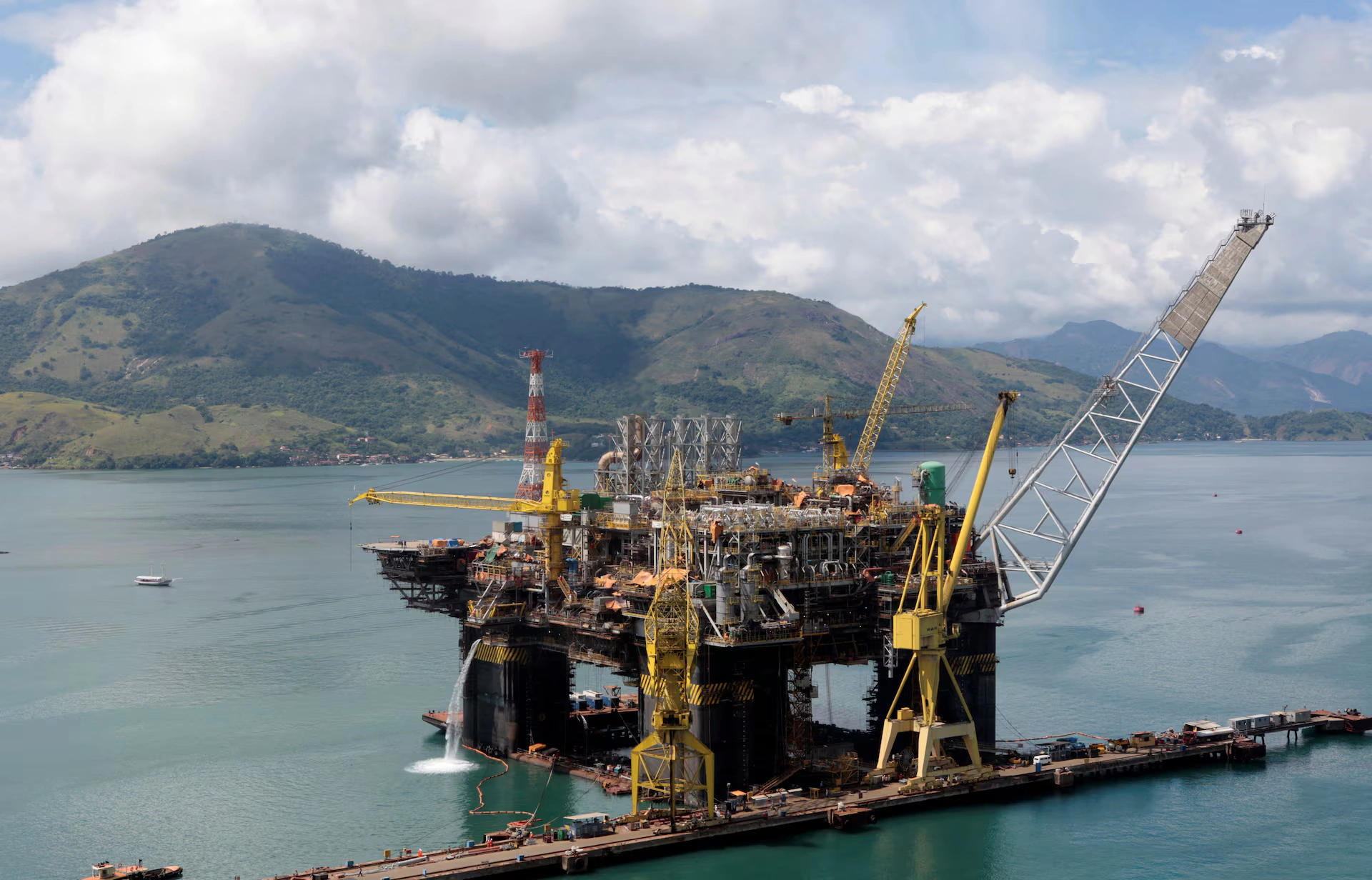
The leap came from two new platforms, known as the P-78 and the P-79, which are still in their start-up phase. Each is designed to process up to a hundred and eighty thousand barrels a day, and neither has yet reached full speed.
The field currently runs eight production units in all, including the Almirante Tamandaré, the most powerful single platform in the country. Built to handle as much as two hundred and twenty-five thousand barrels a day, it shows how much a single modern unit can add.
As more wells are connected, output keeps climbing. Much of that crude is light and low in sulphur, the kind Asian refiners have been buying in growing volumes, with China and India the largest customers.
And the build-out is far from finished. Petrobras plans for Búzios to eventually run twelve floating platforms, with three more under construction and a further unit out to tender, so the field has years of growth still ahead.
Live Company IntelligencePetroleo Brasileiro Petrobras SA ADR — the full investor dossier
Wall Street view
Valuation & profitability
Price & risk
$10.7852-wk high
$26.12
Revenue trend · 6y
Ownership
Dividend
Why a foreign reader should care
For an investor watching from London or Munich, Búzios is the engine under one of the world’s cheapest barrels. Petrobras has said its average break-even cost is around the low thirties of dollars a barrel, among the lowest of any major producer, which means these fields stay profitable even when crude prices fall hard.
It also matters for the wider economy. Oil is now Brazil’s top export, and the cash from the pre-salt feeds both the country’s trade surplus and the government’s budget in an election year, giving the production record a political weight beyond the oil market.
The bigger picture is a shift in who supplies the world’s oil. While the OPEC group manages its output, Brazil keeps adding barrels, and a single field now matching whole member states shows just how quickly that balance is moving.
More: Brazil news in English, every day from The Rio Times.
Frequently Asked Questions
What is the Petrobras Búzios field?
It is an offshore oil field in the pre-salt region of the Santos Basin, off the coast south of Rio de Janeiro. Petrobras describes it as the largest deep-water field in the world, with oil lying beneath thousands of metres of water, rock and salt.
How big is the new record?
The field topped one point two million barrels of oil a day on June twenty-sixth, up from one point one million just three days earlier. That single field now produces more than several entire OPEC member countries.
Will Petrobras Búzios production keep rising?
Most likely, yes. Two of its newest platforms are still ramping up to full capacity, and the field is planned to grow from eight production units today to twelve, with several more already under construction.
Connected Coverage
› Petrobras Q1 Production Hits Record 3.23 Million Barrels per Day
This article was produced by The Rio Times’ automated newsroom system. How we use AI · Report an error · Editorial responsibility: Matthias Camenzind, Editor-in-Chief