Petro threatens new interventions in energy sector
The controversies generated by the leftist President of Colombia, Gustavo Petro, do not cease.
This week again, the President has provoked public opinion by stating his intention to “democratize” energy generation in the South American country where six companies are currently in charge of performing this task to provide electricity to the homes of Colombians.
“There is an oligopoly of six generating companies with the population by the neck (…) Why not democratize, then, the generation of energy? Isn’t that, perhaps, democracy?” said Petro in a visit to the Cauca region, alluding to the alleged advantages that a new scheme could bring, including the promotion of clean energies.
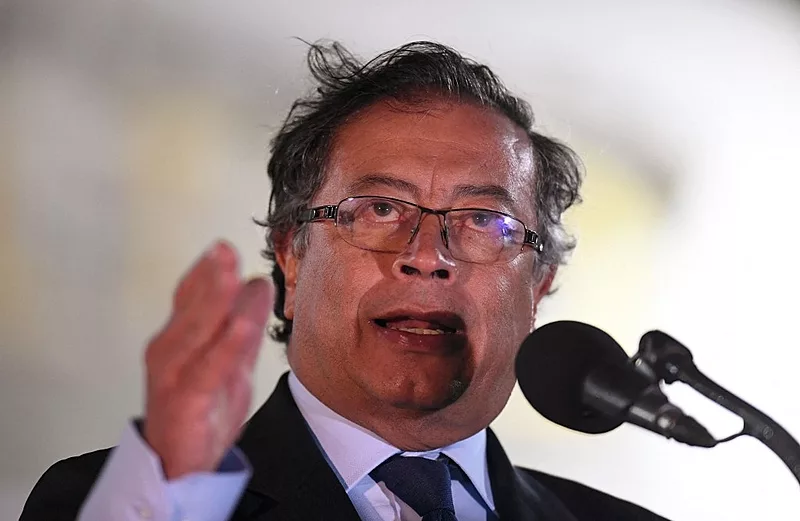
The discourse, which may sound very promising, generates alarms regarding the use of the word “democratization” since the term is generally associated in governments related to the leftist São Paulo Forum to maneuvers to intervene from the State in activities that are usually channeled through private enterprise.
Thus, for example, the late Venezuelan President Hugo Chávez habitually used this word to undertake plans to nationalize any company he could get his hands on: from food to electricity.
As it is logical, the Chavist maneuvers of “democratization” of companies that previously belonged to the private sector never ended well.
While on the one hand, these companies generally ended up ruined, on the other hand, the users or consumers of their products ended up receiving services and products of a more than questionable quality.
This statement by the Colombian head of State comes in the context of situations in which, just a week ago, his office formally reassumed for three months the legal competence to regulate the rates of essential services such as drinking water, waste collection, and electric power, through its involvement in commissions to supervise them.
Specifically, regarding the energy issue, the President has hinted at his willingness to use the power of the presidency to lower rates by decree.
The advance of the Petróleos government in the way of interventions does not seem to be yielding good results in terms of how its management is perceived by public opinion.
Recently, the company Datexco, through its Opinómetro survey, made evident the drop in Petro’s popularity: 53% of Colombians disapprove of him, while only 36% approve of him.
Colombia has experienced, during the last years, relative stability regarding the provision of electric energy services, mainly through the efforts made by different private companies within the sector.
However, with the latest actions of Petro’s government, alarms have been raised about a future scenario in which Colombians may begin to go through episodes of electricity blackouts, such as those that usually occur in neighboring Venezuela, governed by the regime of Nicolás Maduro.
Thus, Camilo Sánchez, the President of the National Association of Public Utilities and Communications Companies (Andesco), has warned on Caracol Radio about the dangers that loom over the Hispanic American nation.
“If the president says that 10 or 20% (of the tariff) will be lowered, what will happen is that legal security and everything that has to do with institutionality will be breached, and therefore the prejudice will fall and very surely in the medium or short term we will have blackouts on the coast”.
Colombians still have time to stop Petro’s attempts to control more and more sectors of society.
The failure of the recipe of interventions in the name of “democratizing” demagogy – which at the end of the day is nothing but destructive – and the utopia of free for all has been evidenced on more than one occasion in the country with which they share the neighborhood. Chavist Venezuela.
They are warned…
With information from LGI
More: Colombia news in English, every day from The Rio Times.
Editorial responsibility: Matthias Camenzind, Editor-in-Chief · Editorial standards · Report an error