
PERU · ECONOMY
Key Facts
- The country Peru is one of the world’s leading copper and gold exporters and has had a free-trade agreement with the United States since 2009.
- What happened The International Monetary Fund (IMF) raised its Peru growth forecast for 2026 to 3%, from 2.8% in April, in its October World Economic Outlook.
- Next year The IMF expects Peru’s economy to grow 2.9% in 2027, after growth of 3.4% in 2025.
- Inflation The IMF sees average consumer prices rising 3.8% in 2026, above the central bank’s 1% to 3% target range, and 2.6% in 2027.
- The region The IMF forecasts 2.3% growth for Latin America and the Caribbean this year, with Brazil at 2.2%, Mexico at 1.5% and Chile at 0.6%.
- Power Index Peru ranks 5th of 14 in The Rio Times Latin America Power Index, with 54.7 points (October 2026 edition).
- Still open The report does not discuss Peru in detail, so it does not say what drove the upgrade.
The International Monetary Fund (IMF) now expects Peru’s economy to grow 3% in 2026, up from the 2.8% it forecast in April. The new Peru growth forecast, in the IMF’s October World Economic Outlook, puts the Andean copper exporter ahead of Brazil, Mexico and Chile.
For US investors who hold Peruvian bonds or shares in its mining companies, the upgrade points to steady growth despite a global energy shock. The IMF also expects prices to rise faster than Peru’s central bank wants, with inflation of 3.8% this year.
What the IMF Forecast Says
The IMF’s new Peru growth forecast is 3% for 2026 and 2.9% for 2027, according to its October 2026 data. That follows growth of 3.4% in 2025, so the economy is expected to slow only slightly.
In April, the IMF had forecast 2.8% for both 2026 and 2027, and it published no new Peru figures in July. The Lima business papers Gestión and Semana Económica both reported the 0.2-point upgrade on Tuesday.
The IMF now sees average consumer prices in Peru rising 3.8% in 2026 and 2.6% in 2027. In April it had expected 2.5% inflation for this year, a figure already raised after a fuel supply crisis in March.
How Peru Compares With Its Neighbours
The IMF expects Latin America and the Caribbean as a whole to grow 2.3% this year and 2.5% in 2027. That Peru growth forecast of 3% would put it ahead of Brazil at 2.2%, Mexico at 1.5% and Chile at just 0.6%.
Venezuela, at 5%, and Paraguay, at 4.5%, are among the few South American economies forecast to grow faster. Bolivia stands at the other end, with the IMF expecting its economy to shrink 3% in 2026.
Infobae, an Argentine news site, listed Peru among six regional economies whose forecasts the IMF raised, alongside Brazil and Venezuela. Argentina, Chile and Uruguay were among the biggest cuts, and the regional forecast stayed at 2.3%.
Why It Matters for US Investors and Trade
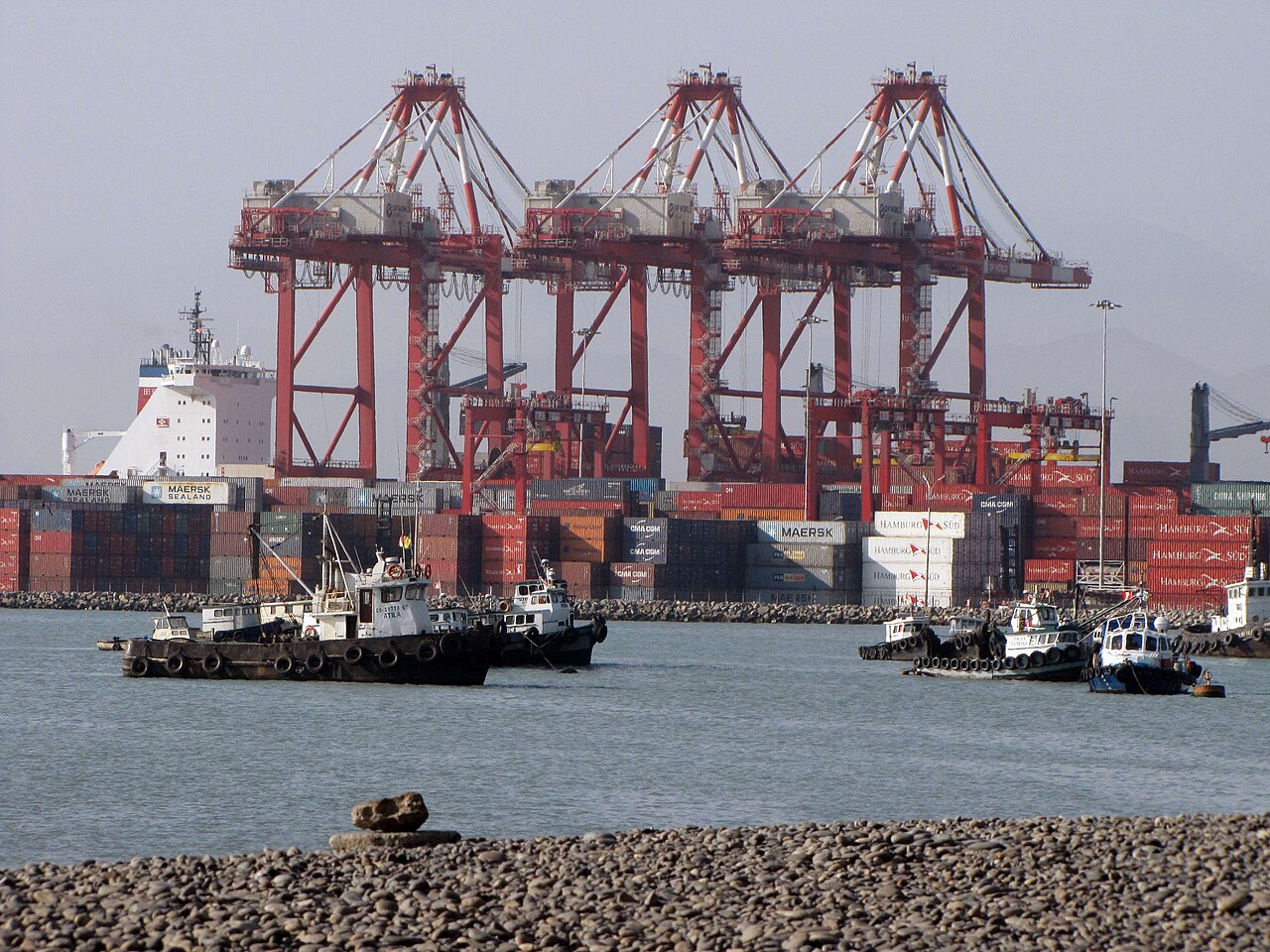
Peru is one of the world’s main sources of copper, the metal used in power grids, electric cars and data centres. Much of its trade passes through Callao, the country’s main port next to Lima.
The United States and Peru have had a free-trade agreement in force since February 2009. A steadier Peruvian economy supports demand for American goods and means fewer surprises for holders of Peruvian government bonds.
The IMF’s Warnings
The IMF paired its higher Peru growth forecast with a call on the region to stay alert to inflation, Gestión reported. It said the oil shock linked to the war in the Middle East will hit growth unevenly across Latin America.
The IMF urged policymakers to prevent second-round effects of the energy and commodity shock, meaning wage and price rises that keep inflation high. It said the advice applies to commodity exporters such as Peru as well as to importers.
Peru’s central bank, the Banco Central de Reserva del Perú (BCRP), aims to keep inflation between 1% and 3%. The IMF’s 3.8% average for this year would sit above that range, after inflation of just 1.5% in 2025.
What It Means for You
For travellers and expats in Peru, steady growth points to a stable business climate in Lima and the mining regions. Everyday prices, however, are expected to rise faster than in 2025, when the IMF puts inflation at 1.5%.
For holders of Peruvian bonds and mining shares, which often track copper prices, the higher Peru growth forecast is a modest positive signal. It does not remove the risk of a sharp fall in metal prices or a new political shock.
What Is Not Known
The IMF report does not discuss Peru in detail, so it does not explain what drove the upgrade. Gestión notes that the new figure sits close to most other forecasts for Peru, which cluster around 3%.
Peru’s Economy Ministry, according to Gestión, still expects 3.4% growth this year, slightly above the IMF figure. The central bank cut its 2026 estimate to 3.2% in September over El Niño, Andina reported, after an upgrade in June.
El Niño, a periodic warming of Pacific waters off Peru’s coast, can hurt fishing, farming and roads. How strong it turns out to be in the coming months is one of the biggest open questions for Peru’s growth.
More: Peru news in English, every day from The Rio Times.
Frequently Asked Questions
What is the IMF’s new growth forecast for Peru?
The IMF expects Peru’s economy to grow 3% in 2026 and 2.9% in 2027. In April it had forecast 2.8% for both years.
How does Peru compare with the rest of Latin America?
The IMF sees the region growing 2.3% this year, so Peru’s 3% is above average. Brazil, Mexico and Chile are all forecast to grow more slowly.
Why does the IMF warn about inflation in Peru?
The IMF expects Peruvian consumer prices to rise 3.8% on average in 2026, above the central bank’s 1% to 3% target range. It links the regional inflation risk to the oil shock from the war in the Middle East.
What does the Peru growth forecast mean for US investors?
A steadier economy supports Peruvian government bonds and mining companies tied to copper. It does not protect them from a fall in metal prices or political turmoil.
Sources: International Monetary Fund, World Economic Outlook, October 2026 (report), 13 October 2026; International Monetary Fund, DataMapper, Peru real GDP growth, World Economic Outlook (October 2026), 14 October 2026; International Monetary Fund, DataMapper, Peru inflation, World Economic Outlook (October 2026), 14 October 2026; Office of the US Trade Representative, United States-Peru Trade Promotion Agreement, 14 October 2026; Andina, BCR: Peru’s economy to grow 3.2% in 2026, 19 September 2026; Gestión, 13 October 2026; Semana Económica, 13 October 2026; Panamericana (BCRP September Inflation Report), September 2026; Infomercado (IMF April 2026 forecast), 15 April 2026; El Peruano (IMF April 2026 forecast), April 2026; Gestión (BCRP inflation target range), 13 January 2026; Infobae, 13 October 2026.
This article was produced by The Rio Times’ automated newsroom system. How we use AI · Report an error · Editorial responsibility: Matthias Camenzind, Editor-in-Chief