Pandemic Bill in Brazil Has Reached R$700 Billion
RIO DE JANEIRO, BRAZIL – In the words of President Jair Bolsonaro, the disease brought on by the coronavirus would be nothing more than a “minor flu”. Yet, five months later, the damage caused by the pandemic in the country bears no resemblance to a common flu outbreak, which is treated with vitamin C and plenty of rest – or chloroquine, as Bolsonaro promotes.
In addition to the 100,000 lives claimed by the virus and the three million Brazilians infected so far, including the President himself, the amount of resources used to fight the pandemic and mitigate its economic and social impact has had a devastating effect on public finances. The measure opening the public coffers for the government to tackle Covid, organized by Chamber president Rodrigo Maia, was not by chance baptized as the “war budget”.
According to a survey conducted by Estadão newspaper, based on government and bank estimates, the pandemic is expected to cost some R$700 billion (US$140 billion) in 2020 alone, the equivalent of almost ten percent of Brazil’s GDP (Gross Domestic Product) and R$3,300 for each Brazilian.

It would be enough to pay for the Bolsa Família (Family Grant), even considering the growth in the number of recipients during the crisis, for 21 years. From the public accounts perspective, this represents almost six times the deficit projected for this year before the pandemic, once estimated at R$124.1 billion.
“It’s a very high cost,” says Treasury Secretary Bruno Funchal, who took office in late July, with the bill for the coronavirus already issued and the challenge of managing the problem. “Ultimately, it is an account that will be paid by all of us and by future generations.”
Global Crisis
If the projections are confirmed, gross public debt is expected to rise 22.4 percentage points this year, from 75.8 percent of GDP in late 2019 to 98.2 percent (as already announced by the government), a record high. This is a sevenfold increase over 2009, at the peak of the global financial crisis, and the same as the last six years combined, from 2013 to 2019, one of the most troubled periods for public accounts and the national economy.
As in the global crisis, which ultimately plunged the country into the worst recession of all time, albeit years ago, as a result of the spending spree promoted in an attempt to mitigate its impact here, the damage now should extend well beyond 2020 – and on a larger scale. “We can’t even think of actions that weaken our fiscal situation,” says Funchal. “In the post-Pandemic future, our fiscal consolidation trajectory must be the same as the pre-pandemic.”
According to the Treasury’s projections, the gross public sector debt is expected to remain relatively stable over the next three years and peak at 98.6 percent of GDP in 2024. Only then will it start to drop, reaching 92.2 percent of GDP in 2029.
Some analysts draw even more pessimistic scenarios, reinforcing Funchal’s own perception that the situation could spiral out of control should the temporary pandemic spending become permanent, as many politicians and economists are advocating.
Austerity
A study conducted by the Independent Fiscal Institution (IFI), linked to the Senate, shows that gross debt, which was expected to stop growing this year or next, according to pre-pandemic projections, could reach 100 percent of GDP by 2022. After that, it will continue to rise until 2030, when it will reach 117.6 percent of GDP and only then will it begin to decline.
“If before the crisis we were already challenged to adjust the accounts and it was difficult to do that, after the pandemic it will become even more challenging because the federal, state and municipal governments will be in an even worse fiscal situation than before,” says economist Felipe Salto, executive director of IFI. “Many people are celebrating, saying that now we have overcome this fiscal austerity issue, but they are wrong because the country’s structural problems will be the same.”
This year, the cost of the pandemic may be further aggravated if companies fail to pay the deferred taxes – an amount estimated at R$100 billion by the Treasury.
Given that the arrears will need to be paid along with those of the fourth quarter, the Ministry of Economy’s officials fear that companies will not be in a position to meet all payments.
A new extension of the emergency aid for casual workers, which represents the highest cost in the pandemic, could also use up an additional R$200 billion, should the benefit be stretched to December, raising the cost of the pandemic to almost R$1 trillion.
Pooling
However, there are some factors that have not yet been accounted for that could contribute to the country reaching the end of the year with a slightly better result than the projections disclosed to date.
For instance, interest expense on the public debt may be much lower than official estimates suggest and even lower than expected before the pandemic, despite the government’s estimated 4.7 percent drop in GDP.
As the Ministry’s projections are somewhat outdated, they fail to reflect the drop in the basic rate (SELIC) to two percent per year, which is applicable to approximately 60 percent of the public debt.
Currently, the Treasury is still projecting an interest expense of R$350 billion in 2020 (4.8 percent of GDP), while the median of the banks’ estimates, according to the July 31st Focus Report, points to an expense of some R$290 billion (four percent of GDP) – R$60 billion less than the official projections.
The government may also have a positive surprise if part of the R$35.9 billion transferred to the Credit Guarantee Fund (FGC) to enable the release of financing for micro, small and medium-sized companies by the banks, return to public coffers. Given that the government is not even considering this money, transferred in the form of non-repayable funds, anything that comes into the treasury will contribute to mitigate the cost of the pandemic.
Another factor that may ease the bill is the surplus resources from the original 2020 budget, approved before the Covid – a phenomenon called “pooling” by economists. As many Ministries have focused on pandemic-related efforts, they have been unable to implement several projects scheduled for this year. In the first semester, according to Funchal, the “pooling” of these resources reached a record amount of R$31 billion.
This is even true for the so-called “war budget”. Of the R$510 billion released by the government, only R$273.8 billion (53.7 percent) have been spent to date, according to the Federal Budget Panel. Another R$123.3 billion (24.2 percent) are earmarked for payments but have not yet been disbursed. Even if part of the remaining R$110 billion is used by December, there could still be a substantial surplus to bolster cash flow.
All in all, the pandemic bill in 2020 may ultimately be a little lower than expected. If this were to happen, it would bring welcome relief for the country’s shaky public finances.
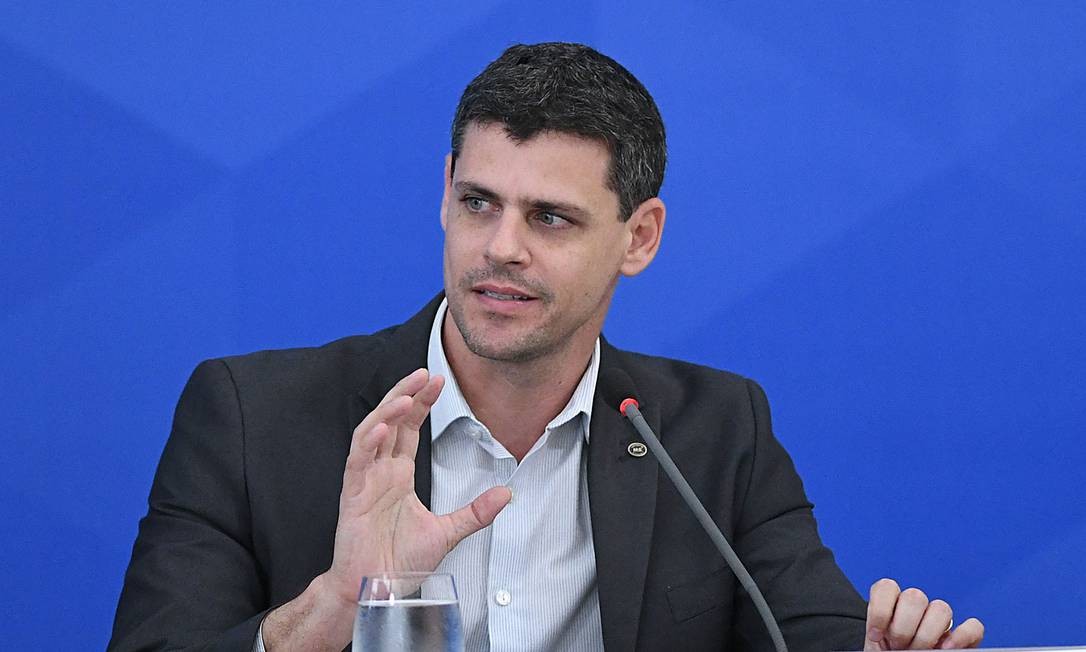
Treasury Secretary Bruno Funchal took office in the “eye of the hurricane” when the government was forced to set aside the fiscal containment effort and open its coffers to meet the demands raised by the pandemic. In an interviewwith Estadão, he discusses the colossal impact of the Covid on public accounts and the need to resume austerity policies in the post-pandemic to prevent a confidence crisis in relation to the country’s ability to manage a debt that is expected to cost R$700 billion this year.
From a fiscal standpoint, how do you analyze the level of public spending in the pandemic?
The increase in spending in this period was required. As we are dealing with life, it is quite reasonable that you take exceptional measures to be able to address the problem. It was a worldwide effort in order to tackle the pandemic and the widespread uncertainty it brought, not only with respect to dealing with the disease but also with respect to how the economy would react. Now, it is a very high cost. It is a bill that will ultimately be paid by all of us and by future generations.
What is the real impact of the pandemic on public accounts?
We went from a primary deficit projected by the LDO (Budget Guidelines Law) of R$124 billion to a deficit of almost R$800 billion. In addition to these R$124 billion already committed, there were an additional R$500 billion in expenses, equivalent to 7.5 percent of GDP, to protect the most vulnerable, secure jobs and provide liquidity for companies, and an additional R$20 billion in tax reductions and exemptions.
There is also the frustrated revenue because we expected GDP to grow between 2.5 and three percent this year and it will drop 4.7 percent according to projections from the Secretariat of Economic Policy (SPE). In total, considering an interest expense of 4.8 percent of GDP, we project a nominal deficit of 16.1 percent of GDP in 2020. This difference we are adding as compared to what was projected in the budget will be reflected in our debt.
Some analysts say that most of the money released in the pandemic was to mitigate its social and economic impact and that the share for health, for prevention and fighting the disease, was very low, approximately ten percent of the total. How do you perceive this criticism?
Since the start of the pandemic, the government’s top priority, of Minister (Paulo) Guedes, was for resources to be available for health as long as there was demand. Furthermore, of the R$60 billion directed to states and municipalities, R$10 billion were earmarked for health. The other R$50 billion were not earmarked, but that was a request from the states and municipalities, to have greater freedom to allocate the money.
Ultimately, healthcare is provided locally. So, the most important task was to supply the subnational bodies with funds so that they could manage them. It is the local authority that knows where the money is most needed. As there was a significant reduction in revenue also in states and municipalities and a reorganization of resources for health, money for other areas was eventually lacking, to run the machine.
All of this will demand a great effort from the government to rebalance its public accounts. What is your assessment of the fiscal framework in the coming years?
We need to bear in mind that we are experiencing a temporary shock. As the economy rebounds, our actions must revert to the pre-crisis agenda. We must not turn what is temporary into a permanent situation so as not to deteriorate the fiscal framework further. In the post-pandemic future, our fiscal consolidation path must be the same as the pre-pandemic. Our indebtedness is very high. We must not even consider actions that weaken our fiscal situation. By maintaining the spending ceiling and the low-interest period, we can control the debt and make an effort to return to a more reasonable level of indebtedness.
What can happen if this is not achieved?
If we turn these temporary measures into permanent spending, the expectations with regard to public accounts will worsen greatly. If we lose credibility with respect to the stability of our debt, the impact on interest rates will be immediate. Then we will have a combination of high interest rates and high debt. We will be flirting with a very high fiscal risk. That is why it is crucial to return to the fiscal consolidation agenda and reinforce the spending ceiling. This is what drives expectations and leads everyone to believe that spending is under control and interest rates will remain low.
Source: Estadão Conteúdo
More: Brazil news in English, every day from The Rio Times.
Live Market IntelligenceBrazil — Live Market Board
Rio Times · Live Market Intelligence
Brazil — Live Market Board
-0.56%
187,206.89
-0.56%
63,924.77
-0.28%
11,220.10
-0.16%
3,098,898
-1.87%
2,589.69
-1.41%
59,373.28
-0.32%
| Instrument | Last | Change | YoY | Prev. | High | Low | Volume |
|---|---|---|---|---|---|---|---|
| IBOV | 187,206.89 | -0.56% | +21.85% | 188,268.59 | 168,310 | 167,142 | — |
| USD/BRL | 5.16 | +0.01% | -5.13% | 5.16 | 5.18 | 5.14 | — |
| SELIC | 14.00% | — | — | — | — | — | |
| PETR4 | 41.64 | -0.05% | +35.19% | 41.66 | 41.97 | 41.15 | 41,499,400 |
| VALE3 | 72.97 | +0.83% | +30.75% | 72.37 | 73.54 | 72.66 | 17,658,000 |
| ITUB4 | 38.60 | -1.03% | +4.57% | 39.00 | 39.34 | 38.39 | 29,487,800 |
| BBDC4 | 16.85 | +0.36% | +3.50% | 16.79 | 16.90 | 16.67 | 19,416,900 |
| BBAS3 | 19.37 | +0.47% | +0.73% | 19.28 | 19.44 | 19.16 | 11,069,200 |
| B3SA3 | 14.26 | -0.21% | +12.73% | 14.29 | 14.47 | 14.11 | 33,037,800 |
| ABEV3 | 14.89 | -0.80% | +21.91% | 15.01 | 15.07 | 14.81 | 16,453,100 |
| WEGE3 | 47.59 | +0.49% | +29.99% | 47.36 | 48.08 | 47.36 | 3,364,600 |
| PRIO3 | 59.14 | -0.19% | +50.67% | 59.25 | 59.81 | 58.74 | 3,325,600 |
| SUZB3 | 41.33 | +2.35% | -23.55% | 40.38 | 41.48 | 40.35 | 3,914,900 |
| RENT3 | 34.68 | -0.09% | +0.84% | 34.71 | 34.96 | 34.35 | 7,979,100 |
| AZZA3 | 15.89 | -2.63% | -53.76% | 16.32 | 16.42 | 15.82 | 1,330,300 |
| CSNA3 | 4.30 | +0.47% | -42.65% | 4.28 | 4.41 | 4.26 | 10,076,100 |
| GGBR4 | 24.69 | +2.19% | +51.38% | 24.16 | 24.85 | 24.18 | 7,047,600 |
| ENEV3 | 24.21 | -1.38% | +70.49% | 24.55 | 24.64 | 23.99 | 9,297,000 |
This article was produced by The Rio Times’ automated newsroom system. How we use AI · Report an error
Read More from The Rio Times