Oil Flows Again: South Sudan and Sudan Rekindle Economic Ties Amid Conflict
The leaders of South Sudan and Sudan have agreed to resume oil production and export, marking a significant step towards economic cooperation. This decision comes after months of disruption caused by the ongoing conflict in Sudan.
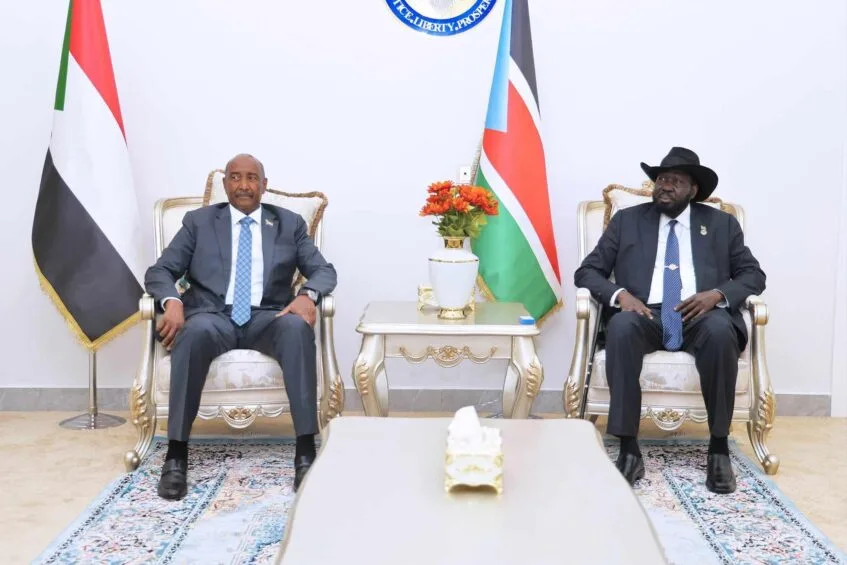
President Salva Kiir of South Sudan and Sudanese military leader Abdel Fattah al-Burhan reached this agreement during bilateral talks in Juba. South Sudan’s oil exports, a crucial pillar of its economy, were halted on February 6, 2024.
The Jabelyn-Port Sudan pipeline suffered damage, leading to a force majeure declaration on March 16. Gelling issues between Pump Stations 4 and 5, located in a conflict zone, further complicated the situation.
Gen. Burhan announced that Sudanese engineers have completed the necessary technical preparations for oil production to resume.
South Sudanese engineers will soon visit Sudan to assess the readiness of the oil facilities. This collaboration signals a potential thaw in relations between the two nations.
However, concerns remain about the safety of the pipeline. A significant portion runs through territory controlled by the Rapid Support Forces (RSF).
The RSF has been engaged in conflict with the Sudan Armed Forces since April 2023, raising questions about the feasibility of the agreement.
Economic Impact on South Sudan
The impact of the export freeze on South Sudan’s economy has been severe. Civil servants have gone unpaid for months, and the country has been forced to delay elections.
Budget constraints have stalled key political reform programs, including voter registration. Public reactions in South Sudan reflect a mix of skepticism and calls for transparency.
Many citizens have expressed concern about the management of oil revenues and the need for accountability. Some have questioned the decision to resume exports through Sudan, citing past agreements with China for alternative export routes.
Both nations face ongoing challenges stemming from the conflict. They have agreed to open humanitarian corridors to aid refugee camps on both sides.
Over 600,000 South Sudanese refugees have returned from Sudan, joined by 183,000 Sudanese nationals and 3,500 migrants from other countries.
This agreement represents a delicate balance between economic necessity and political reality. As oil production resumes, both nations will need to navigate complex security and economic challenges.
In short, the success of this venture may have far-reaching implications for regional stability and economic recovery.
This article was produced by The Rio Times’ automated newsroom system. How we use AI · Report an error · Editorial responsibility: Matthias Camenzind, Editor-in-Chief
Part of our ongoing coverage
Africa: The New Scramble — the great-power contest over the continent.
Horn of Africa and the Red Sea
- Horn of Africa 2026: Why It Matters and Who Backs Whom
- Ethiopia’s Neighbors Explained, Ports, Eritrea, Somalia
- Eritrea Explained 2026, a Red Sea Country Guide
- Somalia Explained: Al-Shabaab, Somaliland, the Ports and the Fight Over a 2026 Vote