Military Action Escalates as Turkey Targets PKK in Iraq and Syria
Turkey has escalated its military operations against the Kurdistan Workers’ Party (PKK) in northern Iraq and Syria. This surge comes after a violent incident in Ankara that resulted in five fatalities.
The Turkish Ministry of Defense reported that Turkish forces targeted 29 PKK sites in northern Iraq and 18 in northern Syria. These operations resulted in the deaths of 59 militants.
The attack occurred overnight, with two assailants—a man and a woman—using automatic rifles and explosives to assault the Turkish Aerospace Industries headquarters, known as TUSAS.
In addition to the fatalities, 22 individuals sustained injuries during the attack. No group has claimed responsibility for this assault.
However, Turkish Interior Minister Ali Yerlikaya confirmed that one attacker was linked to the PKK. The identity of the female assailant remains unknown.
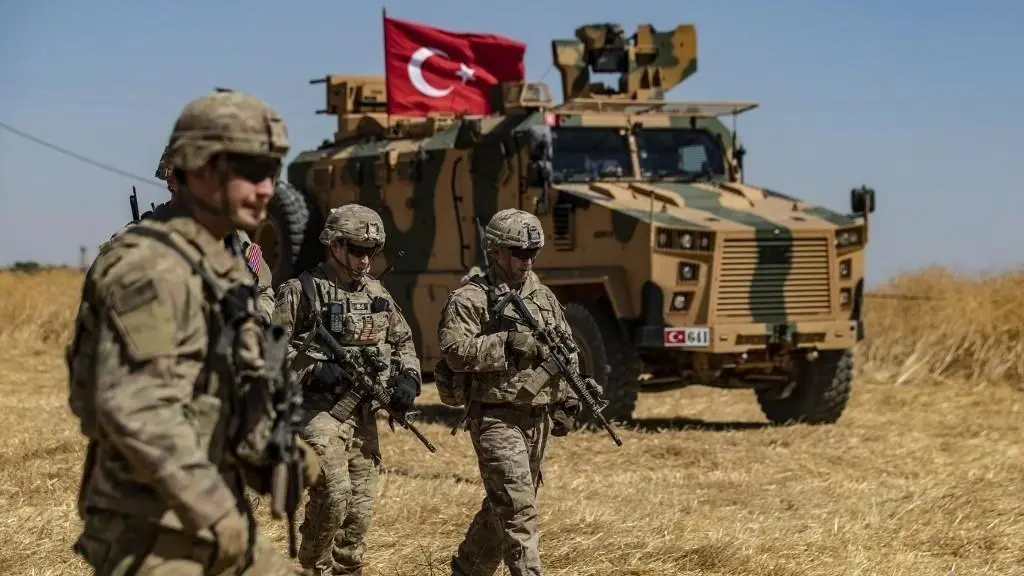
Defense Minister Yasar Güler stated that the military operations were a direct response to the Ankara attack. He noted that among those killed were two individuals deemed “high ranking” within the PKK, a term often used to indicate fatalities.
Turkey-Syria Conflict
The Syrian Democratic Forces (SDF), which receive support from the United States, reported that Turkish airstrikes in northern and eastern Syria resulted in the deaths of 12 civilians, including two children, and injured 25 others.
The SDF, led by Kurdish YPG fighters and comprising Arab combatants, serves as a key ally in the U.S.-led coalition against ISIS.
They control approximately 25% of Syria, which includes vital oil fields and areas where around 900 American troops are stationed.
Turkey classifies the YPG as a terrorist organization closely associated with the PKK. The Turkish Defense Ministry emphasized that all necessary precautions were taken to minimize civilian casualties during their operations.
During a defense industry event in Istanbul, Minister Güler declared, “No member of this treacherous terrorist organization will escape from the grasp of Turkish soldiers.” He further remarked on the significance of TUSAS as a target for such attacks.
Turkey routinely conducts airstrikes against PKK positions in both Iraq and Syria using fighter jets and drones. TUSAS is Turkey’s largest aerospace manufacturer, producing drones, helicopters, and training aircraft.
It is also developing the country’s first indigenous fighter jet, known as KAAN. In response to these developments, security measures at TUSAS have been heightened.
Security personnel are now checking vehicles and verifying identities at the facility. Additionally, airports across Turkey have raised their alert levels to “orange” as part of enhanced security protocols.
Turkey’s Stance on Terrorism and the PKK Conflict
President Tayyip Erdogan condemned the recent attack. He received support from NATO, the United States, and the European Union, all of whom regard the PKK as a terrorist organization.
Erdogan stated that this cowardly act has further solidified Turkey’s resolve to eradicate terrorism. The timing of this attack coincided with remarks from Devlet Bahceli, leader of Turkey’s Nationalist Movement Party.
He suggested allowing Abdullah Ocalan, the imprisoned leader of the PKK, to speak in Turkey’s Parliament. This would only happen if Ocalan announced an end to the group’s insurgency.
This proposal arose amidst speculation about renewed efforts to resolve the PKK conflict, which has claimed over 40,000 lives since its inception.
Originally formed four decades ago with the aim of establishing an independent Kurdish state, the PKK has since shifted its focus. It now advocates for greater rights for Kurds and limited autonomy in southeastern Turkey.
It remains uncertain whether this recent violence will influence Bahceli’s proposal or hinder potential peace initiatives. Ocalan’s nephew visited him for the first time in four years at his prison on an island south of Istanbul on Wednesday.
Omer Ocalan conveyed his uncle’s belief that, under suitable conditions, he could transition discussions from conflict to political dialogue.
This article was produced by The Rio Times’ automated newsroom system. How we use AI · Report an error
Read More from The Rio Times