Milei 2.0: Who Is Winning in Argentina’s New Economy
Argentina · Economy
Key Facts
- New thesis La Nación reports a pro-Milei business establishment consolidating around energy, agriculture and mining.
- Energy pivot YPF is shedding mature conventional oilfields to concentrate on Vaca Muerta shale.
- Family winner PeCom, the Pérez Companc family’s energy arm, bought a Mendoza cluster for about US$205 million via San Benito Upstream.
- Deal scale Two Mendoza clusters sold for a combined US$405 million to two separate buyers.
- Wider winners Market coverage also ties banks like Grupo Galicia and Mercado Libre to the “Milei trade.”
- The catch The gains are concentrated; manufacturing has struggled under a strong peso and tight money.
Argentina’s economic map is being redrawn — and a business class aligned with Milei’s deregulation is coming out on top, La Nación reports.
If you want to know who is winning in Javier Milei’s Argentina, follow the money into shale, farmland and mines. A much-discussed La Nación report describes the rise of a Milei economic elite — a new “society of the powerful” forming around the president’s deregulation drive. It is a useful lens on where economic power is shifting, and who is gaining.
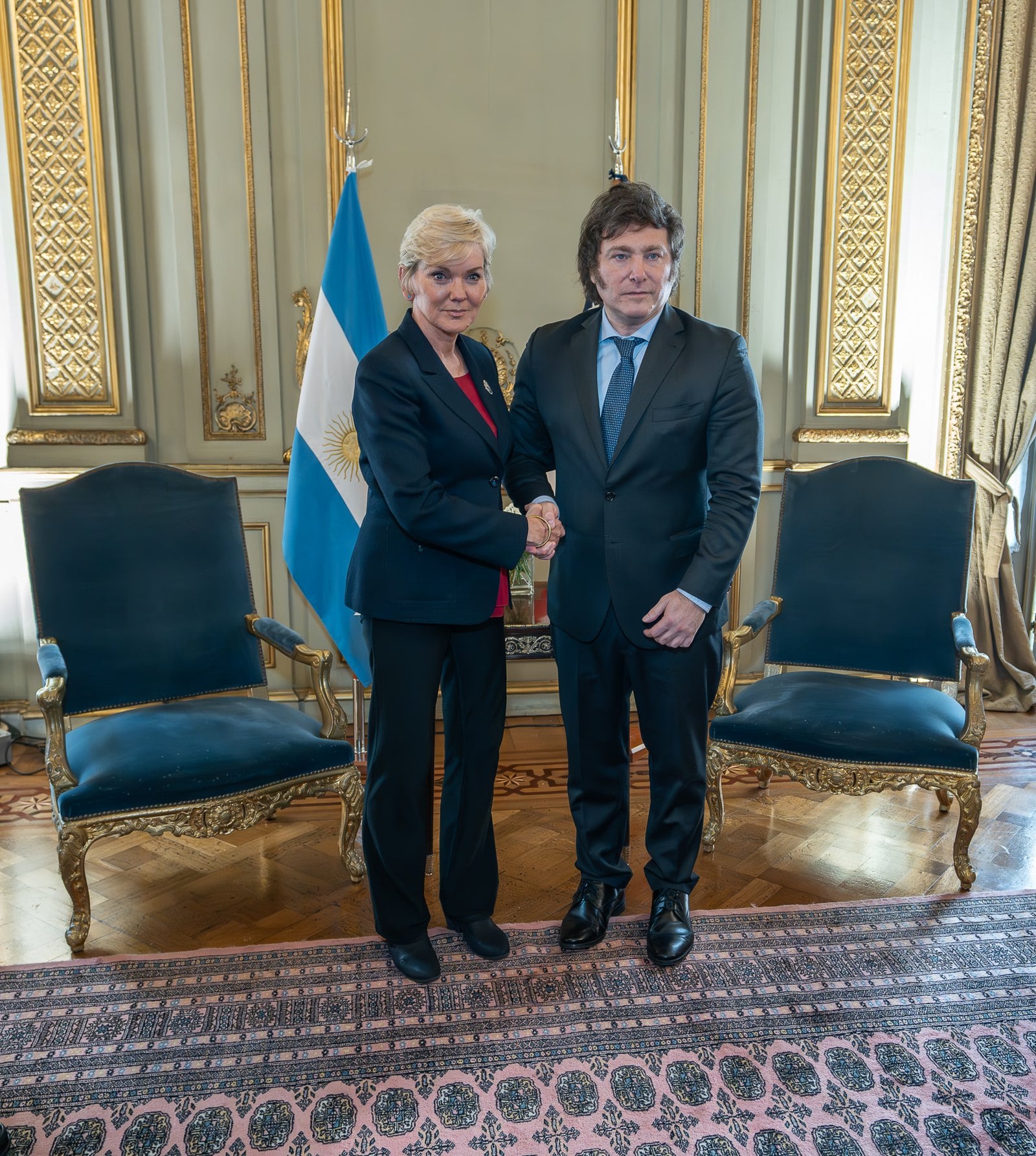
Who is in Milei economic elite
The La Nación piece, published on August 9, 2026, argues that a fresh business establishment is consolidating around three sectors: energy, agriculture and mining. These are the winners of deregulation, the RIGI large-investment regime, and the Vaca Muerta export boom. On the farm side, the report points to the grain-trading giants — Cargill, Bunge, Louis Dreyfus and Argentina’s own AGD. In mining, it flags global players like Río Tinto and Grupo México, drawn by copper and lithium. In energy, the anchor names are YPF and Pan American Energy. It is, in the report’s telling, the outline of a new establishment aligned with the president’s agenda.
Live Company IntelligenceYPF Sociedad Anonima — the full investor dossier
Wall Street view
Valuation & profitability
Price & risk
$23.0252-wk high
$57.87
Revenue trend · 6y
Ownership
Dividend
Energy is where it shows up first
The clearest example is the shake-up in oil. YPF, the state-controlled energy company, is selling off mature conventional oilfields to pour capital into Vaca Muerta shale — a strategy it calls its Plan 4×4. In one round of divestments, YPF sold two Mendoza clusters for a combined US$405 million to two separate buyers. One of them, the Mendoza No Operado cluster, went to San Benito Upstream for about US$205 million.
San Benito is controlled by PeCom, the energy arm of the Pérez Companc family — one of Argentina’s storied business dynasties, now among the clearest private winners of the reshuffle. Deals like this are how an abstract “new elite” becomes concrete: assets change hands, and a familiar family name expands its footprint just as the shale boom accelerates. It is exactly the kind of reconfiguration La Nación is describing.
Finance, tech — and a big catch
Beyond La Nación’s three pillars, market coverage ties other names to what traders call the “Milei trade.” In energy stocks, that means YPF, TGS, Central Puerto and Pampa Energía. In finance, banks like Grupo Galicia have been among the companies most associated with the deregulation and stabilisation bet, helped by a capital-formalisation push and a reform of the Central Bank’s charter. In tech, Mercado Libre, founded by Marcos Galperín, keeps posting strong growth.
But here is the catch: the gains are concentrated. Separate industrial data show the energy surge is masking real weakness elsewhere — Argentine manufacturing has been contracting under a strong peso and tight credit. The new elite is real, but it is narrow: booming in shale, farms and finance, while parts of the old industrial economy struggle to keep up. That gap is the quiet tension inside the Milei story.
Why this matters for the region
For investors and anyone watching Argentina’s turnaround, the map of winners is the story. It tells you where capital is flowing — energy, agribusiness, mining, banking — and which family and corporate names are gaining clout under Milei. It also flags a political risk: when the benefits of a reform program cluster at the top while industry and consumers lag, the durability of that program becomes a live question. Argentina is a test case for market-friendly reform in Latin America, and who ends up powerful is a big part of whether the experiment holds.
The scale of the tilt is hard to miss. The RIGI incentive regime alone has drawn tens of billions of dollars in pledged projects, much of it into energy and mining, while the families and firms best placed to capture that flow pull further ahead. For the rest of the region, watching who thrives and who is left behind under Argentina’s shock therapy is a preview of the trade-offs any market-first government eventually has to manage.
Frequently Asked Questions
What is the “Milei economic elite”?
It is the term used in a La Nación analysis for a pro-Milei business establishment consolidating around energy, agriculture and mining — the sectors thriving under his deregulation, the RIGI investment regime and the Vaca Muerta boom.
Which companies and families are gaining?
La Nación highlights agribusiness traders like Cargill and Bunge, miners like Río Tinto and Grupo México, and energy firms like YPF. In one deal, the Pérez Companc family’s PeCom bought a YPF cluster in Mendoza for about US$205 million.
Is everyone benefiting?
No. The gains are concentrated in energy, agriculture, mining and finance. Separate data show manufacturing has been weak under a strong peso and tight money, so parts of the industrial economy are lagging.
Connected Coverage
Sources: La Nación; Infobae; Bloomberg Línea; The Rio Times.
This article was produced by The Rio Times’ automated newsroom system. How we use AI · Report an error
In depth
Read More from The Rio Times