IBOV 186,595.60 ▲ 0.74% IPSA 11,357.82 ▼ 0.21% IPC MEX 63,536.96 ▲ 0.25% MERVAL 2,998,956 — 0.00% COLCAP 2,565.55 ▲ 0.68% BVL PERÚ 59,344.04 ▲ 0.31% USD/BRL5.12▲ 0.26% USD/MXN17.25▲ 0.14% USD/CLP945.22▼ 0.42% USD/COP3,195▲ 0.58% USD/PEN3.38▲ 0.04% USD/ARS1,514▼ 0.02% USD/UYU40.14▲ 3.08% USD/PYG5,926▲ 3.28% USD/BOB10.95▲ 15.73% USD/DOP59.13▲ 3.46% USD/CRC443.27▲ 2.38% USD/GTQ7.63▲ 3.20% USD/HNL26.86▲ 3.33% USD/NIO36.62▲ 2.80% USD/VES850.29▼ 0.13% USD/PAB1.00— 0.00% USD/BZD2.00— 0.00% USD/JMD 157.28 — 0.00% USD/TTD6.76▲ 0.17% EUR/BRL5.87▼ 0.44% BRENT 88.88 ▼ 0.03% WTI 83.11 ▼ 0.11% IRON ORE 161.91 — — COPPER 6.61 ▲ 0.03% GOLD 4,461 ▲ 1.78% SILVER 65.59 ▲ 1.26% SOY 1,184 ▲ 3.20% CORN 480.50 ▲ 10.02% WHEAT 655.00 ▲ 3.93% COFFEE 317.25 ▼ 5.51% SUGAR 16.43 ▼ 1.79% ORANGE JUICE 138.55 ▼ 0.47% COTTON 85.03 ▲ 2.33% COCOA 5,719 ▲ 3.18% BEEF 223.60 ▼ 3.93% CATTLE 339.10 ▼ 3.16% LITHIUM 75.20 ▲ 1.47% PETR4 41.64 ▼ 0.05% VALE3 72.97 ▲ 0.83% ITUB4 38.60 ▼ 1.03% BBDC4 16.85 ▲ 0.36% ABEV3 14.89 ▼ 0.80% BBAS3 19.37 ▲ 0.47% B3SA3 14.26 ▼ 0.21% WEGE3 47.59 ▲ 0.49% PRIO3 59.14 ▼ 0.19% SUZB3 41.33 ▲ 2.35% RENT3 34.68 ▼ 0.09% AZZA3 15.89 ▼ 2.63% CSAN3 3.22 ▼ 1.83% RAIZ4 0.25 — 0.00% PCAR3 2.75 ▼ 0.36% GMAT3 3.65 ▼ 1.08% PSSA3 48.13 ▼ 0.54% CVCB3 1.33 ▼ 2.92% POSI3 3.36 ▲ 2.44% SLCE3 13.34 ▲ 0.30% NATU3 8.14 ▼ 0.73% IBOV 186,595.60 ▲ 0.74% IPSA 11,357.82 ▼ 0.21% IPC MEX 63,536.96 ▲ 0.25% MERVAL 2,998,956 — 0.00% COLCAP 2,565.55 ▲ 0.68% BVL PERÚ 59,344.04 ▲ 0.31% USD/BRL 5.16 ▲ 0.01% USD/MXN 17.06 ▼ 0.24% USD/CLP 913.98 ▲ 0.04% USD/COP 3,140 ▲ 0.03% USD/PEN 3.36 ▼ 0.66% USD/ARS 1,493 ▲ 0.10% USD/UYU 40.27 ▲ 1.24% USD/PYG 5,939 ▲ 1.68% USD/BOB 11.64 ▼ 0.76% USD/DOP 58.34 ▲ 1.25% USD/CRC 445.92 ▲ 0.89% USD/GTQ 7.62 ▲ 2.21% USD/HNL 26.79 ▲ 1.57% USD/NIO 36.62 ▲ 0.69% USD/VES 762.44 ▼ 0.13% USD/PAB 1.00 — 0.00% USD/BZD 2.00 — 0.00% USD/JMD 157.28 — 0.00% USD/TTD 6.70 ▲ 0.61% EUR/BRL 5.95 ▲ 1.01% BRENT 88.88 ▼ 0.03% WTI 83.11 ▼ 0.11% IRON ORE 161.91 — — COPPER 6.61 ▲ 0.03% GOLD 4,461 ▲ 1.78% SILVER 65.59 ▲ 1.26% SOY 1,184 ▲ 3.20% CORN 480.50 ▲ 10.02% WHEAT 655.00 ▲ 3.93% COFFEE 317.25 ▼ 5.51% SUGAR 16.43 ▼ 1.79% ORANGE JUICE 138.55 ▼ 0.47% COTTON 85.03 ▲ 2.33% COCOA 5,719 ▲ 3.18% BEEF 223.60 ▼ 3.93% CATTLE 339.10 ▼ 3.16% LITHIUM 75.20 ▲ 1.47% PETR4 41.64 ▼ 0.05% VALE3 72.97 ▲ 0.83% ITUB4 38.60 ▼ 1.03% BBDC4 16.85 ▲ 0.36% ABEV3 14.89 ▼ 0.80% BBAS3 19.37 ▲ 0.47% B3SA3 14.26 ▼ 0.21% WEGE3 47.59 ▲ 0.49% PRIO3 59.14 ▼ 0.19% SUZB3 41.33 ▲ 2.35% RENT3 34.68 ▼ 0.09% AZZA3 15.89 ▼ 2.63% CSAN3 3.22 ▼ 1.83% RAIZ4 0.25 — 0.00% PCAR3 2.75 ▼ 0.36% GMAT3 3.65 ▼ 1.08% PSSA3 48.13 ▼ 0.54% CVCB3 1.33 ▼ 2.92% POSI3 3.36 ▲ 2.44% SLCE3 13.34 ▲ 0.30% NATU3 8.14 ▼ 0.73%
since 2009
Tuesday, September 22, 2026

Mexico’s Peso Falters Amid $4.55 Billion Trade Deficit and Looming U.S. Tariffs

By · March 4, 2025 · 2 min read

The LatAm Brief

One email, every weekday morning. What moved in Latin American markets, politics and expat life.

Yesterday’s subject line: “68 strikes, 223 people. A UN expert says murder.”

Free. We send a confirmation link first — nothing arrives until you click it. Unsubscribe with one click in any edition. If you stop opening us for 30 days we stop sending by ourselves, as we assume the interest is no longer there. See our privacy policy. We never share your email.

The Mexican peso opened March 4, 2025, at 20.75 per dollar, reflecting growing concerns over U.S. tariffs and Mexico’s economic struggles.

President Donald Trump confirmed that 25% tariffs on Mexican imports would take effect today, fueling market uncertainty. Traders responded by favoring the U.S. dollar as a safe haven, pushing the peso lower overnight.

Mexico’s January trade deficit widened to $4.55 billion, while Q4 GDP contracted by 0.6%, marking the sharpest decline in four years. Weak manufacturing data and falling business confidence added to the peso’s woes.

This contrasts sharply with December 2024, when Mexico recorded a $2.57 billion surplus. The 5.9% year-over-year increase in imports, which reached $49 billion, drove the deficit. This was fueled by higher purchases of both oil and non-oil products.

In contrast, exports rose by 5.5% year-over-year to $44.4 billion, with notable growth in non-oil shipments (+8.7%). However, oil exports declined sharply by 40.6%, and automotive exports fell by 17%.
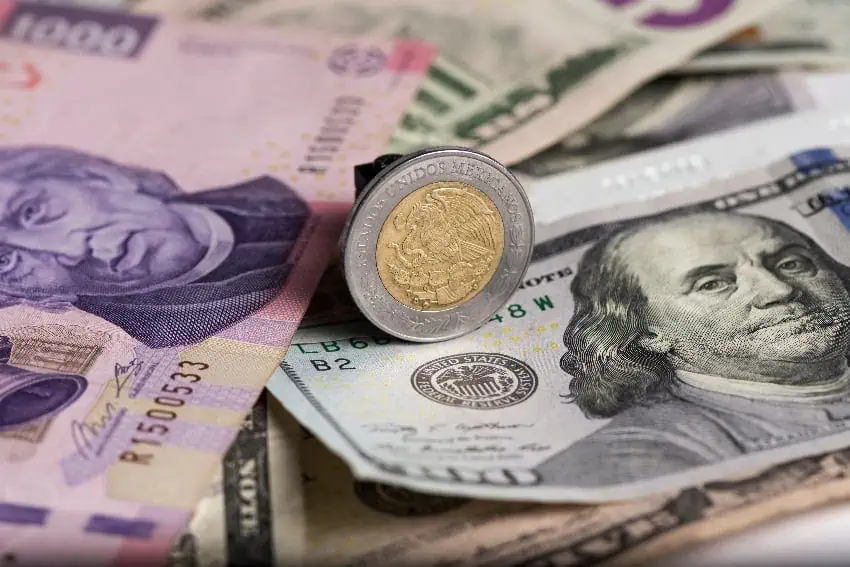
Mexico’s Peso Falters Amid $4.55 Billion Trade Deficit and Looming U.S. Tariffs
Mexico’s Peso Falters Amid $4.55 Billion Trade Deficit and Looming U.S. Tariffs.
One-stop reference
Company Intelligence
Every listed company in Latin America — financials, ownership and structure for 1,450+ companies across 26 exchanges, in one place.
Browse the directory →
RT
Ask Rio Times
17 years of Latin America reporting, on demand.
Open the full Ask Rio Times →

This reflects weaker demand from the United States and other markets. On March 2, the currency fluctuated between 20.41 and 20.54 before closing at 20.47, with subdued trading volumes reflecting investor caution.

Mexican Peso Under Pressure

Market analysts noted that the looming tariffs could severely impact Mexico’s export-driven economy, further weakening the peso. Banxico is widely expected to cut interest rates by 50 basis points this month if inflation remains under control, potentially adding more downward pressure on the currency.

Global sentiment toward emerging markets remained cautious due to geopolitical risks and broader economic uncertainties. This limited inflows into peso-denominated assets and ETFs.

Peso-focused funds saw minimal activity, with investors hesitant to take new positions ahead of tariff implementation. Technical indicators showed a bullish bias for USD/MXN, with resistance levels at 20.50 and 20.93 and support at 20.30 and 20.00.

Momentum indicators suggested further upside potential if resistance levels are breached. However, any positive developments in U.S.-Mexico trade talks could quickly reverse this trend.

The peso’s depreciation highlights its vulnerability to external shocks and domestic economic weakness. Market participants will closely watch for updates on tariffs and upcoming economic data for signs of stabilization or further volatility in the USD/MXN pair.

Key Facts

Deep Dive

For the complete picture, read our in-depth guide: Mexico Economy 2026: GDP, Peso, Nearshoring, Banxico and Trade

This article was produced by The Rio Times’ automated newsroom system. How we use AI · Report an error

Read More from The Rio Times

The Rio Times · Power Map
See who really holds power in Latin America
Click to open the Power Map

Rotate for Best Experience

This report is optimized for landscape viewing. Rotate your phone for the full experience.