Mexico’s inflation rate continues to decelerate at the start of 2025. The National Institute of Statistics and Geography (INEGI) released new data showing a significant slowdown in price increases.
This trend marks a positive shift in the country’s economic landscape. The National Consumer Price Index rose by 0.20% in the first half of January. This increase resulted in an annual inflation rate of 3.69%, the lowest level since 2021.
The figure represents a notable drop from the 4.21% annual rate recorded at the end of 2024. If this trend persists through January’s second half, it will mark the third consecutive month of slowing inflation in Mexico.
This deceleration has finally brought inflation within the Bank of Mexico‘s target range of 3% +/- 1%. The central bank now has more reasons to consider further interest rate cuts.
The core inflation rate, which excludes volatile goods and services prices, continued to rise in early 2025. It increased by 0.28% in the first half of January, reaching an annual rate of 3.72%. This figure is up from 3.65% at the end of 2024.
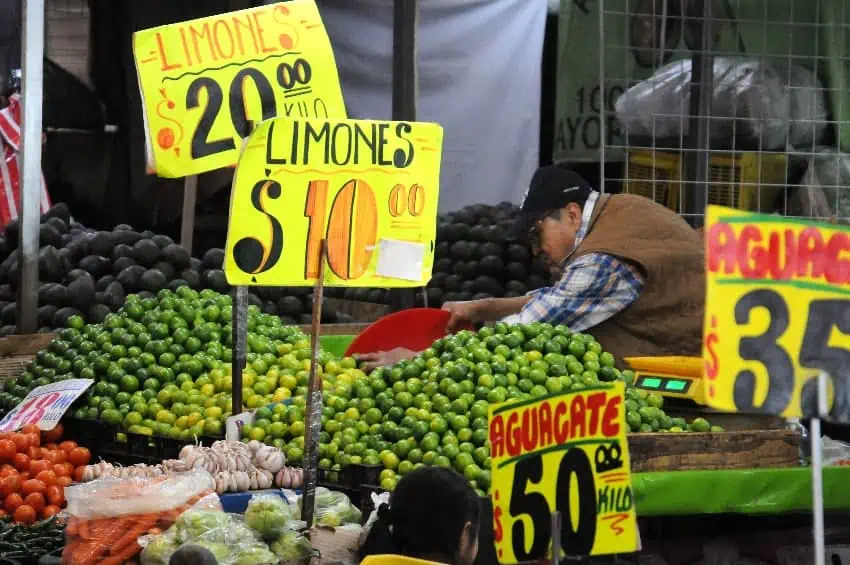
Within the core index, prices for Goods and Food, Beverages, and Tobacco saw the highest increases. They rose by 0.49% and 0.56% respectively over the two-week period. These increases contributed significantly to the overall inflation rate.
Mexico’s Inflation Trends and Price Changes
Non-core inflation, however, showed a different trend. It decreased by 0.04% in the first half of January, settling at an annual rate of 3.60%. This marks a substantial drop from the 5.95% annual rate recorded at the end of the previous year.
In the non-core component, Fruits and Vegetables and Energy prices saw the largest decreases. They fell by 2.67% and 0.99% respectively over the two-week period. These decreases helped offset increases in other areas.
Several products saw significant price changes during this period. Bananas increased by 7.96%, while cigarettes rose by 3.14%. Electricity costs went up by 1.80%, and water supply fees increased by 1.61%. Chicken prices also saw a 1.07% rise.
On the other hand, some products experienced notable price drops. Air transportation costs fell by 31.51%, and tomato prices decreased by 9.08%. Package tour services saw an 8.70% reduction, while grape and papaya prices fell by 8.34% and 7.92% respectively.
These figures paint a complex picture of Mexico’s economic situation. While overall inflation is slowing, some sectors continue to face price pressures. The coming months will be crucial in determining whether this trend towards lower inflation will persist.
Key Facts
— Deep Dive
— For the complete picture, read our in-depth guide: Mexico Economy 2026: GDP, Peso, Nearshoring, Banxico and Trade
More: Mexico news in English, every day from The Rio Times.
This article was produced by The Rio Times’ automated newsroom system. How we use AI · Report an error
In depth
Read More from The Rio Times