Mexico Wants Private Money for Its Roads. Only 18 Percent of the Plan Is Private
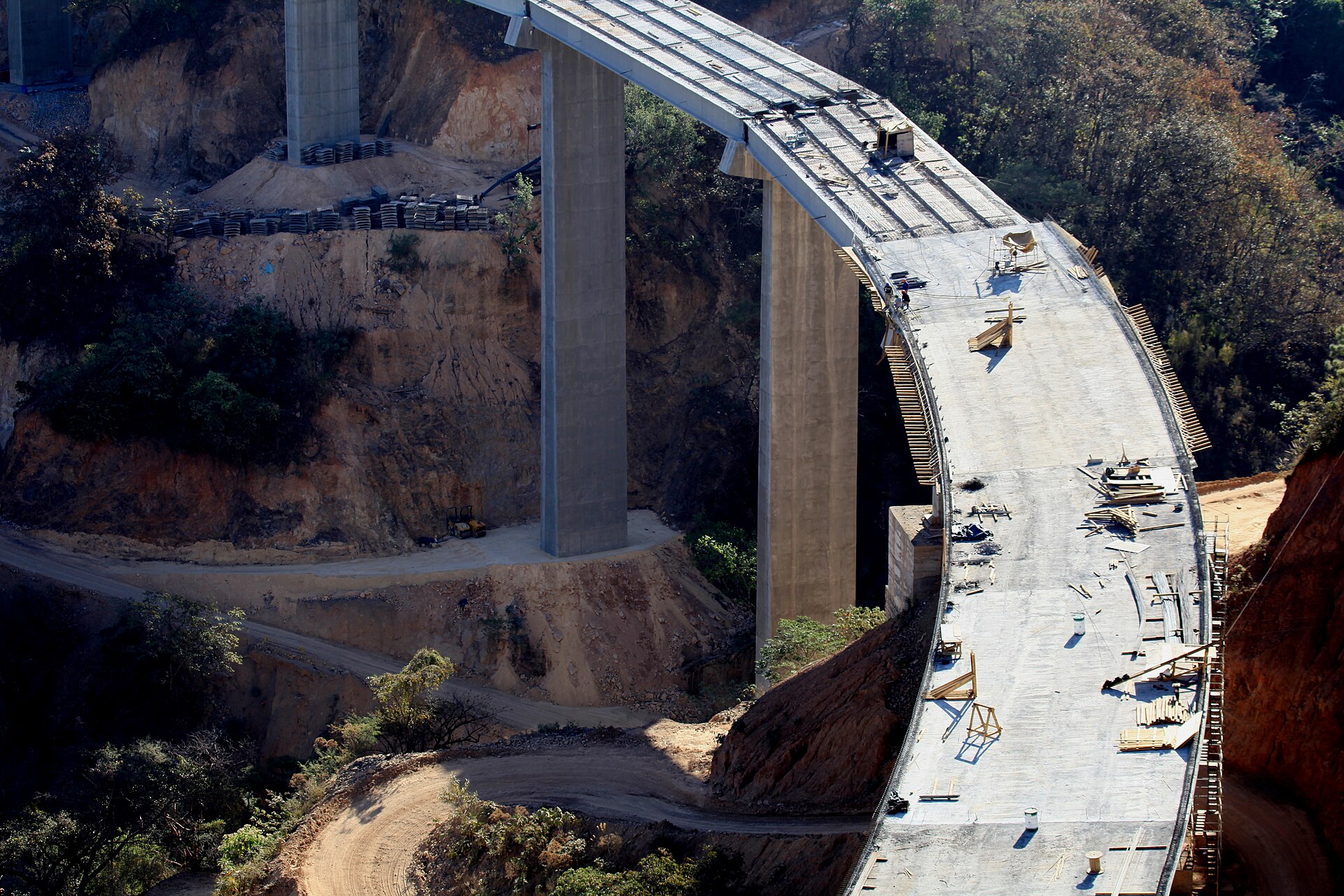
Infrastructure
Key Facts
—The total. Mexico’s infrastructure minister told deputies the administration is spending about 1.35 trillion pesos ($77bn) across roads, rail, airports and public works.
—The private share. Mixed public-private schemes account for 237bn pesos ($13.5bn), split between motorways and airports. That is 18 percent of the total.
—The control. In the mixed motorway model, the government keeps the majority stake.
—The reason. The minister says schemes are screened to avoid future pressure on public finances or the need for rescues.
—The centrepiece. A new rail agency plans more than 3,000 kilometres of passenger lines across 13 routes by 2030. The army is building two of them.
—The backdrop. Private investment contracted 1.7 percent in 2025, and total investment slipped from 24.8 to 22 percent of GDP.
Read the Mexico infrastructure investment plan as an opening to private capital, and the arithmetic will surprise you. Four fifths of it is public money.
On Tuesday the infrastructure minister, Jesús Esteva Medina, appeared before the infrastructure committee of the Chamber of Deputies. He gave a category-by-category breakdown of what his ministry is spending this administration.
Roads, schools and sports facilities take 528bn pesos, about thirty billion dollars. Rail takes 587bn pesos, roughly thirty-four billion, and that figure covers federal resources only.
Where private capital fits in Mexico infrastructure investment
Two lines carry private money. Mixed investment in motorways comes to 101bn pesos, close to six billion dollars, and mixed investment in airports to 136bn pesos, near eight billion.
Add them, and private capital sits alongside the state in schemes worth 237bn pesos, about thirteen and a half billion dollars. Against a total near one and a third trillion pesos, that is eighteen percent.
The eighty-two percent is straight public spending. A minister describing that mix is not opening the door to private capital so much as holding it ajar.
Note also where the private money is allowed. It appears in motorways and airports, both of which generate a toll or a fee, and nowhere near the rail network the government treats as strategic.
Even inside the mixed portion, the state does not cede control. Esteva has described a build, maintain and operate model in which the government retains the majority percentage.
The word that explains the caution
Esteva has said the motorway package is being examined carefully, weighing demand. The aim is to avoid schemes that later strain public finances or require rescues.
A minister who volunteers the word rescues is telling investors where the limit sits. Demand risk is the crux here.
If traffic on a toll road undershoots the forecast, someone absorbs the shortfall. The ministry is signalling it does not intend that someone to be the state.
His formulation elsewhere was careful. The ministry is not closed to private investment, he said, only that it come under schemes proven to be reliable.
An earlier tranche gives the shape of it. Five mixed road projects worth 31bn pesos, close to two billion dollars, cover about three hundred kilometres, with more under study in Michoacán and Tamaulipas alongside the development bank Banobras.
The rail plan is the real Mexico infrastructure investment story
A decentralised rail agency was created by presidential decree in January and is known by the acronym ATTRAPI. Its 2026 to 2030 programme has been approved and published in the official gazette.
Its ambition is a Mexican rail system by 2030, with a freight network and a separate, independent passenger network. That means developing and planning more than three thousand kilometres of passenger line across thirteen named routes.
The first phase is 787 kilometres. Two flagship lines run from the new Mexico City airport to Pachuca and from the capital to Querétaro, built in coordination with the defence ministry.
A further 1,336 kilometres sit in technical studies. When the army is a delivery partner on the marquee projects, the private sector is not the protagonist.
The routes trace Mexico’s industrial spine rather than its tourist map. Saltillo to Nuevo Laredo runs at the border, and Querétaro to Irapuato threads the manufacturing belt that nearshoring has filled.
Why the caution is expensive
Mexico’s construction chamber argues equipment investment should run at six percent of national income each year. The figure managed in 2025 was around two point seven percent.
Its president put the constraint plainly, saying there is not enough money to go round. He noted that some seven mechanisms exist beyond formal public-private partnerships.
Meanwhile the private appetite the state is rationing has itself been shrinking. This newspaper has reported that private investment contracted one point seven percent in 2025, with total investment falling from twenty-four point eight percent of national income to twenty-two.
There is a coherent case for the state’s position. There is also a cost.
The ministry reported spending only about fifty-four percent of its budget by the end of the third quarter last year. That suggests capacity to deliver, not merely capital, is a binding constraint.
Is Mexico opening infrastructure to private investors?
Only partly, and on the state’s terms. Of roughly one and a third trillion pesos in announced infrastructure spending, mixed public-private schemes account for about 237 billion pesos, or eighteen percent, and the government retains the majority stake in the motorway model.
Why is the government wary of public-private partnerships?
The infrastructure minister says projects are screened against future pressure on public finances or the possibility of requiring rescues, weighing projected demand before a scheme proceeds. The concern is that if traffic undershoots the forecast on a toll road, the shortfall lands somewhere, and the ministry is signalling it should not land on the state.
What is ATTRAPI?
It is the decentralised trains and integrated public transport agency created under the infrastructure ministry by decree in January 2026. Its approved programme runs to 2030 and targets more than three thousand kilometres of passenger rail across thirteen routes, alongside a strengthened freight network.
More: Latin America news in English, every day from The Rio Times.
Frequently Asked Questions
How much is Mexico spending on infrastructure and what share comes from private sources?
Mexico's infrastructure minister announced total spending of about 1.35 trillion pesos ($77 billion) across roads, rail, airports and public works. Mixed public-private schemes account for 237 billion pesos ($13.5 billion), just 18 percent of the total, so four fifths of the plan is funded by public money.
How does the government structure its mixed public-private infrastructure projects?
In the mixed motorway model, the government retains a majority stake in the projects. The minister said schemes are screened specifically to avoid future pressure on public finances or the need for government rescues.
What are Mexico's rail infrastructure ambitions under this plan?
A new rail agency is planning more than 3,000 kilometres of passenger lines across 13 routes, with a target completion date of 2030. The army will build two of those routes, and rail spending accounts for 587 billion pesos, roughly $34 billion, the largest single spending category.
Connected Coverage
Mexico Needs Private Investment to Hit 4% Growth
This article was produced by The Rio Times’ automated newsroom system. How we use AI · Report an error · Editorial responsibility: Matthias Camenzind, Editor-in-Chief
LatAm Markets: Live Signals → — real-time movers, turnover leaders and FX across Latin America.