Mexico Builds the World’s Products but Invents Few of Its Own
Mexico · Economy
Key Facts
—The number. Only about one in eight companies in Mexico develops technology of its own.
—The gap. Mexico spends far less on research and files vastly fewer patents than peers in the OECD.
—The paradox. The country is a manufacturing powerhouse, yet it mostly assembles ideas invented elsewhere.
—Why now. A record factory boom is raising the stakes of who owns the valuable ideas.
—The risk. In an age of automation and AI, assembling alone captures the thinnest slice of the profit.
—The upside. A young deep-tech scene is emerging, but it is small and still finding its feet.
Mexico innovation has a stubborn weak spot: the country has become one of the world’s great factories, yet only a small fraction of its companies create technology of their own, a gap that could decide how much it really gains from its manufacturing boom.
A telling little number
Here is a statistic that says a great deal about the Mexican economy in a single figure: only around one in eight companies in Mexico develops its own technology. The rest, the overwhelming majority, run on tools, machines, software and designs created somewhere else. For a country that has spent two decades building itself into one of the world’s busiest manufacturing hubs, that is a revealing admission about what kind of economy it has become.
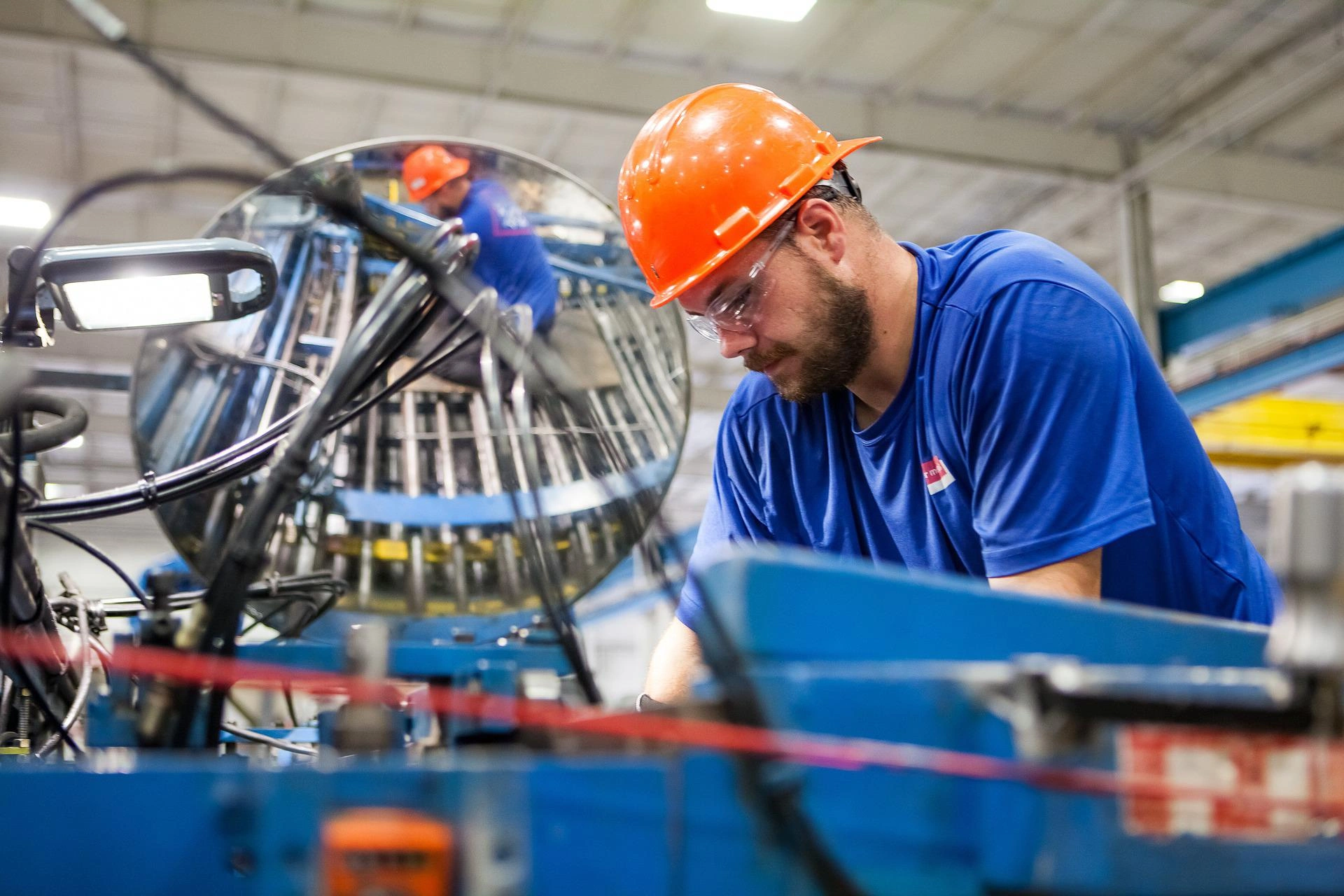
The point is not that Mexican firms are idle or unsophisticated. Many are highly efficient at what they do. The point is what they do: they make and assemble, expertly and at enormous scale, products whose core ideas were dreamed up in laboratories and design studios abroad. Mexico is brilliant at building. It is far weaker at inventing.
How wide the Mexico innovation gap runs
Zoom out to international comparisons and the gap is stark. Against the average of the OECD, the club of mostly wealthy economies, Mexico invests roughly eight times less in research and development. Its pool of researchers is about nine times smaller relative to its size, and its residents file something like twenty times fewer patents at the major patent offices. Those are not small differences of degree; they describe an economy that consumes technology far more than it produces it.
Patents are a useful shorthand here. A patent is essentially a legal claim on a new invention, and counting them is one rough way to measure how much original technology a country is generating. On that scoreboard Mexico sits well behind not just rich nations but also some of its emerging-market peers. The handful of Mexican firms that do patent are heavily concentrated in and around the capital, leaving much of the country with almost no inventive activity at all.
Why it matters more than ever
For years this was an awkward footnote to an otherwise upbeat story. Mexico’s proximity to the United States, its trade deal with its northern neighbours, and its competitive wages made it the natural home for companies moving factories out of Asia. Investment has poured in. But that very success is what makes the innovation gap urgent now, because the nature of the work is changing.
In the simple version of the story, a country grows rich by hosting factories that employ lots of people. In the emerging version, shaped by automation and artificial intelligence, the factories need fewer workers and the real money flows to whoever owns the design, the software and the patents. If Mexico only ever assembles other people’s inventions, it captures the thinnest, least profitable slice of each product, while the lion’s share of the value travels back to wherever the idea was born. Building someone else’s smartphone earns far less than designing it.
Economists who study the country make the point bluntly: generating knowledge is not enough on its own, and neither is hosting factories. What turns either into lasting wealth is the ability to capture the value of innovation at home, through companies that own what they make. That is precisely the link Mexico has struggled to forge.
Why so few firms invent
The reasons are tangled together. Public spending on science and research has long been thin, and incentives for private companies to invest in their own development have been weak. The education pipeline produces relatively few graduates in science, technology, engineering and mathematics, the fields that feed invention. And the structure of the economy itself rewards assembly: when a multinational sets up a plant to build cars or electronics for export, the design work typically stays at headquarters abroad, and the Mexican operation is asked to manufacture, not to invent.
There is also a simple matter of who is investing. Much of the recent boom has come from foreign companies expanding plants they already run, rather than from homegrown Mexican firms betting on new ideas. Domestic private investment has actually been soft, and a business that is cautious about spending on a new factory is even more cautious about spending on the slow, uncertain work of research.
Green shoots, and the road ahead
It is not all gloom. A young “deep tech” scene, made up of start-ups building genuinely novel technology in fields like health, energy and agriculture, has begun to stir, with recent gatherings drawing thousands of would-be founders and a trickle of venture capital, some of it from Silicon Valley. It is real, and it is encouraging. But it is also small, early, and still dependent on imported ideas and money. One promising cluster does not yet move a national statistic.
For a foreign investor or executive weighing Mexico, the innovation gap is worth holding alongside the rosy headlines about its factory boom. The boom is real, and the country’s manufacturing strengths are genuine. But the question that will shape the next decade is whether Mexico can move up the chain, from making things to designing them, and start keeping more of the value it helps create. Until more than one in eight of its companies is inventing rather than assembling, the world’s workshop will keep handing the richest rewards to others.
More: Latin America news in English, every day from The Rio Times.
Frequently Asked Questions
How many Mexican companies develop their own technology?
Only about one in eight, according to recent figures. The vast majority rely on tools, machines and designs created abroad, reflecting an economy that consumes far more technology than it invents.
How does Mexico compare with other countries?
Against the OECD average, Mexico invests roughly eight times less in research and development and files around twenty times fewer patents relative to its size. It trails not only wealthy nations but several emerging-market peers.
Why does this matter for Mexico’s economy?
As automation and AI spread, the biggest profits flow to whoever owns the designs and patents, not to whoever assembles the product. If Mexico only assembles, it captures the smallest share of the value its factories help create.
Connected Coverage
Mexico’s Nearshoring Boom Is Real, the Jobs Are Not
Mexico Needs Private Investment to Hit 4% Growth
This article was produced by The Rio Times’ automated newsroom system. How we use AI · Report an error · Editorial responsibility: Matthias Camenzind, Editor-in-Chief