The Mexican peso depreciated on Wednesday, losing ground against a strengthening U.S. dollar. This movement followed the release of U.S. inflation data for January, which exceeded expectations and reinforced predictions that interest rates in the United States will remain unchanged.
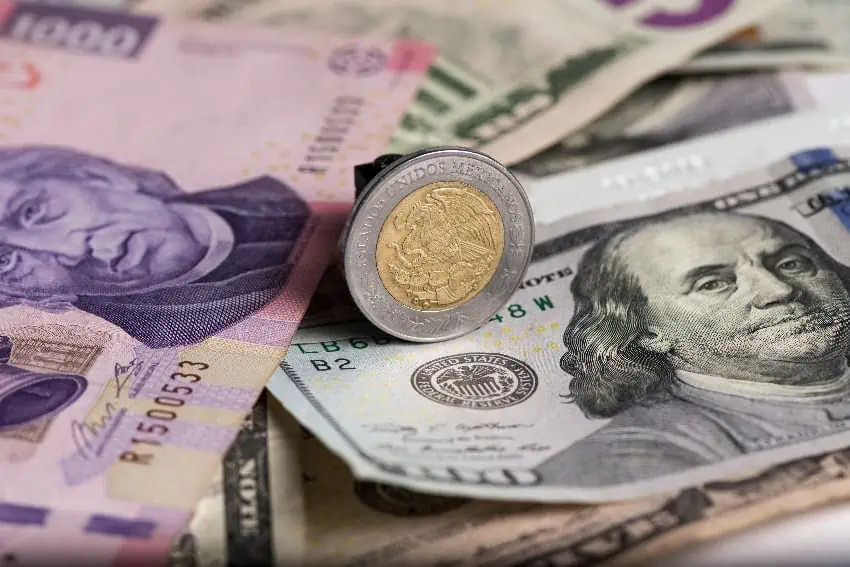
The peso’s exchange rate stood at 20.5832 pesos per dollar in spot trading, compared to Tuesday’s close of 20.5392 pesos, according to the Bank of Mexico (Banxico). This represents a loss of 4.40 centavos for the peso, equivalent to a 0.21% decline.
The dollar traded within a range of 20.5311 to 20.6311 pesos during the session. Meanwhile, the U.S. Dollar Index (DXY), which measures the greenback against a basket of six major currencies, rose by 0.35% to reach 108.31 points.
January’s U.S. Consumer Price Index (CPI) showed a monthly increase of 0.5%, following a 0.4% rise in December. On an annual basis, inflation reached 3.0%, slightly above December’s 2.9%.
Analysts had anticipated monthly and annual increases of 0.3% and 2.9%, respectively, but the higher-than-expected figures fueled the dollar’s rally against global currencies, including the peso.
CiBanco noted that “the Mexican peso is under pressure as traders digest the U.S. inflation report, which showed larger-than-expected increases.” The bank added that investors are also closely monitoring Federal Reserve Chair Jerome Powell’s testimony before Congress this week.
Powell’s Remarks Highlight Strong U.S. Economy
Powell’s remarks on Tuesday highlighted that the U.S. economy remains strong and suggested no urgency in lowering interest rates anytime soon. He continued his semiannual testimony before Congress on Wednesday, reinforcing market expectations for steady monetary policy in the near term.
Local financial institution Banco Base projected that the peso-dollar exchange rate would likely trade within a range of 20.58 to 20.70 pesos per dollar during the session.
The peso’s performance underscores how sensitive emerging market currencies remain to shifts in U.S. economic data and monetary policy signals. This is particularly evident amid ongoing concerns about inflation and global financial stability.
Key Facts
— Deep Dive
— For the complete picture, read our in-depth guide: Mexico Economy 2026: GDP, Peso, Nearshoring, Banxico and Trade
More: Mexico news in English, every day from The Rio Times.
This article was produced by The Rio Times’ automated newsroom system. How we use AI · Report an error
In depth
Read More from The Rio Times