Lula’s Tightrope: Brazil’s Geopolitical Dance with Venezuela
(Analysis) The deteriorating relationship between Brazil and Venezuela has emerged as one of Latin America’s most complex diplomatic crises, testing Brazil’s regional leadership ambitions and exposing the fragility of ideological alliances.
Once bound by shared leftist ideals, Presidents Luiz Inácio Lula da Silva and Nicolás Maduro now stand at odds, with tensions fueled by Venezuela’s contested 2024 presidential election, economic interdependence, and a worsening migration crisis.
As Brazil seeks to reassert its influence in South America, its handling of Venezuela will shape its global standing amid great power rivalries involving the United States, Russia, and China.
A Fractured Alliance
The roots of the current crisis trace back to Venezuela’s unique historical and economic trajectory. Venezuela’s self-perception as an exceptional nation, inspired by Simón Bolívar’s legacy, has long justified its divergence from regional norms.
The discovery of oil in the late 19th century transformed Venezuela into a Caribbean-facing oil power, prioritizing ties with North America over South American neighbors.
This oil-driven economy, while fostering prosperity during high-price cycles, left Venezuela vulnerable to global market swings, a fragility that deepened under Hugo Chávez’s Bolívar-inspired “Socialism of the 21st Century.”
Chávez’s 1999 rise marked a turning point, redirecting oil revenues toward social programs while straining ties with the United States.
The Bolívaristic Revolution, celebrating its 25th anniversary in 2024, initially brought economic and social gains but has since been marred by political polarization, economic collapse, and authoritarianism under Maduro, Chávez’s successor.
Venezuela’s 2024 election, widely disputed after Maduro’s refusal to release disaggregated voting data, crystallized these tensions. Brazil’s unprecedented refusal to recognize the results—demanding transparency—marked a sharp departure from Lula’s earlier overtures.
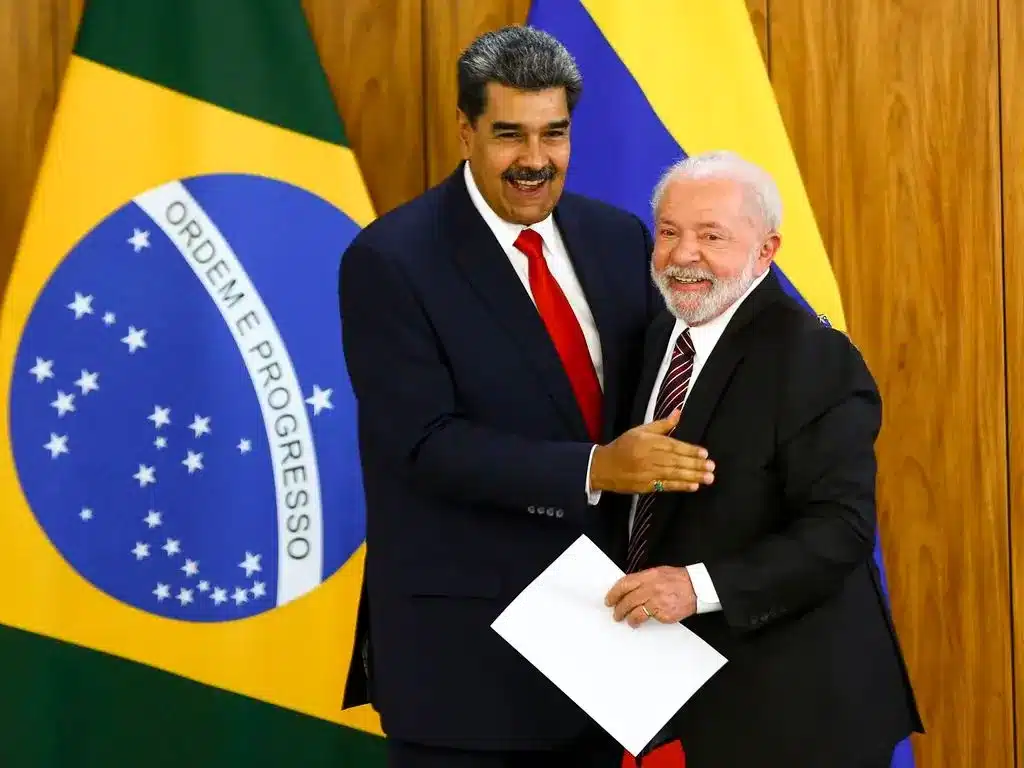
Lula’s return to power in 2023 initially promised a thaw. Restoring ties severed under Jair Bolsonaro, Lula hosted Maduro with state honors, signaling a “new era.”
Yet, the election fallout and Brazil’s veto of Venezuela’s BRICS membership at the 2024 Kazan summit triggered a fierce backlash. Venezuela labeled Brazil’s actions “hostile,” with officials posting provocative imagery of Brazil’s flag accompanied by threatening messages.
Diplomatic communication between Lula and Maduro has since collapsed, with Lula publicly criticizing Maduro’s “unpleasant” and “authoritarian” regime—a stinging rebuke from a former ally.
Economic and Energy Entanglements
Despite political friction, economic ties remain robust. In 2023, Brazil exported $1.15 billion in goods—mainly raw sugar, malt extract, and soybean oil—to Venezuela, while importing $468 million, primarily fertilizers and raw aluminum.
Energy interdependence further complicates the rift. In February 2025, Brazil resumed electricity imports from Venezuela’s Guri dam to power Roraima, its isolated northern state, after a six-year hiatus.
This pragmatic move underscores how practical needs often supersede ideological divides, as Roraima’s alternative—costly and polluting thermal power—proved unsustainable.
Historically, Brazil and Venezuela capitalized on complementary markets. During the 2000s oil boom, Brazilian firms tapped Venezuela’s growing consumer base, fueled by social spending and high oil prices.
However, Venezuela’s economic collapse after the 2014 oil price crash exposed its structural weaknesses, exacerbating internal polarization and straining regional ties.
Brazil’s own political upheavals, including Dilma Rousseff’s impeachment and Bolsonaro’s hardline anti-Maduro stance, further eroded the partnership.
The Migration Crisis
Venezuela’s turmoil has spilled across borders, with Brazil bearing the brunt of the region’s largest migration crisis. Over 500,000 Venezuelans have sought refuge in Brazil, including 194,331 in 2024 alone.
Brazil’s Operation Welcome, a humanitarian initiative, has earned global acclaim for providing shelter, healthcare, and integration support.
Yet, the sheer scale of migration strains resources and demands cross-border coordination, underscoring the futility of diplomatic estrangement.
Geopolitical Stakes
The crisis unfolds against a backdrop of global power competition. Venezuela’s alignment with Russia, China, Iran, and Cuba contrasts with U.S.-led efforts to isolate Maduro’s regime through sanctions, citing human rights abuses and democratic backsliding.
The return of Donald Trump to the White House in 2025 has tightened restrictions, revoking trade concessions for U.S. firms like Chevron. Meanwhile, Venezuela’s territorial dispute with Guyana over the Essequibo region risks drawing in the United Kingdom and escalating regional tensions.
Brazil faces a diplomatic dilemma. Supporting the anti-Chávez opposition, as advocated by figures like María Corina Machado, aligns with democratic principles but risks entanglement in a volatile conflict.
Proposals for armed intervention, backed by Colombian and Venezuelan right-wing factions, could ignite a broader regional crisis with unpredictable economic, social, and humanitarian consequences. Brazil’s 2,000-kilometer border with Venezuela amplifies these risks, making stability a national security priority.
Brazil’s Path Forward
As Latin America’s largest economy, Brazil’s response to the Venezuelan crisis will define its regional leadership. Lula’s cautious approach—balancing ideological sympathies, economic interests, and democratic values—reflects the complexity of the challenge.
Restoring trust with Maduro seems unlikely without electoral transparency, yet isolating Venezuela could exacerbate migration and instability. Brazil’s veto of Venezuela’s BRICS bid signals a tougher stance, but energy and trade ties demand pragmatic engagement.
The fracturing of Latin America’s leftist bloc, once a pillar of regional integration, complicates Brazil’s ambitions. Lula’s vision of South American unity, rooted in the Mercosur era, faces resistance from a polarized Venezuela and competing global influences.
To navigate this tightrope, Brazil must leverage its diplomatic heft to mediate a regional solution, potentially through multilateral forums like the Organization of American States, while avoiding entanglement in great power rivalries.
Conclusion
Venezuela’s crisis is Brazil’s crucible. The interplay of historical exceptionalism, economic dependence, and geopolitical fault lines makes this more than a bilateral dispute—it’s a test of Brazil’s ability to lead in a fractured region.
As Lula balances humanitarian imperatives with strategic interests, the world watches. Brazil’s choices will not only shape its relationship with Venezuela but also define its role on the global stage, with implications far beyond Latin America.
More: Brazil news in English, every day from The Rio Times.
Editorial responsibility: Matthias Camenzind, Editor-in-Chief · Editorial standards · Report an error
Venezuela and the United States
- What Is Going On Between Venezuela and the United States?
- What Is Going On Between Venezuela and the United States?
- Venezuela Geopolitics Explained, US Now Runs Its Oil
- Venezuela Politics 2026, Who Holds Power After Maduro
Brazil runoff, Sunday, October 25: Brazil runoff start time and results schedule. Latest: Brazil runoff polls, Flávio 51%, Lula 49%.